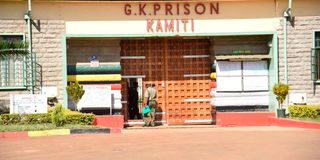
Kenya’s correctional service is rolling out an ongoing digital transformation aimed at modernising prisons and probation institutions across the country. The system will allow for real-time monitoring of inmates and operations.
The initiative, noted as part of wider public sector reforms, is aimed at enhancing transparency, efficiency, and humane justice.
“We are fully embracing digitisation to enhance transparency, accountability, and informed decision-making throughout our correctional systems,” Principal Secretary for Correctional Services Dr Salome Beacco said during the opening of the Correctional Service Week 2025.
“This is about using technology to empower officers, restore human dignity, and improve service delivery,” she said.
Dr. Salome Beacco, the Principal Secretary State Department for Correctional Services.
Photo credit: Bonface Bogita | Nation
For decades, Kenya’s correctional services has relied on manual record-keeping; a system that left critical inmate data scattered across dusty files and overburdened offices.
Prison officers often spend hours searching for information, delaying decisions on transfers and rehabilitation progress.
The lack of a centralised database also makes it difficult to track repeat offenders or verify completion of rehabilitation programmes, creating loopholes that undermine efficiency and accountability.
The coordination challenge between prisons, probation offices, and their headquarters remains slow and inconsistent. Reports are often handwritten, prone to loss or damage, and have to be physically delivered, causing long delays in communication.
This has resulted in various damages such as slowed down policy implementation, making it difficult for the department to respond swiftly to emerging challenges such as overcrowding, inmate welfare, or security incidents.
Many rehabilitated individuals struggle to prove they have completed training or served their sentences because their records are difficult to trace.
Without reliable documentation such as the planned digital Nil-Certificate, former inmates often face discrimination when seeking employment or reintegration support.
The result was a cycle where poor record management not only stalled efficiency but also weakened the department’s goal of turning prisons into centres of reform and second chances.
“We are moving from a punitive system to one that emphasises rehabilitation, reintegration, and societal reinvention,” the PS said, adding that “our correctional outlook has evolve.”
The agency plans to digitise inmate records, streamline reporting systems, and link regional commands through an online communication platform.
In addition, the State Department is also exploring digital Nil-Certificates documents that confirm rehabilitation and discharge from prison. This will help the reformed inmate reintegrate into society easily and cut red tape in the process.
Other initiatives include professional training for officers, expansion of technical and vocational courses for inmates, and a renewed focus on rehabilitation over punishment.
Inmates in several facilities currently access digital education platforms, acquire technical skills, and participate in online mentorship sessions.
“Through structured vocational training and psychosocial support, our institutions are producing individuals who leave with skills, not stigma,” PS said.
Digitisation, she explained, ensures that even remote facilities have equal access to resources, reporting tools, and communication networks.
Officers in correctional centres in North Eastern regions such as Wajir can submit data, attend online briefings and share updates without leaving their duty stations.
As digitisation advances, the State Department is pairing technology with sustainability. Dr Beacco said the government is investing in renewable energy and climate-smart practices across prisons to reduce costs and support national environmental goals.
“We must explore renewable energy for our facilities, adopt green farming and circular economy models,” she said. “Efficiency cannot exist in isolation from innovation.”
“We are turning our facilities into models of sustainability,” said Patrick Kariri, the Director of Prison Farms. “Solar power is lighting our workshops, while organic farming and recycling are helping us cut costs and teach inmates valuable skills for life after prison.”
According to Kariri, these efforts align with President William Ruto’s 15-billion-tree initiative and the national target of achieving full clean energy transition by 2030.
Kenya currently operates 135 prison facilities across the country, serving both male and female inmates, alongside 146 Probation and Aftercare Service offices that handle non-custodial sentences.
The probation system plays a critical role in easing congestion within prisons by supervising offenders serving community-based sentences, offering rehabilitation support, and facilitating reintegration programs that align with the government’s restorative justice approach.
“Probation and aftercare are essential pillars of restorative justice,” Secretary of Probation and Aftercare Services, Dr Christine Obondi said. “By focusing on community-based rehabilitation, we not only decongest prisons but also give offenders a real chance to reform and reintegrate into society.”
The ongoing reforms rely heavily on partnerships both locally, through collaboration with county governments, the private sector and internationally, with correctional services from countries such as Azerbaijan, Sierra Leone, and Eswatini, whose representatives attended this year’s event.
“Efficiency thrives in an ecosystem of collaboration,” PS said. “No single institution can achieve transformative outcomes alone.”
Commissioner-General of Prisons Patrick Aranduh lauded the state department’s reform agenda, saying the ongoing transformation is redefining the role of correctional institutions by combining security with rehabilitation and giving inmates the tools to rebuild their lives through digitisation, vocational training, and green initiatives.
Commissioner General of Prisons Patrick Mwiti Aranduh.
Photo credit: File | Nation
“Our goal is to build correctional institutions that not only maintain security but also restore lives,” Aranduh said. “Through digitisation, vocational training and green initiatives, we are giving inmates the tools to rebuild their futures and contribute positively to society,” he added.
Representing the Interior CS Kipchumba Murkomen, Defence CS Soipan Tuya commended the State Department for its ongoing reforms and called for continued innovation to improve service delivery within the correctional system.
“The transformation we are witnessing is not just about technology but about changing mindsets,” CS Tuya said.
Defence Cabinet Secretary Soipan Tuya.
Photo credit: File | Nation
She emphasised that digitisation and rehabilitation efforts must go hand in hand to ensure the correctional service contributes to national security and social cohesion.
“A modern correctional service must combine efficiency with compassion, ensuring that those who go through the system come out as better citizens to the community since every person deserves a second chance to reform.”