A forensic audit before Parliament has revealed massive irregularities in the payment of Sh12.99 billion for wayleave compensation by the Kenya Electricity Transmission Company (Ketraco) limited in seven donor-funded projects.
The forensic audit by Auditor-General Nancy Gathungu ,covering 13 financial years from 2010/11 to 2022/23, shows that the compensation project was budgeted at Sh17.02 billion, out of which Sh4.03 billion remains outstanding to date.
According to Ms Gathungu, the audit was to establish the accuracy and genuineness of the long outstanding wayleave compensations as well as compliance with the law by Ketraco.
The irregularities identified include huge variance between Resettlement Action Plan (RAP) and compensation amount, lack of documentation for the outstanding wayleave compensation, irregular compensation based on revaluation, overvaluation and overpayment of parcels of land.
Others are the lack of guidelines on land revaluations or renegotiations, Irregular engagement of a valuer, failure to provide criteria used in sampling parcels of land to be valued, unapproved valuation schedules, Irregular payment of top ups and unsupported payment vouchers.
Ms Gathungu notes that although Ketraco was constantly updated on the process including the list of documents required, the documents were not provided for audit review raising questions whether the funds were applied for a good course.
“Electricity transmission infrastructure is critical for national energy security and economic transmission. Wayleave compensation ensures that PAPs are lawfully and fairly compensated for land, crops and structures affected by high-voltage transmission lines,” the audit says.
The audit adds that; “persistent arrears and weak controls in this area risk project delays, litigation and financial loss to government.”
The projects include the Olkaria-Lessos-Kisumu (OLK) transmission line worth Sh5.58 billion out of which Sh2.27 billion is yet to be paid, the Sh2.62 billion Ethiopia-Kenya line out of which Sh2.31 billion has been settled.
There is also the Kenya-Tanzania line costing Sh1.64 billion of which Sh1.3 billion has been settled, the Kenya- Uganda worth Sh1.84 billion with Sh478.7 million pending and Turkwel-Ortum- Kitale line costing Sh865.3 million that has Sh650.8 million settled.
The others are Nairobi Ring (Suswa-Isinya) Sh2.2 billion of which Sh146.36 million remains unpaid, Kenya Power Transmission System Improvement Programme (KPTSIP) project worth Sh2.27 billion with Sh263.68 million pending and Machakos-Konza line Sh55.4 million out of which Sh29.81 million has been paid.
The audit reveals that the estimated cost resettlement as per the RAP was Sh283.1 million while the final compensation was Sh2.2 billion, resulting in an increase of Sh1.9 billion, which is a 663.22 percent increase.
“There was a likelihood that the increase was as a result of poor planning and budgeting in the initial planning phase,” reads the audit.
The audit reveals that supporting documents for the outstanding wayleave compensation amount of Sh478.7 million for the Kenya-Uganda transmission line were not provided for audit.
It further shows that review of the total payments of Sh1.4 billion revealed that Sh17.8 million was paid to 65 PAPs who had rejected offer letters.
“The amount should not have been paid since compensation should be paid upon acceptance of the offer and execution of the necessary agreements,” reads the audit.
According to the audit, a review of Olkaria-Lessos-Kisumu (OLK) transmission line revealed that 19 parcels of land, initially valued at Sh27.9 million were compensated for Sh41.73 million, resulting in an excess payment of Sh13.9 million.
“Review of payment records revealed that revaluation documentation was missing, making it impossible to verify the legitimacy of the excess payment,” the audit says adding; “the audit team found that Ketraco lacked guidelines or procedures for conducting revaluations for compensation.”
The audit notes that a review of valuation reports for the Kenya-Tanzania transmission line reveals that 58 parcels of land had their compensation amounting to Sh292.99 million approved for the payment.
But according to the audit, based on the recalculated size of the aforementioned parcels of land, the compensation amounts payable ought to have been Sh159.6 million, meaning that there was an overvaluation of Sh133.4 million.
The audit fingered Ketraco for irregularly paying Sh116.2 million to PAPs for the 48 out of 58 parcels that were overvalued by Sh133.4 million.
The audit established that 14 parcels of land with an initial value of Sh65.9 million were renegotiated to Sh128.63 million with doubts cast whether the renegotiations were based on open market values.
However, Ketraco did not have clear guidelines or policies to guide in the process of land revaluations contrary to section 9.1 of the Resettlement Policy Framework (RPF) of 2011.
“The audit could not ascertain whether the renegotiations were based on open market values. The lack of renegotiation documents may be an avenue for the loss of funds by increasing the compensation, leading to inequitable treatment, financial uncertainty and project implementation delays,” the audit states.
The audit established that M/s Realmast limited was issued with a letter of instructions to undertake valuation of sampled parcels of land along OLK transmission line.
But a review of the list of pre-qualified firms for the provision of valuation services for the period 2015- 2017 revealed that M/s Realmast l,imited had not been prequalified under this category therefore contravening section 57 (1) of the Public Procurement and Asset Disposal Act.
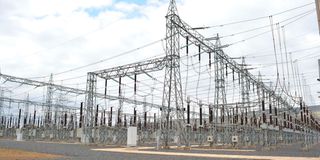
A power transmission line under construction by Ketraco.
Photo credit: File | Nation Media Group
According to the audit, Ketraco valued 259 parcels of land out of 3,132 affected parcels of land representing 8 percent, which was used as a basis of computing the compensation amount payable to the Project Affected Persons (PAPs).
“The criteria used to determine the 259 parcels of land that were sampled and valued was not provided for audit. It was therefore not possible to confirm the accuracy, reliability and authenticity of the value of the land provided by the land valuers,” says the audit.
A review of valuation schedules provided revealed that three valuations for land and structures amounting to Sh314.73 million were not approved by the managing director but out of which Sh49.02 million was paid to PAPs.
The auditors noted that for the six valuations, the initial compensation was Sh1.62 billion, 30 percent of the open market value.
But Ketraco made a 20 percent top up of Sh659.51 million, resulting in an increase of the wayleave compensation amount to Sh2.28 billion with documentary evidence to support the top ups not provided for audit.
The assessment of the Ethiopia-Kenya wayleave compensation schedule revealed that Ketraco paid top ups, also known as second payments, of Sh24.02 million to 59 PAPs despite the RPF of 2011 and RPF of 2021 not having provisions for the payment of top ups after the initial compensation to PAPs.
“It was not clear why Ketraco made the top up payments and no documentary evidence was provided on any efforts made by the company to recover the amount.”
The audit shows that out of the Sh1.3 billion payable for wayleave compensation, Ketraco had paid Sh1.1 billion for parcels of land, Sh36.7 million for structures and Sh223.9 million for crops.
However, payment vouchers for compensation to landowners amounting to Sh18.3 million did not have supporting documents “to confirm registration” and, interestingly, “the payments could not be traced to Ketraco’s bank statements.”
The failure to recover compensation paid to parcels of land not affected by the project was also established.
Cadastral schedule, cadastral map and compensation schedule provided Kenya-Tanzania interconnector project with field visits revealing that three land parcels were irregularly compensated for Sh3.03 million “despite the parcels no longer being affected by the wayleave corridor.”