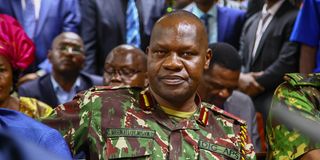
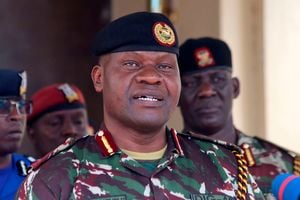
The High Court has declined to stop the September 26 graduation ceremony at the United States International University-Africa (USIU-A) over a petition filed by Deputy Inspector General of Police Gilbert Masengeli challenging his exclusion from the list of graduands.
Justice Patricia Nyaundi further declined a prayer to include Masengeli in the list of graduants ruling that there was no evidence that he had promised that his name would be in the graduation list.
“I do not consider that it is in the public interest to suspend the graduation as has been sought by the applicant,” the judge said.
The court directed the case to be mentioned on October 21 for directions as to the hearing of the case.
Mr Masengeli moved to court arguing that he had been denied the opportunity to graduate with a PhD despite meeting all the requirements.
Students outside the USIU library.
Photo credit: File
The institution opposed the application arguing that the DIG has not met the academic requirements for the award of a PhD and therefore cannot be included in the graduation list.
The university told the court that Mr Masengeli has yet to defend his dissertation before a panel of internal and external examiners, a mandatory requirement before a doctoral degree can be awarded.
Through lawyer Chege Njoroge, the institution opposed Mr Masengeli’s application seeking to stop the graduation ceremony, arguing that academic procedures set out under the university’s charter, regulations and guidelines issued by the Commission for University Education cannot be waived for any student.
“What Masengeli is inviting the court to do is disregard the procedures of running the programmes,” Mr Njoroge submitted.
USIU-A said the earliest date available for Mr Masengeli’s dissertation defence is October 6, 2026. Even if he successfully defends the thesis, the university said, he would still be required to satisfy other graduation requirements before being cleared for graduation.
The institution said that after a successful defence, he would need to demonstrate that he had published two journal articles arising from his research and obtain the necessary confirmations before the university Senate could approve his graduation.
According to the university, Mr Masengeli was informed of the outstanding requirements on September 4 by his supervisor, Dr Francis Khayundi.
"Bypassed internal mechanisms"
USIU-A maintained that there was no evidence of deliberate delay on its part and noted that Mr Masengeli had not lodged a formal academic complaint through the university's internal grievance mechanisms before moving to court.
The university said Mr Masengeli submitted his first dissertation draft on June 11, 2026, followed by revised versions on July 14 and August 31. The dissertation, it said, was still undergoing examination by internal and external examiners before it could proceed to the defence stage.
The institution further argued that the case was premature because Mr Masengeli had failed to exhaust the university's internal dispute resolution procedures.
It told the court that it remained willing to facilitate his completion of the remaining academic processes and that he would be eligible to graduate once he met all the requirements, but not during the September 26 ceremony.
USIU-A also warned that halting the graduation would unfairly affect hundreds of other students who have no connection to the dispute.
Mr Masengeli, however, insists that the university's handling of his dissertation process has unfairly denied him the opportunity to graduate with his September 2021 cohort.
Through lawyer Cecil Miller, he told the court that he enrolled for a PhD in International Relations in September 2021 and successfully completed his coursework and examinations. His results were approved by the university's Board of Examiners in August 2023, paving the way for the dissertation phase.
He said he later submitted a dissertation proposal, which was approved for defence in December 2025. After making the required corrections, obtaining approvals and conducting fieldwork, he submitted several revised versions of his dissertation, including a further corrected copy in July 2026.
Mr Miller argued that his client had fulfilled all the requirements expected of him and had every reason to believe he would graduate this month.
“All was well until last month when the institution went silent on him. He fulfilled all the requirements and then a graduation list was published with his name missing,” Mr Miller submitted.
He said the university had created a legitimate expectation that Mr Masengeli would graduate with his cohort through various communications indicating that he was progressing towards completion of his studies.
According to the lawyer, the Deputy Inspector General was left with no option but to seek the court's intervention after receiving no clear explanation regarding his exclusion from the graduation list.
“The clock was ticking towards graduation and he was left with no other option but to seek the court’s intervention. He has been a student for five years,” Mr Miller said.
He argued that there was nothing to suggest that Mr Masengeli was responsible for any delays and questioned why the university wanted him to defend his dissertation after the graduation ceremony despite, in his view, having allowed him to progress through all the required stages.
Mr Miller told the court that his client was ready to defend his thesis and should not be forced to wait until a future graduation ceremony because of what he described as an unpredictable administrative process.
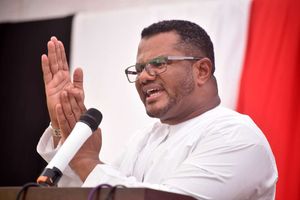
He further argued that the university's conduct had undermined Mr Masengeli's legitimate expectation of graduating with his classmates and urged the court to protect the rights of students facing similar circumstances.