Mashujaa Day: Ruto promises tax cuts, 50,000 jobs in 2027 pitch
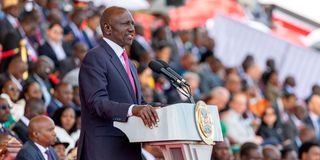
President William Ruto delivers his speech when presided over the 63rd Mashujaa Day celebrations at Kipchoge Keino Stadium in Eldoret City, Uasin Gishu County on October 20, 2026.


President William Ruto used his Mashujaa Day address to make an economic case for his administration ahead of the 2027 General Election, promising tax relief, more jobs for young people and cheaper access to property and technology while defending his record on agriculture, housing, healthcare and education.
In his address at Kipchoge Keino Stadium in Eldoret, the President proposed exempting workers earning up to Sh32,333 a month from Pay As You Earn (PAYE) tax, scrapping stamp duty on land transactions valued at Sh1 million or less.
The president also proposed the removal of 25 per cent import duty on mobile phones and creating 50,000 additional paid internship places for youth from January 2027.


He also announced plans to inject an additional Sh5 billion into the Hustler Fund before the end of the year, presenting the measures as part of his administration’s Bottom-Up Economic Transformation Agenda (BETA), which he said was designed to put more money in households’ pockets and expand access to economic opportunities.
The proposals formed the centrepiece of an address in which President Ruto defended his economic record and sought to demonstrate that his policies were delivering results in areas affecting ordinary Kenyans, including the cost of living, employment, access to credit and essential services.
The measures will, however, require the relevant legislative, fiscal and administrative processes before taking effect. The President said the National Treasury would submit proposals to Parliament the following week.
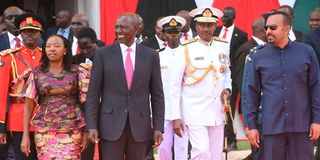
President William Ruto (center), accompanied by Ethiopia Prime Minister Abiy Ahmed (right), and First Lady Rachel Ruto leave Kipchoge Keino Stadium in Eldoret City, Uasin Gishu County, after this year's Mashujaa Day celebrations on October 20, 2026.
The address also carried a political message, with the President presenting his administration’s record as evidence of progress while acknowledging that Kenyans had the right to question government decisions and demand better services.
“Citizens retain the right to question their government, challenge its decisions and demand better. We must listen, respond and remain answerable for the commitments we made,” he said.
President Ruto said his administration’s priority was to ensure that economic growth translated into better living standards and wider opportunities, regardless of a person’s birthplace or financial circumstances.
He defended BETA, which focuses on agricultural transformation, education reforms, expanded healthcare, modern infrastructure, job creation and support for small enterprises.
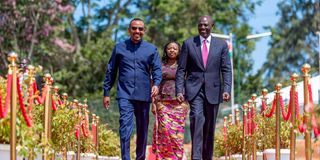
President William Ruto and Ethiopian Prime Minister Abiy Ahmed arrive for Mashujaa Day reception at the Eldoret State Lodge in Eldoret City, Uasin Gishu County. With them is First Lady Rachel Ruto.
The President recalled seeking the electorate’s mandate in the 2022 General Election on an agenda he said was intended to reduce household expenditure on essential needs while increasing incomes through employment and business opportunities.
“Our purpose is clear: to put more money in the pockets of workers, make ownership easier for families, bring digital opportunities within reach, and open the doors of employment for our young people,” he said.
He said his administration wanted to build a country where a child’s circumstances of birth did not determine access to quality education, illness did not condemn a family to poverty and every Kenyan had a fair chance to secure employment, earn a decent income or establish a business.
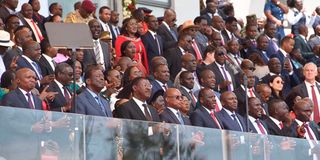
Deputy President Prof Kithure Kindiki (bottom left), Prime Cabinet Secretary Musalia Mudavadi, National Assembly Speaker Moses Wetang'ula, Senator Speaker Amason Kingi, Uasin Gishu County Governor Jonathan Bii, National Assembly Majority Leader Kimani Ichung'wa, Senate Majority Leader Aaron Cheruiyot, Nandi County Governor Stephen sang and Elgeyo Marakwet County Governor Wisley Rotich, at Kipchoge Keino Stadium in Eldoret City, Uasin Gishu County, during this year's Mashujaa Day celebrations presided over by Ruto on October 20, 2026.
Recalling a declaration he made on August 24, 2021, when he described himself as “a man on a mission”, President Ruto said pursuing his vision required determination and a clear plan.
“I have no space to retreat nor the luxury to surrender,” he said.
The President’s address sought to link the new proposals to his broader economic agenda, presenting tax relief, affordable credit, housing, healthcare and education as connected elements of a plan to expand economic participation.
Under the proposed changes, workers earning Sh32,333 or less a month would be exempted from PAYE, potentially increasing their take-home pay if the measure is approved and implemented.
According to official records, Kenya has a total formal employment of 3,468,997. The current PAYE exempt (Sh0 - Sh24,000) benefits 1,328,625 Kenyans. Additional PAYE to be exempt (Sh24,001-Sh32,333) would benefit additional 362,846 people and bring total PAYE exempt to be 1,691,471 (48.8%).
President Ruto said the proposal was intended to ease pressure on households struggling to meet expenses such as food, transport and other daily essentials.
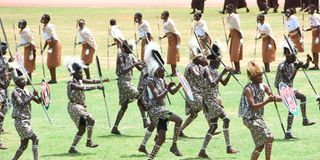
Traditional dancers entertain guests at Kipchoge Keino Stadium in Eldoret City, Uasin Gishu County, during this year's Mashujaa Day celebrations presided over by President William Ruto on October 20, 2026.
“For workers on modest incomes, every shilling saved means more money to meet their families’ needs, including food, transport, and other essentials,” he said.
The proposal comes amid public concern over taxation, purchasing power and the cost of living. Its actual benefit will depend on the final legislation and implementation arrangements, including how the exemption interacts with the existing tax bands.
The President acknowledged that young people had expressed frustration over taxation, unemployment and the pace of economic change, saying the Government had a responsibility to listen and respond.
The second proposal seeks to reduce the cost of acquiring and transferring land by exempting transactions valued at Sh1 million or less from stamp duty and introducing progressive rates for higher-value transactions.
President Ruto said the National Treasury had developed the proposals to make property ownership more accessible to ordinary Kenyans.
For families seeking to buy land and build assets, lower transaction costs could offer some relief. The eventual savings will depend on the final rates and scope of the exemption.
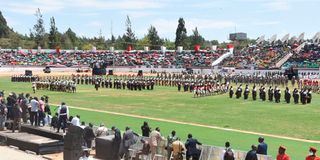
Traditional dancers entertain guests at Kipchoge Keino Stadium in Eldoret City, Uasin Gishu County, during this year's Mashujaa Day celebrations presided over by President William Ruto on October 20, 2026.
The third measure targets access to technology, with the President proposing the removal of the 25 per cent import duty on mobile phones.
“A mobile phone is no longer a luxury. It is a classroom, a marketplace, a bank, an office and, for many young Kenyans, a gateway to employment,” he said.
The proposal is intended to widen access to digital learning, online work, financial services and electronic commerce. Its effect on retail prices will depend on implementation and whether import-cost reductions are passed on to consumers.
President Ruto linked the proposal to his administration’s digital employment agenda, saying initiatives had already connected 350,000 young people to opportunities in the digital economy. The Government intends to expand such opportunities substantially over the next three years.
The measures on PAYE, stamp duty and mobile phones are aimed at reducing costs for workers, property buyers and consumers, while the proposed internship expansion targets young people seeking to enter the labour market.
The fourth measure seeks to address youth unemployment through an expansion of the National Internship Programme by 50,000 places from January 2027.
Successful applicants will receive monthly stipends while recruitment will be conducted through what the President described as a transparent, digital and merit-based system. The government also intends to provide incentives for private employers to offer meaningful work experience.
“Too many young people cannot secure employment without experience, yet cannot gain experience without employment,” he said.
The programme is intended to bridge the gap between education and the workplace by giving young people practical experience that could improve their prospects of securing jobs.
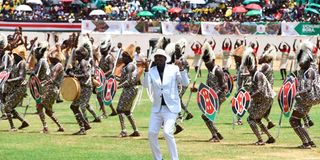
An artist accompanied by traditional dancers entertain guests at Kipchoge Keino Stadium in Eldoret City, Uasin Gishu County, during this year's Mashujaa Day celebrations presided over by President William Ruto on October 20, 2026.
It complements other youth-focused initiatives, including the National Youth Opportunities Towards Advancement (NYOTA) programme, through which President Ruto said more than 700,000 young people were being equipped with skills.
He also said more than 120,000 young entrepreneurs had received start-up capital and mentorship to establish businesses and develop sustainable livelihoods.
The government’s wider employment ambitions include expanding digital employment opportunities towards two million, international work opportunities towards one million, and jobs associated with housing and related investments towards two million over the next three years.
The scale of these ambitions places implementation at the centre of the administration’s jobs agenda, particularly as young people continue to seek pathways from education and training into paid work.
Beyond the four proposed measures, President Ruto announced plans to inject an additional Sh5 billion into the Hustler Fund before the end of the year.
He said more than 10 million Kenyans were regular borrowers through the programme, which had advanced Sh98 billion without collateral.
The fund is a central element of BETA, which seeks to expand access to affordable credit for individuals and small enterprises that have traditionally struggled to secure financing through conventional channels.
President Ruto argued that affordable credit was necessary to help businesses expand, create jobs and increase household incomes.
He also cited developments in the capital markets and foreign investment as evidence of improving economic conditions.
According to the President, the value of Kenya’s stock market had doubled from Sh2 trillion to Sh4 trillion, while foreign direct investment increased from US$1.5 billion in 2022 to US$3.2 billion in 2025.
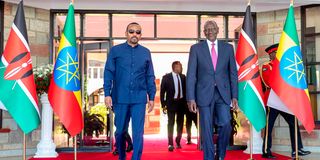
President William Ruto welcomes Ethiopian Prime Minister Abiy Ahmed to the Eldoret State Lodge, Uasin Gishu County.
He said the economy had stabilised, the exchange rate had improved and inflation had been brought under control over the past four years.
The administration’s challenge, however, remains translating these broader economic indicators into improvements households and businesses can feel, including more affordable goods, stronger purchasing power and reliable employment.
Agriculture also featured prominently in the President’s defence of his economic record with an emphasis on lower production costs, increased food output and improved earnings for farmers.
President Ruto said his administration had registered 8.9 million farmers and reduced the price of fertiliser from Sh7,500 per bag in 2022 to Sh2,000 under the subsidy programme.
More than 38 million bags of subsidised fertiliser had been distributed, he said, contributing to increased production.
The President reported that maize output rose from 34.3 million bags in 2022 to 71 million bags last year, while maize imports had declined significantly.
He also cited improved prices in the coffee and tea sectors, saying the average coffee cherry price had risen from about Sh70 to between Sh110 and Sh150 per kilogramme. The average price of green tea leaf had increased from Sh35 to Sh56 per kilogramme.
In the dairy sector, the President announced that farmers would receive Sh65 per litre of milk from this month, alongside an additional monthly bonus of Sh2 per litre, payable quarterly.
He said national milk production had increased by one billion litres, while the price paid to farmers had risen from Sh35 to Sh60 per litre before the latest announced adjustment.
The government had also vaccinated more than 22 million livestock and extended drought insurance in a programme targeting 1.6 million pastoralists across 21 counties, he said.
The interventions are intended to strengthen food security, protect farmers against climate-related risks and improve rural incomes. Their broader impact will depend on whether higher production and better farm-gate prices are sustained and translate into more affordable food for consumers.
President Ruto also cited the Affordable Housing Programme as a source of employment and a means of expanding access to decent homes.
He said 303,910 homes were at various stages of development, alongside more than 450 modern markets and student accommodation facilities intended to serve 180,000 students.
According to the President, the initiatives had generated more than 1.1 million employment opportunities in construction and related industries.
He cited the handover of homes to 2,157 families at the Pioneer Affordable Housing Estate in Eldoret on Sunday as an example of the programme’s progress.
The housing initiative is also intended to stimulate demand for construction materials, support small businesses and create work across related industries. Its impact will depend on the pace of project completion, affordability and access for intended beneficiaries.
On infrastructure, President Ruto pointed to the upgrading of the Rironi-Mau Summit highway, the extension of the Standard Gauge Railway towards Kisumu and Malaba, and the development of the Lake Victoria Ring Road.
He said 7,000 kilometres of roads were being built across constituencies, with the projects intended to improve connectivity, lower transport costs and facilitate trade.
The President also cited plans to modernise Jomo Kenyatta International Airport and develop major transport corridors, arguing that infrastructure investment was necessary to support industrialisation and private-sector growth.
He said the Government was working towards an economy that produced more of what it consumed and exported more of what it produced.
The investments are intended to strengthen links between producers and markets, improve the movement of goods and make it easier for businesses to expand.
In healthcare, President Ruto said the number of beneficiaries registered under the Social Health Authority (SHA) had increased to 33.3 million, compared with seven million under the former National Hospital Insurance Fund.
He said SHA had disbursed Sh107 billion to healthcare facilities since January 1 this year, with more than 10,000 facilities receiving financing directly to purchase medicines, medical supplies and other essentials.
The reforms, he said, were intended to widen access to healthcare regardless of a person’s income or location.
Their effectiveness will depend not only on registration and funding but also on whether patients can access treatment when they need it, facilities receive payments promptly and essential medicines remain available.
In education, the President reported that the Government had recruited more than 100,000 teachers, constructed 23,000 classrooms and commenced construction of 1,600 laboratories.
A further 6,000 trainers had been recruited for technical and vocational education and training institutions, while student admissions had risen from approximately 300,000 in 2022 to 1.3 million, he said.
President Ruto said the investments were intended to widen access to education and equip young people with skills relevant to the labour market.
Follow our WhatsApp channel for breaking news updates and more stories like this.