Cannabis sativa (bhang) remains the most abused illicit substance in Eastern and Southern Africa, but methamphetamine, an increasingly available and dangerous synthetic stimulant, is fast emerging as the region’s biggest drug threat, a new report warns.
According to findings by the Eastern and Southern Africa Commission on Drugs (ESACD), bhang is widely consumed in its herbal or resin form across every country in the region.
But it is methamphetamine, also commonly known as meth, that is rapidly displacing older drugs like cocaine in many communities, spreading quickly even in areas where it was previously unknown.
“It is becoming the dominant substance used in a growing number of communities where it has displaced crack cocaine as the illicit stimulant of choice,” the report established.
Cannabis is either smoked in its dried or resin forms or ingested as an edible, either on its own or mixed with other foodstuffs.
While methamphetamine is currently the most consumed synthetic drug in the region, it is not the only one. The report notes that meth is quickly displacing crack cocaine as the preferred illicit stimulant in many communities.
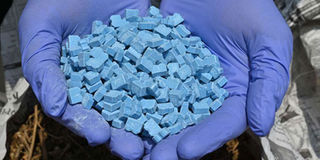
Meth, found only in crystalline form so far, is usually smoked. However, the report reveals that an increasing number of users in the region are now injecting it.
“Recent estimates suggest the consumer base for methamphetamine in South Africa, the country with the largest consumption in the region, appears to be significantly greater than initially imagined, making it potentially one of the largest methamphetamine consumer markets in the world,” says the report.
Beyond South Africa, meth has also gained a significant market foothold in Eswatini, Lesotho, Botswana, Mozambique, Malawi, Zambia, Zimbabwe, Uganda and Kenya.
“It is inevitable that meth will penetrate every other drug market in the region, and its availability, accessibility, and use will increase,” the commission warns.
The report links the rise in synthetic drug use, especially meth, to poor urban development, deepening inequality and limited economic opportunities.
The drug’s regional proliferation flows from policies and environments of inequitable, unsustainable development, and it is quickly occupying the deteriorating spaces of the growing number of marginalised and victimised communities facing limited opportunities for licit socio-economic prosperity.”
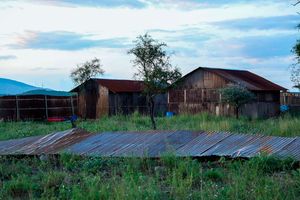
The methamphetamine laboratory in Olelopo village, Namanga, Kajiado County in this photo taken on March 19, 2025.
Photo credit: Lucy Wanjiru | Nation
Despite this, most governments have continued to respond through arrests of smallholder farmers and low-level peddlers, strategies the report criticises as ineffective and harmful.
The criminalisation of low-level offenders, it says, has led to prison overcrowding with some facilities holding more than 250percent of their capacity.
As a result, large numbers of poor people have been incarcerated for non-violent, drug-related offences.
These convictions, in turn, drive even higher unemployment and deepen social exclusion for former drug users—many of whom face long-term stigma and limited job prospects.
“Disproportionately high unemployment and underemployment rates continue to plague people who use (or used) drugs, especially those who have been marginalised by a criminal conviction for low-level drug offences,” says the report.
The report also addresses cocaine use in the region, noting that both powder and ‘crack’ forms are present in every country. However, crack is more widely consumed due to its affordability and broader distribution network.
Crack cocaine—produced by mixing powder cocaine with baking soda to create hardened rocks—is typically smoked or inhaled. Powdered cocaine, which is five to seven times more expensive, is more often used by those with higher disposable incomes and is usually snorted or ingested.
To strengthen the regional fight against illicit drugs, the commission proposes four key findings, 12 recommendations and 40 actions, including the need for more reliable drug data, harm-reduction policies and socioeconomic reintegration for offenders.
It also warns that traditional drugs like cannabis are being challenged by newer synthetic substances, whose use is expanding rapidly even in areas where such markets previously did not exist.
“Markets for some drugs have emerged in places where they were not previously available. Heroin and cocaine have moved from their coastal origins to inland countries,” the report states.
However, according to the report, in most countries of the region, there is no reliable determination of some of the basic marketplace denominators needed to assess a drug market, the harms it is creating or the relative effectiveness of measures put in place to address.