Not police, not guns: Here is how Kenya could help Haiti
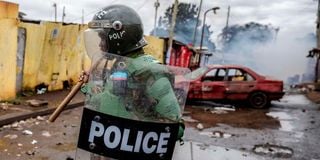
A Kenyan police officer patrols next to a vandalised car used as a barricade by opposition supporters during anti-government protests in Nairobi on July 19, 2023. Kenya's parliament on November 16, 2023 approved plans to send its police to Haiti as part of a UN-backed, Nairobi-led multinational mission aimed at restoring calm in the gang-ridden Caribbean nation.
Haiti’s insecurity and poverty are rooted in its punishment for winning freedom from racial slavery in 1804. France forced Haiti to repay French slaveholders.
This instigated a cycle of indebtedness and is how Haiti became, in the words of Haitian poet Jean-Claude Martineau, the only country with a last name: “the poorest country in the western hemisphere”.
There are more guns in Haiti now than before the last peacekeeping mission that ended in 2017. Like Haitian police, Kenyan police may find themselves outgunned by gangs who control (and trade in) vast troves of weapons.
As the security situation in Haiti deteriorates, Kenya has offered to lead a new sort of UN mission to the country from 2024. In early October, the UN Security Council authorised a Multinational Security Support mission led by Kenya to confront the paramilitary-style gangs that control the capital city of Port-au-Prince and other parts of the Caribbean country.
We asked Jennifer Greenburg, who researches the effects of peacekeeping interventions in Haiti, some questions.