The drive to increase the retirement benefits of judges has run into headwinds, with the Salaries and Remuneration Commission (SRC) saying it would cost the taxpayer at least Sh15 billion a year.
The proposal in the Judges Retirement Benefits Bill, 2025, coming when the country faces challenges in financing its operations, seeks to boost the retirement packages for the judges, including pension and post-retirement transport and medical benefits.
The beneficiaries, according to the Bill, will be the judges in office on the date of its commencement, those to be appointed after the law becomes operational and judges who retired after August 27, 2010 when the current Constitution was promulgated.
In what appears to be an attempt to subjugate the SRC Act, the Bill says: “Where there is a conflict of law, the provisions of this Act shall prevail.”
If enacted in its current form, the Judges’ benefits will be fully funded by the government as they are exempt from making contributions to fund their retirement.
This is despite SRC, an independent constitutional commission, recommending a defined contribution scheme as per existing government policy and the provisions of the Pensions Increase Act, 2005.
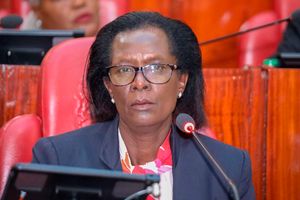
Acting SRC Chief Executive, Margaret Njoka, said in a November 4, 2025 memorandum to the Justice and Legal Affairs Committee of the National Assembly that the Bill, which is undergoing stakeholder input, is flawed and should be amended.
“The commission recommends that for purposes and equity and harmony in the definition of pensionable emoluments, the clause be amended to provide that ‘pensionable emoluments’ means the basic salary payable to a judge as set by the SRC,” she says in the memorandum.
The Bill seeks to grant the Judicial Service Commission (JSC) – the judges’ employer – exclusive powers to make recommendations on the retirement benefits.
Ms Njoka said the SRC is uncomfortable with the Bill on account that it fails the country’s fiscal sustainability principles and that it is a “direct usurpation” of its mandate.
She says the Bill is in breach of Article 230 (4) (a) of the Constitution on the mandate of the SRC as affirmed by the High Court in 2015.
The memorandum states that the post-retirement transport and medical benefits proposed in the Bill, which have a financial implication of Sh1.74 billion in year one, have not been set by the SRC in accordance with its mandate.
“The proposed review of retirement benefits for judges of superior courts constitutes a direct usurpation of SRC’s constitutional mandate to set and regularly review the remuneration and benefits of state officers, including retirement benefits,” Ms Njoka says in the memo.
Kenya’s rough financial situation, caused by the huge public debt and depressed revenues, recently saw National Treasury Cabinet Secretary John Mbadi announce the reduction in annual capitation for secondary schools from Sh22,244 to Sh16,900 per learner.
John Mbadi, the Cabinet Secretary for National Treasury and Economic Planning.
Photo credit: File | Nation Media Group
The Bill defines “pensionable emoluments” as the basic salary and house allowance payable to a judge, contrary to the October 13, 2023 SRC letter to the JSC.
Said the letter: “For purposes of gratuity and pension, the pensionable emolument shall be based on the monthly basic salary.”
“The wording in the Bill seeks to render the SRC Act subservient to this Act, notwithstanding that Article 172 (1) (b) (i) of the Constitution expressly limits the JSC powers to make recommendations on judges’ remuneration.”
Article 162 (1) of the Constitution identifies superior courts as the Supreme Court, the Court of Appeal, the High Court and courts established by Parliament with the status of the High Court to hear and determine disputes relating to employment and labour relations and the environment.
“These benefits have not been assessed against the principle of fiscal sustainability as required under the Constitution and the SRC Act,” Ms Njoka said.
The Constitution recognises SRC as the sole government agency with the mandate to set and review the remuneration and benefits of state officers.
According to Article 260, judges of the superior courts are state officers just like the President, the Deputy President, members of the Cabinet, the Chief Justice and Deputy CJ, lawmakers, chairpersons and members of constitutional commissions and holders of independent offices – the Auditor-General and Controller of Budget.
The others are county governors, principal secretaries, magistrates, ward representatives, the Director of Public Prosecutions, Chief of the Kenya Defence Forces and service commanders, Director-General of the National Intelligence Service and the Inspector-General and Deputy Inspectors-General of police.
According to the memorandum, the extension of enhanced post-retirement transport and medical benefits to judges may trigger “legitimate clamour” for similar benefits by other state officers.
That, Ms Njoka says, would result in a ripple effect across the public sector, “thereby exacerbating an already constrained fiscal space and undermining efforts towards sustainable public compensation management”.
The memorandum states that it has been in development since the late 1990s and “marks a significant step towards realising the principles of the Constitution in respect of the Judiciary, its independence and the remuneration and benefits of judges of superior courts.”
In previous submissions, the SRC has guided the JSC to amend the Bill to provide that pensionable emoluments mean the basic salary payable to a judge as set by SRC.
This, the SRC says, is meant to ensure harmony and fairness in the definition of pensionable emoluments as has been set for state officers.
“Such uncoordinated enhancement of benefits for one category of state officers without comprehensive analysis of its implications for the entire public sector compensation framework contravenes the holistic approach that SRC’s constitutional mandate is designed to ensure,” Ms Njoka said.
She added that in the last five years, the SRC has helped reduce the country’s wage bill from a high of 51 per cent to 43 per cent of the revenue collected in a year as of 2024.
The Public Finance Management Act states that expenditure on government wage bill should not exceed 35 per cent of the revenue generated annually.
“The SRC neither initiated the review nor set the retirement benefits proposed in the Bill,” reads the memorandum.