Camels, goats, sheep: Ruto urges milk diversification as prices hit Sh85 a litre
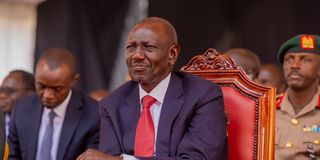
President William Ruto

President William Ruto has called for Kenya to diversify its milk sources to include camels, goats, and sheep as declining supplies push retail prices to as high as Sh85 a litre.
According to President Ruto, who is also a farmer, diversifying milk sources would ease pressure on cow’s milk supplies, which have declined following the recent drought.
“We need to diversify our source of milk, from camels, sheep, goats and even from buffaloes,” Dr Ruto said, drawing laughter from the audience when he mentioned buffaloes.


Dr Ruto attributed the decline in milk supply to drought, which has affected production, and called for measures to expand the country’s dairy base. Milk prices have risen in some supermarkets and milk ATM dispensers in residential estates, increasing pressure on households.
A spot check by the Daily Nation found that a litre of milk was retailing at Sh85 in several Nairobi estates, including Kasarani, Githurai, Zimmerman, Kayole, Buruburu and Embakasi. In Zimmerman, for instance, a litre of milk is currently retailing at Sh75 before the shortage, with prices subsequently rising to as high as Sh85.
Speaking on Friday at the close of the three-day Agriculture and Food Systems Transformation Summit 2026 at Jamhuri Showgrounds in Nairobi, the Head of State directed Principal Secretary for Livestock Development Jonathan Mueke to fast-track the search for improved camel breeds to increase production. He said expanding camel milk production would require investment in pastoralist communities, which have the animals and traditional knowledge needed to support the value chain. Camel milk, traditionally associated with arid and semi-arid land (ASAL) areas, also has a market in urban centres, including Nairobi.
The President said pastoralist communities needed support to improve production and connect with urban markets, adding that the government would explore ways to improve livestock breeds and diversify milk sources.
Agriculture and Livestock Development Cabinet Secretary Mutahi Kagwe, however, this week in an interview with Fixing the Nation show, played down claims of a milk shortage, describing the situation as a decline in supply. “The government would continue engaging dairy cooperatives and processors to address challenges affecting the sector,” he said.
Speaking at the close of the inaugural Agriculture Summit on Friday, Mr Kagwe said milk farmers received varying prices depending on the cooperatives and processors they supplied. While some earned between Sh50 and Sh53 per litre, others received up to Sh55, the CS noted the need for efficient cooperative management and fair returns to farmers.
Dr Ruto said reforms in the dairy industry, including changes at the New Kenya Cooperative Creameries (KCC), were intended to improve farmers’ earnings and ensure timely payments for milk deliveries.
“Farmers should not have to wait two or three months to receive their money,” he said, noting that efficient management of milk-processing facilities was essential to sustaining production and improving household incomes.
The President attributed increased milk production over the past three years to government interventions, including subsidised fertiliser and efforts to improve productivity. He said national milk production had risen from 4.5 billion litres to 5.5 billion litres, making Kenya Africa’s largest milk producer.
Dr Ruto said the government’s wider agricultural reforms were also contributing to improved earnings in other value chains, including tea and coffee. “In tea production, for instance, has increased by 50 million kilogrammes, while payments to tea farmers for green leaf has risen from an average of Sh16 per kilogramme three years ago to about Sh30 this year,” the President explained.
The government has mobilised Sh1.55 billion to support the modernisation of selected tea factories, while Sh850 million had been made available for further improvements aimed at raising efficiency and reducing disparities in farmers’ earnings.
Dr Ruto also announced that 50 acres at the Dongo Kundu Special Economic Zone have been approved for the Kenya Tea Development Agency (KTDA) to establish a tea value-addition facility targeting higher-value products and export markets. The government had also provided Sh100 million to Kenya Tea Packers to modernise its processing facilities.
He said the reforms were part of a wider strategy to shift agriculture from subsistence production towards a commercially driven sector that creates jobs, raises farm incomes and expands local processing.
“Agriculture remains central to our economy,” Dr Ruto said, observing that the sector contributes about 50 per cent of Kenya’s gross domestic product (GDP) when its wider economic linkages are considered. He attributed improved economic performance to agricultural reforms, better production and increased payments to farmers.
The summit was held under the theme “Agriculture and Food Systems Transformation — Advancing Food Sovereignty, Job Creation, and Shared Prosperity under BETA.” It brought together more than 10,000 farmers from across the country, government officials, county leaders, private sector players and development partners to discuss food production, market access, value addition and climate resilience.
World Bank Director for Kenya, Rwanda, Somalia and Uganda Qimiao Fan, while addressing the summit, said transforming Kenya’s food systems would require sustained investment and stronger collaboration between government, development partners and private investors.
“Food security remains fundamental, while creating more and better jobs across agriculture and food systems is essential to raising incomes, reducing poverty and sustaining long-term economic growth,” Mr Fan said.
He said the World Bank Group was committed to increasing its global annual financing for farming and agribusiness to $9 billion by 2030 and mobilising an additional $5 billion from the private sector.
Mr Fan said the bank was in advanced discussions with the Kenyan government on a multi-year, multisector programme to accelerate agricultural transformation, with proposed investments in farming, agribusiness, irrigation, rural roads, research, extension services and digital infrastructure.
“Boosting agricultural production alone will not deliver transformation unless it is accompanied by improvements in transport, energy, processing, finance and market access,” he explained.
The World Bank’s AgriConnect initiative, which aims to support 300 million smallholder farmers globally, could help align investment, create jobs and strengthen food security, he added.
Tharaka Nithi Governor and Council of Governors Vice-Chairperson Muthomi Njuki said increased production following government subsidies on fertiliser, certified seeds and artificial insemination services had created new challenges in some areas, where markets and processing capacity struggled to absorb growing output.
“We need to strengthen markets, processing and value addition so that increased production translates into better incomes for farmers,” Mr Njuki said. He urged the government to implement the AgriConnect Compact without delay, saying timely financing was critical to helping farmers benefit from agricultural programmes and increase their incomes.
Dr Ruto also warned cartels against grabbing public land reserved for fisheries development, saying the government would protect facilities intended to support the blue economy.
He said all 41 fish landing sites along the Coast had been gazetted as government facilities and would be developed to support fishing communities, improve catches and expand economic opportunities. Planned interventions include support for boats, fishing equipment, fish cages and fingerlings.
The President said a marine centre of excellence had been established at the Coast National Polytechnic at a cost of about Sh600 million, with plans to strengthen specialised training for fishers.
He said the government would continue working with farmers, counties, agribusinesses and development partners, including the World Bank, the International Fund for Agricultural Development (IFAD), the International Finance Corporation (IFC)and Germany’s development agency GIZ, to increase production, strengthen agricultural value chains and improve the livelihoods of farming households.
Follow our WhatsApp channel for breaking news updates and more stories like this.