President William Ruto’s latest reorganisation of government, outlined in Executive Order No. 1 of 2025, has quietly shifted the axis of power, consolidating influence in new offices while diminishing others.
At the heart of the new architecture is a strategic redistribution of functions and resources that elevates key dockets.
A close look at the Executive Order reveals the emergence of new power centres, particularly around the offices of the Prime Cabinet Secretary, the Deputy President, and several strategically placed ministries.
The redefined roles and expanded mandates not only signal internal political realignments but also demonstrate the President’s intent to entrench his legacy and control the state machinery with precision.
Ruto's new power architecture
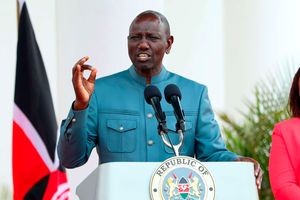
President Ruto says the reorganisation is timely since the “broad-based government is implementing the Fourth Medium Term Plan (MTP IV) of Kenya’s economic blueprint, Vision 2023, as part of the revitalized plan espoused as the Bottom-Up Economic Transformation Agenda (BETA).”
“It has become necessary to revise the Executive Order so as to embed operational enhancements and functional realignments in government,” President Ruto said.
The changes, he noted, seek to fortify the State’s coordination of interventions aimed at promoting constitutionalism and safeguarding human rights through the establishment of a State Department for Justice, Human Rights, and Constitutional Affairs.
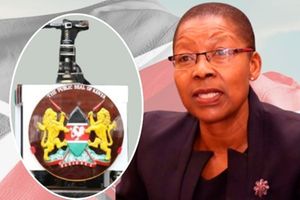
This will be domiciled in the office of the Attorney General, Dorcas Oduor.
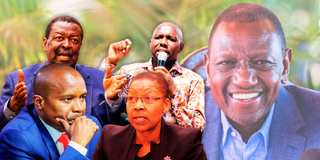
Prime Cabinet Secretary Musalia Mudavadi, one of the major winners in the shake-up, has, beyond his coordination role, been handed expanded oversight in foreign affairs and investment portfolios, effectively making him Kenya’s chief diplomat and economic envoy.
His office is now the nerve centre for international partnerships and investment promotion, signalling a deliberate push to grant him both visibility and leverage on the global stage.
The Prime Cabinet Secretary recently threw a warning shot, cautioning Mt Kenya leaders that abandoning Dr Ruto could cost the region the Deputy President’s post, amid a serious onslaught in the region by former DP Rigathi Gachagua.
“This was not a threat or a premonition of anything that is coming. It was a reminder for the region to value and safeguard its current position in national leadership,” Mr Mudavadi told Nation.
He said, “Leadership opportunities should not be taken for granted, and active participation in governance ensures continued representation. So, that was simply a statement of fact because you have a Deputy President, and there are other Kenyans who can equally serve in that position. So I was just trying to tell them to attach value to what they have because that opportunity could easily go elsewhere.”
Deputy President's uphill battle
“Even me, as PCS, I must have a sense of duty, commitment, and patriotism because if I don’t, another Kenyan can do the job because it’s not personal to me. Therefore, it is a privilege that you are being given to serve, and we should do it with zeal, integrity, and dignity,” added Mr Mudavadi.
This veiled message appeared aimed at reinforcing Deputy President Prof Kithure Kindiki’s position as the community’s bridge to the presidency.
But it also underscores the fragility of his tenure—his political survival is directly tied to Ruto’s re-election and Mt Kenya’s continued alignment with Kenya Kwanza.
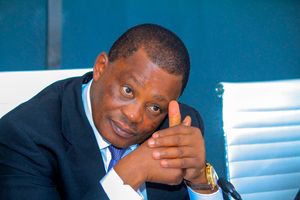
In the new Executive Order, Prof Kindiki retains key responsibilities in intergovernmental coordination and coffee sector reforms—an apparent nod to his Mt Kenya base.
The DP has, in recent weeks, intensified his economic empowerment programs across the country, anchored heavily in his Mt Kenya backyard—a strategic push analysts see as an effort to fortify his political base to retain his position in the 2027 election.
Thrust into the second-most powerful seat in government following the impeachment of his predecessor, Rigathi Gachagua, Prof Kindiki is now grappling with a high-stakes battle to reinforce his political standing amid unease in the Mt Kenya region.
Analysts believe that his fate is inextricably tied to the volatile politics of Mt Kenya—a region that has become a battlefield of loyalty, betrayal, and ambition.
Prof Kindiki has the unenviable task of consolidating support in the Mt Kenya region to retain his post in the coming election, while also finding footing in his national standing.
For the better part of this week, the DP stormed Wiper leader Kalonzo Musyoka’s Ukambani backyard in a charm offensive fundraiser, in a move to establish a footing in the perceived opposition zone.
Prof Kindiki presided over multiple fundraisers in Kitui and Machakos counties, coming just days ahead of President William Ruto’s anticipated tour of the region.
Over the past month, the DP has traversed the country, holding high-profile fundraisers alongside other key Kenya Kwanza leaders.
Once seen as a reserved legal mind, Prof Kindiki is now stepping out with uncharacteristic boldness—taking off the gloves in a bid to defend his political turf and secure his place as President Ruto’s running mate in the next election, and possibly as a future presidential candidate.
While Jubilee Secretary General Jeremiah Kioni insisted that Kenyans are determined to kick out the entire Kenya Kwanza administration in 2027, he contends that “what Prof Kindiki is doing is going to make it difficult for Ruto to dump him as his deputy in 2027.”
“Kindiki is putting his best foot forward, though acceptance is something else. At least he has tried to access areas that were difficult for Ruto before, but when the opposition begins to crisscross the country, it will be even worse for them,” added Mr Kioni.
Observers say that Prof Kindiki’s battle is not just about political loyalty, but about visibility and influence.
“If he fails to consolidate Mt Kenya behind Ruto, his future in the country’s top leadership will hang in the balance. If he succeeds, he will have redefined Mt Kenya’s politics and possibly emerged as the undisputed kingpin of the region.”
Key ministries retain, gain power
The National Treasury, headed by CS John Mbadi, which is central to resource control and development funding, remains a crucial hub of power.
Its grip on budgeting, project financing, and fiscal policy makes it the go-to ministry for influence seekers.
Similarly, the Ministry of Interior, under Kipchumba Murkomen, retains sweeping authority over internal security and provincial administration, making it a vital tool in the government's political enforcement strategy.
The newly restructured Ministry of Investments, Trade and Industry, under Lee Kinyanjui, also emerges as a powerful player—tasked with driving Dr Ruto’s bottom-up economic transformation.
“The elevation of the Directorate of Public Investments to a fully-fledged State Department for Public Investments and Assets Management is intended to optimise the utilisation of public assets and enhance the operational and financial performance of State Corporations, in line with the Administration's commitment to reform and revitalize the public sector.”
It is expected to oversee major public-private projects and industrial hubs, which are key to the 2027 political narrative.
The reorganisation has far-reaching implications. By reassigning roles, relocating budget lines, and centralizing control around trusted operatives, President Ruto has redrawn the internal power map of his administration.
It’s a move designed not only to enhance efficiency but also to tighten his grip on the state ahead of a high-stakes political season.
Analysts see the Executive Order as both a governance tool and a political playbook—reshaping influence, rebalancing loyalties, and positioning key figures for future roles.
In this new dispensation, where power lies is not merely about who sits in Cabinet—but who controls the flow of money, diplomacy, and political messaging.
President Ruto noted that the functional realignments also include the establishment of new State Departments focused on fully harnessing the potential in new frontiers of growth and repositioning them as catalysts to spur development through science, applied research and innovation, and aviation; while also enhancing the Government's responsiveness to evolving challenges affecting the family as the basic unit of society, particularly through interventions targeting the improvement of the welfare of children.
The seven new State Departments established include: the State Department for National Government Coordination, the State Department for Science, Research and Innovation, the State Department for Public Investments and Assets Management, and the State Department for Special Programmes.
Others are the State Department for Aviation and Aerospace Development, the State Department for Children Services, and the State Department for Justice, Human Rights and Constitutional Affairs.
Strategic state departments
Another key highlight in the Executive Order was the transfer of the functions of the State Department for Performance and Delivery Management to the Executive Office of the President.
“The changes further seek to reorient the coordination framework for National Government performance management through a revitalized framework for National Government Coordination as well as a strengthened framework for disaster and emergency response through a dedicated State Department for Special Programmes,” added President Ruto.
The key reforms, he noted, are intended to enable Ministries, State Departments, State Agencies, and the Foreign Service to optimise institutional performance and elevate standards of public service delivery, in keeping with the Administration’s revitalised agenda.
The reorganisation affects a wide range of Ministries, with updated structures and State Departments now falling under specific portfolios.
The Ministry of Public Service, Human Capital Development and Special Programmes under Geoffrey Ruku will now oversee the State Department for Public Service and Human Capital Development and the State Department for Special Programmes.
The Davis Chirchir-led Ministry of Roads and Transport, on the other hand, will supervise the State Departments for Roads, Transport, as well as Aviation and Aerospace Development.