Today’s by-elections have dealt a blow to efforts aimed at increasing women’s participation in politics. Of the candidates contesting in parliamentary by-elections (six constituencies and one senatorial), only two are women.
They are Lilian Akinyi Aketch of the National Alliance Party, vying for the Ugunja parliamentary seat, and Sarah Wahito Gakahu of the Chama Cha Kenya Moja Movement, contesting the Magarini MP seat.
In the 2022 General Election, women accounted for about 11 per cent of the total number of candidates gazetted by the Independent Electoral and Boundaries Commission. The percentage in the by-elections, therefore, is a steep decline.
“My entry into the fray is not about proving that I am a woman of guts, but a strong desire to walk through the path of genuine commitment to good governance.”
She adds: “I’m not contesting as a woman... I am in it as a leader who aspires to change how things are done. We have for too long applied the same formula of fielding men and getting the same results. Let us try women’s leadership.”
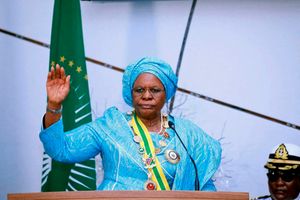
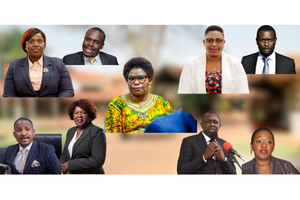
Of the 181 candidates contesting in 24 by-elections, only two are women. Lilian Akinyi Aketch of the National Alliance Party (inset) is one of them.
Photo credit: Shutterstock
Regardless of the outcome, she said she will remain proud to have been in the race—and hopes it will encourage more women to run in the future.
Ms Gakahu says her decision to contest in Magarini was mostly inspired by the desire to serve. She says women offer better leadership and deserve to be elected.
“Many saw my decision as daredevil in a field where raw violence rules, tokenism drives followers and propaganda shapes perception. Who said women’s leadership cannot correct that distorted application of politics and retune it to what it is supposed to be? We can only change things by actively participating inside the ring, not outside. It will take more women flooding the political space for them to be noticed and to demand equal treatment as candidates.”
Hostile political environment
According to Naivasha MP Jayne Kihara, the low number of women candidates reflects a political environment that remains hostile to women’s leadership. “We are witnessing too much violence in politics. Candidates and their supporters are being subjected to violence meted out by both government actors and hired goons. Women candidates will not feel comfortable in such an environment.”
The low participation continues to undermine Kenya’s progress towards fulfilling Article 27(8) and Article 81(b) of the 2010 Constitution, which stipulate that no more than two-thirds of the members of any elective or appointive body should be of the same gender. In simple terms, at least 33.3 per cent of seats should be held by either gender. Given women’s historical marginalisation, this means more women must enter the race to increase the likelihood of securing at least a third of the positions.
Despite sustained efforts by UN Women and other women’s rights organisations to increase the number of women in leadership, progress remains slow. The Kenya Women Parliamentary Association has been working through training, mentorship and constituency outreach to raise the numbers. Parliament continues to fail to pass the required legislation to meet the two-thirds gender rule.
Even after courts repeatedly cited Parliament for contempt for failing to enact the necessary laws—missing the 2016, 2021 and 2025 deadlines—a solution is still not in sight. “This leaves us with no option but to get ourselves there through contesting. Let us flood these contests. Let us prove to them that they can apply all the nonsense they can and we will fight it out with common sense. Let us pressure the government to take political security seriously and guarantee that no woman aspirant will be subjected to political violence,” said Suba North MP Millie Odhiambo.
Dap-K deputy party leader George Natembeya told the Nation today that the government “has completely failed to midwife gender equity in our politics owing to its failure to enforce security laws”.
“When the government is the one practising political intolerance—where if you do not agree with it you are denied security, you are impeached if you are a governor, you are politically, socially and economically persecuted, and in extreme cases abducted and murdered—women are bound to keep off.”
People’s Liberation Party leader Martha Karua said: “We are at a point where we must sit down and demand that politics be made sane.”
She noted that it takes considerable courage for a woman to enter a race that has degenerated into a contest driven by money, propaganda, violence, lies and deceit—where personal ambition supersedes the desire to serve. “Most women candidates are progressive and have a straightforward desire to peacefully liberate this country, but the way these bullies in government are treating dissent is frightening,” she said.
However, Ms Karua added: “Every election will continue seeing women of guts come forward to bid for those positions, and no matter what, somehow but surely, the gender equity card must arrive sooner rather than later.”
Former Meru Governor Kawira Mwangaza argued that women now have little choice but to declare a war for their rightful inclusion. “Sitting down and lamenting how other actors are not letting us in is defeatist. We should now declare that we must be there,” she said.
Ms Mwangaza called on women not to be discouraged by the treatment meted out to those who dare fight their way into leadership. “Take me as an example... After fighting hard to become Meru governor in a situation where I floored men of longstanding influence, I was impeached, but I refused to go down easily. Today, I have my own party and I am campaigning ahead of 2027.”
She said her Umoja na Maendeleo party will welcome women candidates alongside men. “We can only make an impact if we offer ourselves as competitors. Get into those gender-sensitive political parties and pitch your bids. We cannot achieve these aspirations by complaining outside the boxing ring. Let them find us in that ring.”
Similar comments were shared by Democracy for Citizens Party leader Rigathi Gachagua. He said major political formations must dismantle patriarchal structures and remove nomination barriers that disadvantage women. “I encourage women aspirants to pitch their bids through DCP. Already, I have strong women whom I’m mentoring, including Kirinyaga Woman Rep Njeri Maina, Kipipiri MP Wanjiku Muhia and former Laikipia Woman Rep Cate Waruguru. In this party, we have dozens of female hopefuls and I can assure you we will get somewhere with our women,” he said.
But Laikipia East MP Mwangi Kiunjuri argued that women show low interest in politics, hence the limited numbers. “President William Ruto has constantly put in kind words and deeds for women in politics. He has consistently opposed allocating prime seats to men while placing women on the periphery. The ruling United Democratic Alliance party has Cecily Mbarire as its chairperson, alongside the President. He is living proof that women’s aspirations are safest in his hands,” he said.
“What ails our women’s progress is their low interest in politics and their reliance on fragmented coordination to achieve their goals. We have seen organisations that claim to fight for women’s inclusion working in silos, diluting impact and creating overlap—ultimately confusing and sabotaging the drive.”