As President William Ruto crisscrossed his North Rift political backyard ahead of Tuesday’s Mashujaa Day celebrations in Eldoret, another contest unfolded along the region’s highways and streets as aspirants sought to associate themselves with the Head of State.
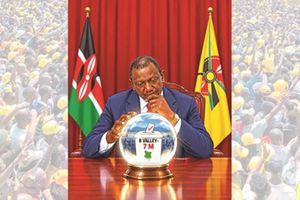
From towering billboards to posters, caps, flares and T-shirts bearing their photographs alongside those of President Ruto, politicians eyeing gubernatorial, senatorial and parliamentary seats turned political branding into a show of loyalty and a bid for visibility ahead of the 2027 General Election.
In Eldoret City, the displays have become prominent along major roads, in the Central Business District and at venues visited by the President.
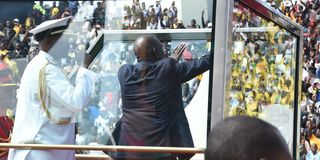
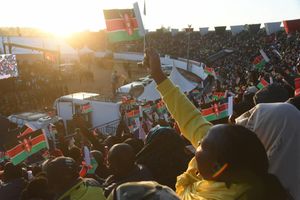
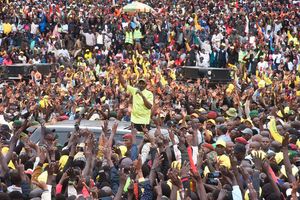
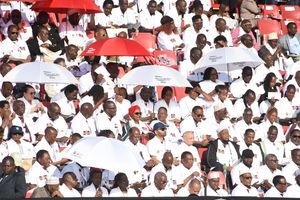
Mashujaa Day Celebrations at Kipchoge Keino Stadium, Eldoret
The message is unmistakable. In a region where the United Democratic Alliance (UDA) enjoys considerable support, being seen alongside the party leader could offer aspirants an advantage in the battle for political recognition and, ultimately, party nominations.
“What is happening is a matter of political supremacy and capturing President Ruto’s attention with a view that it will translate into votes,” said Joshua Too, a political analyst in Eldoret.
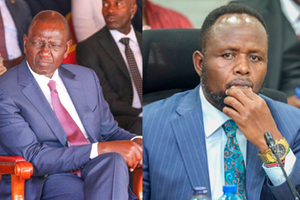
President William Ruto assents to the County Governments Additional Allocations Bill, 2026, at Eldoret State Lodge, Uasin Gishu County on October 19, 2026.
Photo credit: PCS
President Ruto’s influence within UDA has made proximity to him an important political asset, with aspirants hoping that an association with the Head of State will strengthen their standing among voters and party members.
The battle for visibility
Among those seeking to capitalise on the President’s presence is Principal Secretary in the State Department for Tourism, Ambassador Julius Bitok, who is making a third attempt to dislodge Uasin Gishu Governor Jonathan Bii Chelilim.
Governor Bii and other aspirants have also erected posters along the busy Eldoret-Uganda highway, using the President’s visit to project their political presence.
In neighbouring Nandi County, Governor Stephen Sang and Kapseret MP Oscar Sudi have displayed posters featuring themselves alongside President Ruto along the Eldoret-Kapsabet highway, turning sections of the city and its approach roads into an informal political advertising arena.
For the aspirants, the displays are more than greetings to the President. They are a way of communicating loyalty to the ruling party, building name recognition and signalling their place in the region’s political pecking order.
“The displaying of posters featuring President Ruto reflects the growing importance of political proximity to the Head of State in the region. The candidates hope that the posters could influence the electorate’s perception of their standing with the President and their political influence in the region,” said Michael Koech, another political analyst.
The strategy, however, raises questions about whether such displays are simply expressions of party loyalty or part of a wider contest for influence ahead of UDA’s nominations.
The scramble for presidential visibility is unfolding alongside emerging factional rivalries, particularly in Uasin Gishu, where competing political camps are positioning themselves ahead of the gubernatorial contest.
Uasin Gishu Senator Jackson Mandago.
Photo credit: File I Nation Media Group
One camp, led by Senator Jackson Mandago and reportedly backed by Soy MP David and Kesses MP Julius Rutto, is believed to be aligned with Ambassador Bitok. A rival faction led by Kapseret MP Oscar Sudi is said to be supporting Governor Bii’s re-election bid.
The competing displays of loyalty highlight the challenge facing UDA as aspirants seek to establish themselves as the President’s preferred political allies while pursuing their own electoral ambitions.
“What we are witnessing is not a mere display of posters but flexing of political muscles, adding to the growing contest in the region over who is close to the President,” said Peter Kosgei, a political analyst in Eldoret.
The contest is not confined to Uasin Gishu. In neighbouring West Pokot County, rival political groups have adopted distinct brands as they prepare for the gubernatorial race.
One faction, led by former Governor Professor John Lonyangapuo, has branded itself “5G” as he seeks to reclaim the seat. It faces competition from a camp associated with Pokot South MP David Pkosing, who has also declared interest in the governorship and whose supporters have adopted the “Message” brand.
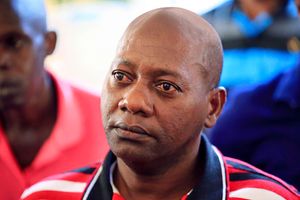
Former West Pokot Governor John Lonyangapuo.
Photo credit: Pool I Nation Media Group
Beyond posters and billboards, aspirants are extending their visibility through photographs and slogans printed on caps, flares and T-shirts, turning political identity into a form of public branding.
Richard Chetotum, a political analyst, said candidates believed the displays could give them an edge over competitors in a region where UDA enjoys strong support.
He said the imagery helped popularise aspirants by associating them closely with the President, while the branding also served as a mobilisation tool through which candidates hoped to convert visibility into votes.
The strategy also allows aspirants to build political networks and present themselves as influential players in the President’s re-election campaign, even as they compete against one another for elective seats.
“It is a campaign and flex of political masculinity on who is close to the President and attain political mileage,” said Mary Kosgei.
While the immediate contest revolves around elective positions and UDA nominations ahead of the 2027 General Election, the political manoeuvring also points to longer-term calculations over influence and succession.
Aspirants are seeking to establish their networks and strengthen their standing within the ruling party, with some also positioning themselves for the political realignments expected after the next election and ahead of the 2032 succession contest.
For now, however, the billboards and branded merchandise offer a visible measure of the competition unfolding within the President’s political backyard.
The posters may appear to celebrate President Ruto’s visit, but they also reveal a contest among his allies over who can claim the closest association with him and turn that visibility into political advantage when voters and party delegates make their choices.