Chiefs and their administrative superiors across Kenya have regained direct access to police support following the full operationalisation of the newly formed National Government Administration Police Unit (Ngapu).
The police outfit tasked with enhancing security at the grassroots is at the helm of Charles Mutuma, who was recently appointed as the first commandant.
A career officer in the Administration Police Service, Mutuma now holds the rank of Assistant Inspector General.
He is a two-time graduate of Kenyatta University, with Master’s degrees in security management and police studies, and leadership and security management. He is currently pursuing a PhD in security studies at the same institution.
According to the Interior Ministry, Mutuma brings “a wealth of experience and a high reputation for professionalism”- qualities that informed his elevation to lead the unit. He will report directly to the Deputy Inspector General (APS) and oversee deployment and operations aligned with national security priorities.
This policy shift reverses a 2018 decision that had stripped National Government Administration Officers (Ngaos) of command over police units, significantly weakening their capacity to enforce law and order. The change follows a directive by President William Ruto last August, which called for a restructuring of security support for chiefs and administrators across the country.
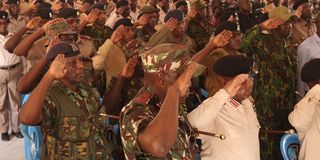
Chiefs from Baringo, Turkana, West Pokot, and Elgeyo-Marakwet counties during a security meeting in 2017.
Photo credit: Jared Nyataya | Nation Media Group
The President had cited the lack of police personnel to back up Ngaos as a major hindrance to law enforcement.
Since the transfer of 24,000 Administration Police (AP) officers to general duties in 2018, area chiefs, assistant chiefs, and their seniors have struggled to manage security within their jurisdictions.
Ngapu, which was officially unveiled in February 2025, will now bridge that gap. The unit will work directly under Ngaos, including county commissioners, deputy county commissioners, assistant county commissioners, chiefs, and assistant chiefs.
The unit’s rollout began with the deployment of 6,000 officers, drawn from the Administration Police Service (AP), to various parts of the country.
Locational reporting levels
The Ngapu structure will mirror the current AP hierarchy, with commanders at regional, county, sub-county, divisional, and locational levels reporting up to the unit’s headquarters in Nairobi.
Eventually, the force will expand to 19,000 officers following a two-phase recruitment of an additional 13,000 personnel, an initial plan released by the Ministry of Interior and National Administration showed.
The Rift Valley, which has the largest number of administrative divisions (249), will receive the highest allocation at 4,980 officers. Other regions will get: Eastern (4,060), Nyanza (2,720), Central (2,600), Western (1,800), North Eastern (1,540), Coast (1,440), and Nairobi (600).
Now fully operational, Ngapu officers will be responsible for a range of functions, including the suppression of outlawed gangs, enforcement of regulations, support in fighting sexual and gender-based violence (SGBV), conducting high-risk operations, and tackling the menace of illicit brews and narcotics.
The announcement of the unit was made during the launch of the Administration Police Strategic Plan 2025–2028 held in Diani, Kwale County in January.
The event was attended by Interior Cabinet Secretary Kipchumba Murkomen, Principal Secretary Raymond Omollo, Inspector General of Police Douglas Kanja, Deputy IG Gilbert Masengeli, Independent Policing Oversight Authority (Ipoa) Chairman Issack Hassan, and other top security officials.
“This is a milestone for Kenya’s security sector. We have a long history between the Administration Police and the NGAOs. Today, we launch Ngapu to fill gaps and support national government agencies in enforcing law and maintaining order,” CS Murkomen said then.
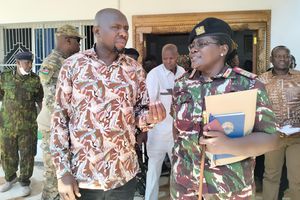
Interior Cabinet Secretary Kipchumba Murkomen addresses chiefs and assistant chiefs from West Pokot, Baringo and Elgeyo Marakwet counties, during a security meeting at St Maurus Academy in Chesongoch, Elgeyo Marakwet County on April 28, 2025.
Photo credit: Jared Nyataya | Nation Media Group
He cited a recent conversation with a chief who was unable to shut down an illicit brew den due to lack of police backing.
“This unit is designed to change that. It will empower administrators to confront such issues decisively,” he said, before adding that National Police Reservists (NPRs) be integrated into NGAPU operations to enhance community policing.
The return of police powers to chiefs has sparked debate, with some expressing concern about a possible return to the authoritarian practices of the past, particularly during the Moi era when provincial commissioners wielded unchecked power.
Ipoa Chairman Issack Hassan addressed these fears during the same event, assuring Kenyans that the new unit would operate under robust oversight mechanisms.
“I remember in the 2000s, provincial administrators had enormous unchecked authority because they had police under their command. That will not happen again. We have checks in place,” he said.
The 2018 restructuring under former President Uhuru Kenyatta had merged the AP and regular police services under the command of the Inspector-General. Chiefs’ camps were converted into police posts, and Ngaos lost operational authority over AP officers.
The vacuum led to growing concerns about grassroots security, prompting then-Interior CS Kithure Kindiki in 2022 to announce a plan to assign five armed police officers to each of the country’s 6,000 chiefs- amounting to roughly 30,000 officers.
However, budgetary limitations stalled the plan’s execution.
President Ruto’s August 2024 directive revived these plans through a new approach—one that consolidates command, restores Ngao-police synergy, and streamlines deployment under the umbrella of Ngapu.
The government now hopes the return of police support to chiefs will revive trust in public institutions and improve intelligence gathering at the grassroots.
PS Omollo noted that the collaboration between Ngaos and the AP will strengthen conflict resolution, particularly in areas facing inter-communal clashes and resource-based disputes.
On his part, Deputy IG Masengeli said the unit will bolster security “from the village up,” helping bridge the gap between communities and the state.