Premium
Sh14m operation moves 21 rhinos to new home
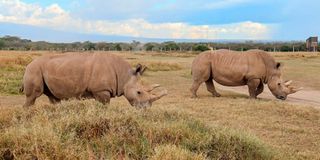
Rhinos at Ol Pejeta Conservancy in Nanyuki on November 1, 2024.

What you need to know:
- A total of 11 females and 10 males will be relocated from high density areas to boost genetic diversity.
- Ol Pejeta in Laikipia County is the home to the only two surviving northern white rhinos.
Sanctuaries for the critically endangered eastern black rhino in the country have risen to 18 with the establishment of Segera Conservancy in Laikipia County.
On Saturday, senior Kenya Wildlife Service (KWS) led by the Director General Prof Erustus Kanga accompanied Tourism and Wildlife Cabinet Secretary Rebecca Miano in witnessing the flagging off the translocation of the first three rhinos from Ol Pejeta Conservancy.
The meticulous and delicate three-week exercise is expected to cost about Sh14million according to wildlife conservation experts. It involves darting the animal with anaesthetics to immobilize it before it is loaded into a cage and ferried by road. In most cases, veterinarians and KWS rangers ride on choppers for easy identification of targeted animals.


A total of 11 females and 10 males will be relocated from high density areas to boost genetic diversity, an initiative that has been approved by Black Rhino Recovery Plan (2022-2026). This exercise is geared towards achieving annual population growth of the rhinos to five percent annually.
Ol Pejeta in Laikipia County is the largest black rhino sanctuary in East Africa and home to the only two surviving northern white rhinos.
Rhino population in Kenya
Over the years, the population of eastern black rhinos has been on a steady rise; from 384 in 1989 to 1,059 by end of last year. While the rising number has been hailed as a milestone in conservation efforts, it presents some challenges that threaten survival of the animals within established sanctuaries.
“Translocation relieves overcrowding in established sanctuaries where territorial conflicts cause 30 percent of rhino mortality. Secondly, it creates a new breeding nucleus that will significantly contribute to growing the rhino population to the goal of 2,000 black rhinos by 2037,” explained Prof Kanga during a media briefing.
Ms Miano revealed that translocation to the 50,000-acre Laikipia sanctuary managed by the Zeitz Foundation would take about 18 days with three rhinos captured in each translocation and a break in between to ensure the rhinos settle before the next capture operation. In coming days, 18 more rhinos are expected to be ferried from Ol Pejeta and Lewa Conservancy while three would be translocated from Nakuru to the newly established sanctuary.
“The translocation is a bold affirmation of Kenya’s enduring commitment to securing a future of one of the world’s most iconic yet critically endangered species. Kenya is home to 80 percent of the black rhino population and the statistics is a clear proof of decades of joint efforts by government, community and conservation partners,” said the CS.
The rhino population in Kenya is estimated at 2,102, with 1,059 black rhinos, 1,041 southern white rhinos and the two northern white rhinos. Laikipia County now has six eastern black rhino sanctuaries including Ol Pejeta, Ol Jogi, Borana, Loisaba, Segera and Il Ngwesi, a community managed conservancy.