Walk the talk on rebuilding trust, Mudavadi tells Nairobi summit
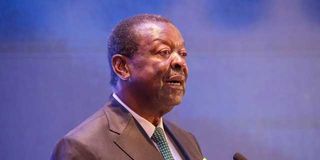
Prime Cabinet Secretary and Cabinet Secretary for Foreign and Diaspora Affairs, Wycliffe Musalia Mudavadi, delivers his remarks during the second day of the Trust Summit 2026 at Glee Hotel in Nairobi on Thursday, October 22, 2026.


Kenya is betting on the Trust Summit in Nairobi to turn growing concerns about declining public trust into concrete commitments, with Prime Cabinet Secretary Musalia Mudavadi warning that the meeting must deliver more than speeches and promises.
On the second day of the summit, Mr Mudavadi challenged delegates drawn from governments, civil society, business, academia, the media and international institutions to agree on a clear plan of action, identify those responsible for implementing it and establish a credible mechanism to track delivery.


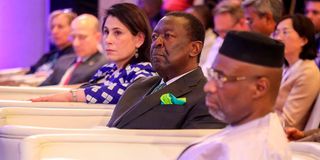
Prime Cabinet Secretary and Cabinet Secretary for Foreign and Diaspora Affairs, Wycliffe Musalia Mudavadi (Centre); former Prime Minister of Mali, Moussa Mara (right); and Deputy Chairperson of the African Union Commission (AUC), Ambassador Selma Malika Haddadi (left), during the second day of the Trust Summit 2026 at Glee Hotel in Nairobi on Thursday, October 22, 2026.
He cautioned that the growing number of meetings and policy discussions on trust risk achieving little if they do not translate into changes that people can see and experience.
“We need a call to action that says what must change, a framework for action that sets out what will be done, a coalition of actors that identifies who will carry the work and a credible delivery mechanism to ensure promises are followed through,” he said.
Mr Mudavadi asked whether governments and institutions had gambled with the confidence of the people by assuming that trust would endure regardless of whether promises were fulfilled.
“We cannot demand that people believe us, we must give them reasons to do so. We cannot legislate trust, we can practise the honesty, fairness and accountability from which it grows,” he said.
He also cautioned against treating public trust as a substitute for accountability.
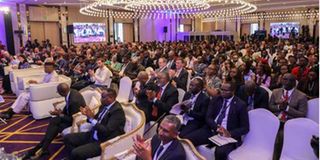
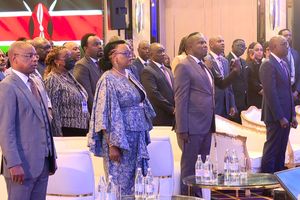
Delegates follow the proceedings during the second day of the Trust Summit 2026 at Glee Hotel in Nairobi.
He cited an Afrobarometer working paper based on surveys in 37 African countries, which found that greater trust in presidents and ruling parties was associated with weaker public support for accountability mechanisms, including parliamentary oversight, media scrutiny and citizens’ ability to hold governments to account.
The summit’s discussions also placed the crisis of trust within the changing global order, where geopolitical tensions, conflict, technological advances and widening inequalities are testing relationships between countries and their citizens.
Foreign Affairs Principal Secretary Korir Sing’Oei said the international system established after the Second World War was facing mounting pressures, partly because of weaknesses in its original design and the exclusion of many countries in the Global South during its formation.
Dr Sing’Oei warned that emerging challenges, including climate change, pandemics and artificial intelligence, were placing additional pressure on a system whose ability to safeguard collective security and prosperity could no longer be taken for granted.
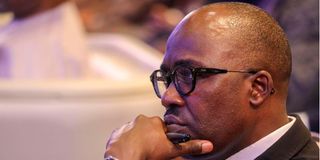
Principal Secretary for Foreign Affairs, Dr. Abraham Korir Sing’Oei, during the second day of the Trust Summit 2026 at Glee Hotel in Nairobi on Thursday, October 22, 2026. The three-day summit seeks to address the global crisis of confidence in public institutions, leadership, markets, and international cooperation.
Dr Monica Juma, the head of the United Nations Office on Drugs and Crime, emphasised the role of trust in sustaining justice, the rule of law and international cooperation.
She warned that geopolitical tensions were eroding multilateralism while rapid advances in technology and artificial intelligence were changing how information is produced, shared and verified.
“And when trust is lost, its effects are profound. Institutions lose legitimacy, markets lose investments, divisions widen,” she said.
The summit also focused on the need for meaningful public participation as a way of earning citizens’ trust in government.
Senate Speaker Amason Kingi said public trust in Parliament depended largely on how it discharged its legislative, oversight and representation mandates.
“The moment Parliament passes laws that do not inform or correspond to the challenges of the people, that is the beginning of losing trust. The public must be at the centre of our legislative journey, our oversight journey and our representation mandate,” he said.
Other speakers during a panel discussion on public participation, freedom of expression and citizen engagement as instruments for building trust, called on Parliament and government agencies to explain why public proposals were rejected, saying this would help citizens understand how their views were considered and strengthen trust in public institutions.
Follow our WhatsApp channel for breaking news updates and more stories like this.