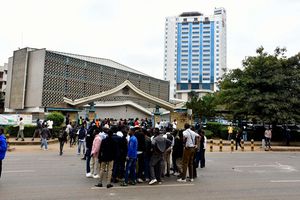
The Technical University of Mombasa has been ordered to compensate 11 students whom it denied the opportunity to graduate by introducing a new requirement despite their having completed studies.
Each of the 11 students who studied for a diploma in Supply Chain Management is to receive Sh200,000, bringing the total compensation to Sh2.2 million. The amount could rise further should more than 40 other students affected by the university’s decision to bar them from graduating on the same grounds come forward to file similar claims.
The High Court in Mombasa found that the university violated the diploma students’ constitutional rights when they were inexplicably excluded from the graduation list, even after receiving provisional transcripts and completing their industrial attachment.
“The treatment they were subjected to amounts to a violation of their right to dignity. They were not treated with respect, nor was their worth and value as human beings with hopes and expectations appreciated,” the judge said in a ruling dated March 23.
According to the court, the perfunctory dismissal of the students’ concerns and the oppressive suggestion that they transfer units to a different course, pay Sh72,000 within 24 hours, and wait another year to graduate, spoke volumes about the institution.
The court noted that evidence presented showed the university failed to provide written reasons for changes to the length of the course, the introduction of a trimester system, and the requirement that the students sit examinations by the Kenya National Examinations Council (Knec) before graduating.
Having established that the students’ constitutional rights were violated, the court declared that the petitioners were entitled to graduate, having completed the university’s examinations and the required industrial attachment.
“I order that the university issue the students with diplomas in Supply Chain Management forthwith. I grant the petitioners general damages of Sh200,000 each. The petitioners have suffered greatly at the hands of the university. In the circumstances, I award them the costs of the petition,” the court ruled.
However, the court temporarily stayed execution of the judgment for 14 days and granted the university leave to appeal the decision, if it so wishes.
Denied opportunity to graduate
In their case, the students argued that they were unfairly and unlawfully denied the opportunity to graduate despite fulfilling all academic requirements. They stated that they were admitted on August 23, 2020, and informed through their admission letters that the course would take two years.
They contended that, as they approached completion of their studies, the university introduced a requirement that they sit Knec examinations, a condition not contained in their admission letters. Testifying on their behalf, Joel Collins Aluku maintained that they had relied on the university’s internal examination system and were later informed in a meeting that the KNEC examinations were optional.
“The admission letter did not specify such a requirement regarding Knec examinations. We believed the university’s internal system was sufficient,” he said.
Mr Aluku further testified that after sitting their examinations in August 2023, the university issued them with recommendation letters for industrial attachment, confirming that they had passed. He added that the issuance of provisional transcripts affirmed that they had completed their studies and were awaiting graduation. The petitioners expressed shock upon discovering their names were missing from the graduation list.
“To our utter shock, our names were missing. We were later informed this was because we had not taken KNEC examinations, despite earlier assurances that they were optional,” he said.
They argued that the subsequent demand, communicated via WhatsApp, requiring them to pay Sh72,000 within 24 hours and transfer credits to the Diploma in Procurement course in order to graduate was malicious and intended to frustrate their academic progress.
The university opposed the petition, arguing that the students had failed to meet the mandatory requirements for graduation and had approached the court dishonestly.
Through a replying affidavit sworn by the university’s Dean of the School of Business Administration, Dr Samson Kitheka, the institution accused the petitioners of dishonesty and non-disclosure of material facts, adding that they had gone to court with unclean hands and were therefore undeserving of the remedies sought.
Dr Kitheka maintained that the petitioners did not qualify for graduation, stating that the institution could not graduate them without fulfilling all academic requirements.
He disputed their claim regarding the duration of study, explaining that due to the Covid-19 pandemic, the students commenced their programme in January 2021 rather than 2020. He asserted that the course requirements were explained at admission and further clarified during a consultative meeting held around July 30, 2021. The university insisted that sitting KNEC examinations was a mandatory component of the diploma programme.
“The students were aware all along that they would sit KNEC examinations,” he said, and criticised them for attempting to mislead the court into believing otherwise.
He further alleged that some petitioners failed their examinations, while others were involved in malpractice, claiming that one student had his results cancelled by Knec.
He argued that the institution acted in the students’ best interests by offering them an alternative pathway, noting that those who had not met the Knec requirement were advised to transfer to a Diploma in Procurement Management, which is internally examined. According to him, the WhatsApp communication regarding the transfer was a reminder of previous deliberations.
While acknowledging that the admission letters did not expressly mention Knec, Dr Kitheka maintained that not all course details are contained in such letters and that students were informed during orientation.
He emphasised that a student could not graduate unless they met the course requirements and urged the court to dismiss the petition. In its findings, the High Court held that the university failed in its duty to clearly communicate the requirements of the Diploma in Supply Chain Management programme to the students.
The court noted that the admission letter did not state that the course was Knec examinable and that the petitioners were made to believe that their course would last two years.
It found that the university’s communication was deficient from the outset, observing that it failed to clearly communicate what the course involved in the admission letter, or at least at the start of the course.
Critically, the court faulted the manner in which new requirements were introduced, stating that the meeting held on July 30, 2021 bespeaks requirements made on the fly, haphazard communication, and little regard for the welfare of the students involved.
The court emphasised that the petitioners’ obligations were altered without notice, without proper consultation, and in a manner most detrimental to them.
It held that they were denied the opportunity to graduate and receive the relevant certificate despite completing their studies, passing internal examinations, and undertaking industrial attachment.
The court further found that the university’s conduct created a legitimate expectation that the students would graduate. It ruled that the institution led the petitioners to believe that the diploma was subject to internal examinations and that, reasonably, given the conduct of the respondent, the students expected to graduate.
Consequently, the decision at the eleventh hour to prevent the students from graduating breached their legitimate expectations. On the issue of dispute resolution, the court observed that the students had made genuine efforts to seek redress but were frustrated by the institution.