It is said that the dollar and football are the world’s most spoken languages. In recent years, the African Cup of Nations (Afcon) has flexed its fluency in both languages.
The quality of football – greatly propelled by the increasing number of the continent’s expatriate footballers, naturalisation of “lost” sons of the soil, and rising reputation of the African coach – has been improving in each subsequent edition of the tournament. The prize money, too, has been increasing.
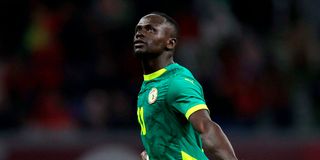
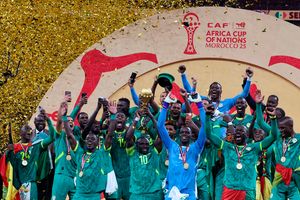
Senegal, the winners of the just-concluded Afcon 2025, earned US$10 million (Sh1.29 billion) in prize money. It is the most that a team has ever been awarded for winning Afcon.
The total prize money for Afcon 2025 rose to US$35.5 million (Sh4.58 billion) after the Confederation of African Football (CAF) increased the winners’ kitty by US$ 3 million (Sh387 million), the highest such rise ever between two Afcon tournaments.
The prize money for other finishers remained unchanged from Afcon 2023. Afcon 2025 hosts Morocco got US$4.5 million (Sh581 million). Nigeria and Egypt, the two semi-finalists, shared US$5 million (Sh645 million). The four quarter-finalists split US$5.2 million (Sh671 million) as each took home US$1.3 million (Sh168 million).
Sudan and Tanzania, who were among the eight teams eliminated in round of 16, received US$800,000 (Sh103.2 million) each. For finishing third in their groups and failing to make the last 16, Angola and Comoros were consoled with US$700,000 (Sh90.3 million).
Uganda, one of six teams to finish bottom of their group, received US$500,000 (Sh64.5 million).
The sum earned by Senegal is as much as the total prize money for Afcon 2010, 2012, 2013, and 2015. During this period of stagnation of the Afcon total prize money, winners earned US$1.5 million. Runners-up made US$1 million. Reaching the last four brought US$750,000. Quarter-finalists received $600,000. Group stage exits attracted $500,000 and $400,000 for ranking third and fourth respectively in a group.
Afcon 2017 came with a 64 per cent increase in the total prize money, with winners Cameroon got US$4 million. Runners-up, Egypt, were also better off than the previous champions with an award of US$2 million.
The two semi-finalists – Burkina Faso and Ghana – made US$500,000. Quarter-finalists shared US$3.2 million. Those eliminated in the group stages, according to a November 2016 BBC report, got US$575,000 and US$475,000 for finishing third and fourth in their pools respectively.
But the CAF 2021-2022 report suggested otherwise. The bottom two teams in the group stages at Afcon 2017 earned US$500,000 and US$400,000 respectively, same as the period from 2010-2015. That prize money for the lowest finishers, as subsequent reports by CAF confirm, remained frozen until Afcon 2023, when it was increased to US$700,000 and US$500,000 respectively.
The expansion of Afcon to 24 teams in 2019 resulted in an increase of prize money for teams progressing beyond the group stages. Since then, teams have received US$800,000 for reaching the Round of 16 but other finishers had their kitty increase at Afcon 2021 and Afcon 2023.
Quarter-finalists made US$1 million at Afcon 2019. This increased to US$1.175 million at Afcon 2021, before rising to US$1.3 million at Afcon 2023. It remained the same at Afcon 2025.
Similarly, before freezing of the prize money after Afcon 2023, the kitty for semi-finalists grew from US$2 million at Afcon 2019 to US$2.2 million at Afcon 2021. It rose to the current US$2.5 million at Afcon 2023.
Meanwhile, the winners’ purse has seen progressive significant increments that at Afcon 2025, Senegal earned more (US$10 million) than the next three teams (Morocco, Nigeria, and Egypt) combined (US$9.5 million).
Afcon 2019 winners, Algeria, made US$4.5 million, an increment of US$500,000 from Cameroon’s award two years earlier.
Senegal received US$5 million when they won Afcon 2021 before the kitty was increased by US$2 million at Afcon 2023 when hosts Cote d’Ivoire won the tournament. From US$10 million 11 years ago, the total prize money for an Afcon tournament is now on course to cross the US$40 million (Sh5.16 billion) mark when Kenya, Tanzania, and Uganda co-host Afcon 2027. That contrast shows that for all its lucrativeness and popularity, the financial reward for winning the competition barely covered past winners in glamour, matching the tournament’s perceived money-spinning reputation.
Nothing exposes that contrast, between reality and expectations, than a startling January 2024 revelation by Cameroonian journalist Ladonette Ondesa. If her report, shared as a YouTube clip on a channel known as Onisport, is to be believed, CAF awarded Afcon winners US$3,000 for the first 37 years of the tournament, 1957 and 1994, before increasing it significantly to US$1 million at Afcon 1996, which South Africa hosted after Kenya withdrew. Winners earned that figure until it was increased to US$1.5 million at Afcon 2010.
After that, Ondesa’s documentation of the progression of Afcon prize money can be corroborated by the records CAF published.
Notably, efforts to find a complete prize money breakdown for Afcon tournaments before 2010 did not bear fruit.
Still, the progression of Afcon prize money speaks volumes of the competition’s commercialisation, an effort which started cautiously in the 1980s as Peter Alegi chronicles in African Soccerscapes: How a continent changed the world’s game.
CAF allowed private sponsors and commercial advertisements for the first time in 1984, but the real game changer came in 1987 when the Cameroonian Issa Hayatou became the president of CAF following the death of Ethiopian Yidnecatchew Tessema.
Hayatou’s presidency, Alegi writes, “adopted a far more sympathetic approach to commercialism”. CAF entered into commercial deals with all manner of companies. Apparel manufacturers and beverage-making companies came on board. Alcohol and tobacco companies, previously shunned by Tessema, joined in the fun as they hope to turn African football fans to consumers of cigarettes, beer, and spirits. Deals with television companies also followed.
Afcon 2025, in terms of prize money and commercial deals, proved how lucrative the competition has become. CAF had deals with 24 companies, up from 15 at Afcon 2023.
Afcon 2027 taking place in East Africa will test the region’s commerce in regards to how many local companies will dangle money at CAF and by how much total prize money will be increased by.