Joginder restores normal order as Manduli, Onyango excite local fans
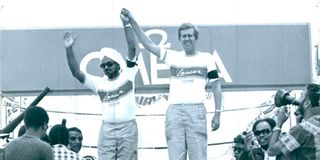
The 1976 Safari Rally Winner, Joginder Singh and David Doig the finishing ramp at Kenyatta Conference Centre.

What you need to know:
- The governments of Uganda and Tanzania extended their diplomatic tiff with Kenya onto sports. This forced organisers in Nairobi to exclude Uganda and Tanzania from that year’s race and subsequent editions.
There was renewed optimism after Shekhar Mehta's victory in the 1973 East African Safari but this was followed by political uncertainty in the region which would eventually break the East Africa Community, made up of Kenya, Uganda and Tanzania, and wreck the image of the Safari.
The governments of Uganda and Tanzania extended their diplomatic tiff with Kenya onto sports. This forced organisers in Nairobi to exclude Uganda and Tanzania from that year’s race and subsequent editions.
Kenyans also vowed to continue from where Mehta had left and treated the victory of Hannu Mikkola, the first overseas winner of the Safari in 1972, as a fluke.

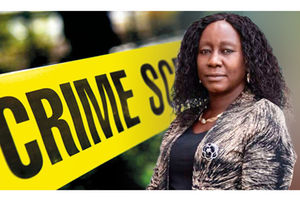
Two women, Mary Ondieki aka Orie Rogo Manduli and Pamela Onyango created such a buzz that would have rivaled any viral social media posts today when they registered for the 1974 Safari Rally, in an era where Kenyan women didn't own cars, leave alone hold driving licences.
The ladies dared men in a well choreographed pre-event media blitz which kept everybody talking.
Competing in the Safari was a preserve of macho men, and until then, only three Africans had ever conquered the Safari -- Sosper Munyegera, Eliud Thuku and Peter Shiyukah.
The economy was on an upward trajectory, impressive skyscraper the Kenyatta International Conference Centre had opened its doors a year earlier, and once again, everybody was looking forward to visiting the facility during the flag off ceremony of the Safari Rally.
A record 13 African drivers entered. Joginder Singh beat European teams Peugeot/Porsche, Ford and Datsun to record his second victory in a Colt Lancer which was later displayed at the prestigious Geneva Motor Show.
The small car lacked the kick of the second placed Porsche Carrera of Swede Bjorn Waldergard and Hans Thorselius but was hardy and firm on rugged conditions.
Italian superstar Sandro Munari co-driven by Lofty Drews of Kenya in a Lancia Fulvia finished third as Joginder's team mate Harry Kalstrom of Sweden settled for fourth place.
The Europeans brought in a high level of a professional approach in the rally. They hired light aircrafts and helicopters and stationed support cars at strategic places to tow out rally cars bogged down in mud.
It was a movie in motion which mesmerised amused local villagers who followed the action on radio.
There was a huge celebration at the finish by locals as Kenyan had stopped the top drivers from established teams.
Joginder and David Doig also hogged the limelight across Japan where they were given a heroes' reception after winning. Joginder had cementing his reputation as the "Flying Sikh".