When the Competency-Based Curriculum (CBC) was introduced, teachers were asked to shift from traditional rote learning towards nurturing critical thinking, problem-solving, and creativity.
However, in crowded classrooms, with limited resources and piles of assignments waiting to be marked, this promise often felt out of reach.
Now, many teachers are quietly finding an unlikely ally: artificial intelligence.
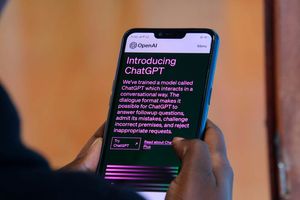
From lesson planning to crafting marking schemes, AI tools like ChatGPT are slipping into Kenyan classrooms—not as replacements for teachers, but as assistants helping to lighten the load.
Caroline Nduta has taught across grades 4 to 7 with a focus on mathematics, English, home science, CRE, and physical education, and like many CBC teachers, she spends hours piecing together lesson plans and drafting marking schemes.
However, she agrees that changed the day she discovered Artificial Intelligence (AI).
“I have been a teacher for two years, and in my experience, using AI tools such as ChatGPT has greatly improved how we plan lessons, prepare marking schemes, and even broaden our own knowledge base as educators,” she says.
She says AI tools can generate lesson plans within minutes instead of hours, which makes them save preparation time.
Large language models and machine learning are just small parts of today’s AI landscape.
Photo credit: Pool
“ChatGPT allows teachers to adjust content to learners' abilities, ensuring inclusivity and differentiation. The tools suggest different teaching strategies. For example, group hack, inquiry method, role play, digital activities, which always make the lessons more engaging. By feeding CBC strands and sub-strands and their competences into ChatGPT, teachers receive structured lesson outlines that align with the curriculum requirements,” she says
CBC demands more individualised learning experiences. Teachers are expected to design activities that cater to different abilities while also documenting progress for every child. With upwards of 50 pupils in many classrooms, that burden is immense.
AI is no longer a novelty, but an essential resource for teachers in Kenya’s new competency-based curriculum, which is weighed on creativity and adaptability.
Caroline talks passionately about the role of AI in helping teachers to design their marking schemes with clear rubrics that reduce subjectivity in grading.
"Instead of creating marking guides from scratch, teachers can generate them instantly and adjust as needed. AI can also suggest model answers and constructive feedback that teachers can adapt when marking learners' work.”
For her, the benefits extend beyond grading as it also eases access global content. "Teachers are exposed to examples, case studies, and teaching ideas from across the world. AI acts as a personal tutor, helping teachers understand new topics or clarify areas of difficulty. Teachers learn fresh strategies for competency-based learning, digital literacy, and integration of the 21st-century skills, on communication, media literacy and life skills.” Ms Nduta says.
“ChatGPT has reduced workload. Teachers can focus more on guiding learners rather than spending long hours on administrative tasks. It has enhanced collaboration, because teachers can share AI-generated resources with colleagues, promoting teamwork and uniformity across schools. In fast-changing contexts like digital learning or emergencies, AI provides instant resources, ensuring learning continues smoothly. As a teacher, I would highly recommend everyone to use ChatGPT as a learning resource," she adds.
The government reports that the national pupil-to-teacher ratio in primary schools is 1:29, an improvement over previous years, but still above the international standard of 1:25. In some counties like Turkana, the ratio climbs as high as 1:77, highlighting the extra challenges faced by teachers in remote and underserved areas.
Loice Matiro, a Nairobi-based homeschool teacher, calls it a flexible teaching partner. “Basically, with AI, if you pay for a premium monthly package of about Sh3,000, you’re able to get lesson plans that you can use for a week, a month, or even a day, depending on what you want,” she says.
Designing and deploying AI for innovation and working towards an ‘AI-enabled economy.
Photo credit: Shutterstock
Her method involves just talking to AI, “Today for instance, I have science, and this week I am teaching the human body. So I highlight the topics, then tell AI: Can you kindly help me make a lesson plan that will be suitable for my class? My class has this number of learners. With GPT you’re able to formulate a lesson plan that will suit your class according to the number of learners you have," she explains
The real value, Ms Matiro says, is in those moments when a teacher is caught off guard. “Sometimes you might have a crash lesson that you had not planned for. So I tell AI, today I’m teaching the human eye in science. Can I get notes on it? AI can help you generate notes that you can use in class. These notes are good because you can compare them with the textbook. Sometimes the textbook does not have all the knowledge you need for your students. So with AI, you’re able to get extra knowledge to add to your students and make learning easy and understandable.”
Her list goes far beyond notes and plans. AI enables her to create schemes of work for the whole term, class timetables, report cards, even assessment tests. "It has also helped us in formulating cats and random assessment tests. I sometimes challenge my students to also use AI when revising. When they want extra information, instead of juggling here and there, they use AI. I kid you not, they are doing really good.”
Ms Matiro also points out that visuals and interactivity also come into play. “I’m teaching about forces and magnetic force, and it will come up with diagrams, maps, explanations, even extra assessment tests. It has really, really helped us a lot in whatever we do in our learning," she says.
Sharon Sanchoine, another CBC teacher, also talks on how AI blends into the problem-solving ethos of the curriculum.
“For sure, ChatGPT has been of great help to us teachers not only as a research tool but also as a planning assistant. CBC emphasises problem-solving and creativity, and we as teachers are expected to stay ahead.
"By asking ChatGPT questions, we can quickly understand new concepts, get clarification on content strands, and even discover creative teaching aids or learner activities depending on their different levels of learning. In turn, this helped boost my confidence in class. I wish AI was discovered earlier," she adds.