Ending banditry must deliver lasting peace
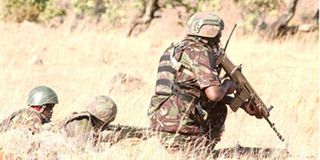
Security forces prepare for an operation to flush out bandits in Malaso, Samburu County.

For families living in parts of the North Rift and northern frontier counties, insecurity has shaped everyday life for years. A parent sending a child to school must worry about the journey ahead.
A pastoralist moving livestock in search of pasture faces the possibility of an attack. Decisions that should be ordinary have, for many families, become matters of safety and survival.
The consequences reach far beyond the immediate violence. Families have lost loved ones, livestock and homes. Children have had their education interrupted, businesses have struggled to operate, and communities that once depended on shared grazing lands and water sources have found themselves divided by suspicion and conflict.


Each attack threatens livelihoods built over generations, leaving families uncertain about what tomorrow may bring. Yet these are regions of extraordinary beauty and potential. From the Korkoron Hills to the Suguta Valley, the landscape offers opportunities for tourism, enterprise, agriculture and other livelihoods.
The people who call these places home have the same ambitions as Kenyans elsewhere: to educate their children, grow their businesses, care for their families and build a better future. For too long, insecurity has stood between them and those possibilities.
The persistence of banditry reveals a challenge that has confronted successive security interventions. Raids may be disrupted, stolen livestock recovered and illegal firearms seized, yet violence can return when the conditions sustaining it remain unresolved.
The challenge is to break this cycle and create conditions in which families can rebuild their lives without the constant threat of losing everything again. This understanding has shaped the government's response through Operation Maliza Uhalifu, launched in February 2023, alongside disarmament efforts including Operation Rudisha Bunduki. Together, these operations have recovered more than 2,600 illegal firearms and over 17,000 head of livestock.
Finance raids
For a pastoralist, livestock represents years of investment, a source of food and income, and the means to educate children and provide for a household. This means pursuing livestock theft beyond the scene of an attack. Those who finance raids, organise criminal activity or knowingly trade in stolen animals must face the law.
Investigations, credible evidence and successful prosecutions are essential to disrupting these networks, while the lawful return of recovered livestock helps families regain their livelihoods. Security operations must also create the conditions for communities to reconnect with the services and economic opportunities that insecurity has disrupted.
More than Sh4.2 billion has been spent on roads and infrastructure, with over 520 kilometres of roads built or improved. For communities that have lived with restricted movement, these investments carry practical significance. The value of these roads will ultimately be measured by the opportunities they open up and the livelihoods they help sustain.
At Ngarachi Comprehensive School in Laikipia, classrooms have been rehabilitated by Kenya Defence Forces (KDF) engineers and their partners. For children whose education has been affected by insecurity, a functioning classroom represents an opportunity to learn and progress alongside their peers.
That promise depends on teachers being available, children attending school consistently and parents feeling confident about their safety. The same applies to health facilities that need staff and medicines, water systems that require maintenance and public services that must reach communities previously cut off by insecurity. Each functioning service helps restore a measure of normalcy and gives families greater confidence to remain, invest and plan for the future.
Preventing conflict
This is why security agencies, the Kenya Defence Forces, other national government ministries and county governments are being brought together through a coordinated development approach.
The aim is to ensure that security gains are supported by functioning services, economic opportunities and investments that respond to the needs identified by communities themselves.
Their knowledge is essential to preventing conflict before it occurs. They understand the grazing routes, the water points shared between communities and the local disputes that can escalate into violence. Through Nyumba Kumi structures, National Government Administration Officers and security teams, residents must have dependable ways to report threats and receive timely responses without fear of reprisals. Women, elders and young people must also have a meaningful role in dialogue, conflict prevention and decisions about the resources on which their communities depend.
Rebuilding trust is equally important. Security operations must remain firm, intelligence-led, professional and lawful, protecting civilians and respecting their dignity.
Allegations of abuse must be investigated through appropriate accountability mechanisms, including the Independent Policing Oversight Authority and the National Police Service Commission's disciplinary processes. Communities are better able to cooperate with security agencies when they have confidence that their concerns will be heard and their rights respected.
Follow our WhatsApp channel for breaking news updates and more stories like this.
The writer is the former Chief of Staff for Kakamega County and currently Director of Partnerships at Lake Region Economic Block.