Evolving model of national transformation

President William Ruto takes breakfast at a kibanda in Mandera Town during a past campaign trip. At the heart of the Bottom-Up Economic Transformation Agenda is the Hustler Fund.

Kenya’s political trajectory since the 2007–2008 Kenyan post-election crisis reflects a gradual evolution from emergency political settlements toward a more structured model of inclusive governance and economic transformation.
For years, the national conversation around inclusion revolved around constitutional thresholds and sectarian political claims—most notably debates over the two-thirds gender rule or ethnic representation within government. While those debates were important, they often reduced inclusion to arithmetic rather than treating it as a structural principle of national development.
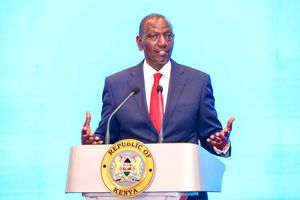
Under the leadership of William Ruto, Kenya’s fifth president, the concept of inclusion has increasingly been reframed as an economic doctrine rather than merely a constitutional obligation.


The administration’s Bottom-Up Economic Transformation Agenda (BETA) seeks to connect political inclusivity with economic participation, positioning governance as an instrument for dismantling the long-standing concentration of opportunity within a few geographic and social enclaves.
Understanding this shift requires situating Ruto within Kenya’s broader political lineage. Few contemporary leaders embody such a composite political apprenticeship. Over the course of three decades, Ruto has navigated and learnt within successive administrations shaped by influential figures such as Daniel arap Moi, Mwai Kibaki, Raila Odinga, and Uhuru Kenyatta.
From his early political formation during the Moi-era to his role in reformist coalition politics during the Kibaki period, his partnership with Raila during the Orange Democratic Movement wave, and later the Jubilee co-presidency alongside Uhuru, Ruto’s political journey reflects exposure to multiple governing philosophies.
This apprenticeship became particularly consequential following the 2007–2008 crisis, when the disputed election between Mwai Kibaki and Raila Odinga plunged the country into violence and national uncertainty.
The formation of the Grand Coalition Government of Kenya 2008—popularly referred to as Nusu Mkate—was an emergency arrangement designed to halt the collapse of the Kenyan state.
Though politically necessary, it remained a reactive settlement focused primarily on restoring stability rather than restructuring the deeper economic imbalances that had accumulated over decades.
Those imbalances were partly rooted in the developmental philosophy embedded in Sessional Paper No. 10 of 1965, which prioritised investment in what were termed “high-potential areas.” While the policy accelerated growth in productive regions, it inadvertently entrenched geographic inequality by sidelining vast parts of the country.
Northern and frontier counties such as Mandera County, Wajir County, Garissa County, Marsabit County, and Isiolo County remained largely outside the mainstream of national infrastructure and economic investment for decades.
The Constitution of Kenya 2010 attempted to address these disparities through devolution, redistributing political authority and resources to county governments. Yet even with constitutional reform, the geography of opportunity remained uneven.
The emergence of the Broad-Based Government under Ruto represents the next stage of Kenya’s political evolution—moving beyond reactive coalitions toward a governance framework designed to integrate diverse political constituencies into a unified national development agenda.
Unlike the 2008 coalition, which was essentially a power-sharing arrangement between rival political camps, the current arrangement seeks to institutionalise inclusivity as a mechanism for national stability.
The principle guiding this framework is straightforward: Kenya’s democracy cannot remain stable if large sections of the population feel economically peripheral or politically excluded.
The operational engine of this philosophy is the Bottom-Up Economic Transformation Agenda. Structured around five pillars—agriculture, micro and small enterprises, affordable housing, universal healthcare, and the digital economy—the BETA framework seeks to reverse the trickle-down development patterns that produced what many analysts have described as a “Kenya of two speeds.” By prioritising grassroots producers and entrepreneurs, the administration aims to expand economic participation beyond established elites.
Infrastructure development has become a central instrument of this national integration strategy. The construction of the Isiolo–Garissa–Wajir–Mandera Road Corridor, a 740-kilometre highway linking historically marginalised northern counties to the rest of the country, illustrates this effort. Beyond its logistical importance, the project carries profound symbolic weight: it represents a deliberate attempt to reverse decades of spatial exclusion by connecting frontier regions to national markets and institutions.
Economic inclusion is also closely tied to the empowerment of women within governance and the entrepreneurial ecosystem. The emergence of female county leaders—often referred to collectively as the “G7”—demonstrates how devolution has expanded leadership pathways.
These governors have become key implementers of grassroots development initiatives, particularly within the micro, small, and medium enterprise economy that forms the backbone of the administration’s “Hustler Nation” narrative.
Kenya’s domestic inclusivity agenda has also translated into an increasingly assertive global diplomatic footprint. In recent months, the Ministry of Foreign and Diaspora Affairs of Kenya formally launched an international campaign supporting the distinguished jurist Phoebe Okowa in securing a full term on the International Court of Justice.
Follow our WhatsApp channel for breaking news updates and more stories like this.
Mr Ibrahim Rashid Ahmed is Head/Secretary, NEDI Directorate