Premium
Kalonzo ’s US trip and missing diaspora record
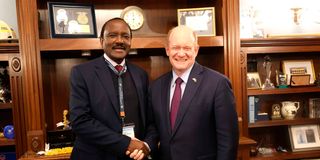
Wiper Patriotic Front Leader Kalonzo Musyoka and Delaware Senator Christopher Andrew Coons at the Russell Senate Office Building in Washington DC during a high-level engagement with United States Senator.
Politics is not tourism, and leadership is not measured by frequent‑flyer miles. When Kenyan politicians travel abroad, the real test is not who attends dinners or poses for photos. The crucial question is whether their visits produce tangible results for Kenyans in the diaspora, one of the country’s most important economic engines.
Kalonzo Musyoka’s recent trip to the United States — which included attending the 74th National Prayer Breakfast in Washington, D.C., a Baltimore town hall, an exclusive dinner engagement and church services among other activities — was marketed as a major outreach effort ahead of the 2027 elections.
Yet the visit delivered little beyond familiar talking points and small‑group conversations. There were no detailed policy proposals, no institutional commitments, and no actionable roadmap to address diaspora priorities such as voting rights, remittance reforms, investment channels, or consular protection.


This is not an isolated oversight. It reflects a pattern. Mr Musyoka has for decades held influential positions, including being an MP, vice President, Foreign Affairs Minister, and senior coalition figure, just to mention a few. Despite Mr Musyoka’s long tenure, no signature diaspora reform, no institutional legacy, and no measurable policy achievement can be traced to his leadership.
Diaspora policy
I believe the William Ruto administration has done a commendable job in just over three years. The State Department for Diaspora Affairs — established in 2022 and fully operationalised under the current government — has become the anchor of diaspora policy. It has negotiated bilateral labour agreements that create safe, legal pathways for Kenyan workers abroad.
The department has facilitated thousands of overseas job placements through private‑sector partnerships and strengthened emergency consular support through digital integration, mobile consular missions, and 24/7 distress‑response systems.
The results speak for themselves. Diaspora remittances hit a historic high in 2025, surpassing $5 billion annually for the first time — outperforming tea, tourism, and horticulture combined. This growth is not accidental. It reflects deliberate policy choices, regulatory reforms, and sustained engagement that transformed remittances from passive inflows into a strategic foreign‑exchange pillar.
Against this backdrop, Mr Musyoka’s US engagements feel less like strategic diplomacy and more like political theatre — recycled grievances delivered to already‑aligned audiences, without new ideas or a concrete agenda to match the moment.
As 2027 approaches, the diaspora faces a clear choice: support a leader who has already built institutions, unlocked economic value, and delivered historic progress — or return to leaders offering recycled promises without a record of delivery.
President Ruto is demonstrating his support of Kenyans abroad through action. The numbers, the structures, and the momentum all point to one reality: under his leadership, the diaspora’s contributions are being recognised, amplified, and rewarded.
That is why, come 2027, the diaspora should stand with a president who has stood with them.
The diaspora has become one of Kenya’s most strategic arms, shaping the nation’s economy, global footprint, and democratic future. They deserve leaders who match their ambition with action, not nostalgia.
Follow our WhatsApp channel for breaking news updates and more stories like this.
Danson Mukile is a US-based Kenyan and author of 'The Diaspora Power Playbook'.