Kenya’s food sovereignty depends on institutions that deliver lasting results
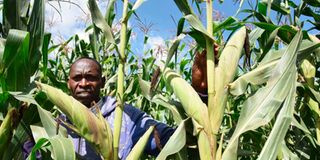
A Kenyan farmer.

A child born in Kenya today will be 37 when the country marks its centenary in 2063. She may be a farmer, processor, trader or scientist, or simply a parent trying to put nutritious food on the table.
Whether she inherits a food system that can withstand drought and feed a growing nation will depend less on the next harvest than on the institutions Kenya builds now.
Building those institutions was the central challenge at the Agriculture and Food Systems Transformation Summit, convened on October 7-9 under the theme “Advancing Food Sovereignty, Job Creation and Shared Prosperity under BETA.” Its message should be heard beyond the agriculture sector: Kenya’s road to food sovereignty runs through a state that delivers. Among the major commitments are a 50 per cent cut in staple food imports, a 60 per cent increase in agricultural exports and 2.5 million new jobs for young people.


The current season makes the stakes plain. Kenya consumes roughly 75 million bags of maize annually, while drought in major producing areas has exposed a substantial deficit. Emergency measures may prevent hunger today, but they cannot become the national business model.
Subsidies can help farmers manage immediate production costs, but without reliable irrigation, functioning markets and stronger institutions, they cannot deliver lasting food security.
President William Ruto has correctly identified over-reliance on rain-fed agriculture as a structural vulnerability. The response must now move from declaration to delivery: irrigation that works, water governance that protects catchments, healthy soils, reliable extension services and markets that reward production.
Food sovereignty
Agriculture, forestry and fishing contribute about one-fifth of Kenya’s GDP, so food-system capability is also an economic, jobs and national security priority. Food sovereignty does not mean closing Kenya to trade. It means having the capacity to secure affordable, nutritious food and retain more value at home while competing in regional and global markets.
Other countries show what is possible. Vietnam turned severe rice shortages in the late 1970s into export leadership by securing farmers’ land-use rights, investing in research and water infrastructure. Brazil’s Embrapa, created in 1973, built science tailored to local soils and helped transform the Cerrado savanna into one of the world’s leading agricultural powerhouses. Both also show that productivity without resource stewardship is not sovereignty.
The pattern is consistent: long-term political commitment, secure incentives, locally adapted science and a state capable of execution. Kenya needs to build that capability in five areas.
The first is coherence. Kenya does not lack plans; it risks having too many initiatives competing for attention, financing and ownership. The National Agri-Food Systems Investment Plan, BETA priorities and flagship programmes should operate as one system, with explicit targets, costs and accountable owners.
The second is rules that reduce the cost of doing business. Kenya’s e-voucher system has expanded access to inputs. Elsewhere, reforms to duties, testing periods and regulatory fees have accelerated the uptake of irrigation and mechanisation equipment and reduced fertiliser costs.
The third is institutions built to deliver. Ministries and agencies need the skills, systems, data and budgets to turn policy into services. Digital registries, traceability systems and shared public data are not side projects; they are the infrastructure of modern agricultural delivery.
The fourth is national-county coordination. Devolution is one of Kenya’s greatest delivery assets because counties are closest to farmers, extension services and local markets. But it succeeds only when national and county institutions plan jointly, share data and work towards a common set of results.
Extension services
The fifth is accountability for outcomes. Government should measure more than money spent. The test is whether irrigation schemes function, extension services reach farmers, incomes rise, and nutritious food becomes more affordable.
Climate resilience is where this capability will be tested hardest. Irrigation projects such as Galana Kulalu matter, but they must be paired with soil health, protected catchments and farmer know-how. In western Kenya, a KALRO sustainable land-management initiative supported by AGRA and the Global Environment Facility helped raise maize yields from 0.8 to 2.3 tonnes per hectare and increased household incomes. Productivity, resilience and prosperity can advance together.
A food-sovereign Kenya must also be a job-rich Kenya, with dignified work for women and young people in processing, logistics, cooperatives and digital services. For smallholders, the ultimate measure is not yield alone but net income. For consumers, it is whether a healthy diet is affordable. These are not separate agendas; they are one transformation viewed from the farm gate, the factory floor and the dining table.
Three immediate steps would signal the government’s commitment. First, link the delivery compact to a funded government capability improvement framework, with named owners and public milestones at national and county levels. Second, protect the agriculture budget and release funds predictably, in line with the Kampala Comprehensive Africa Agriculture Development Programme (CAADP) commitment to allocate at least 10 per cent of public expenditure to the agri-food sector. Third, publish a simple results dashboard that shows citizens what is working, what is delayed and who is accountable.
Kenya has the plans, talent and market opportunity. What remains is the discipline to turn commitments into results, across counties, seasons and political cycles. That is the legacy Kenya must build before 2063.
Follow our WhatsApp channel for breaking news updates and more stories like this.
The writers are with AGRA, where Muhinda is Regional Director for East and Southern Africa and Keizire is Director of Policy and State Capability.
The Public Editor’s column resumes next week