From threats and attacks to death and disappearance, journalists pay the price
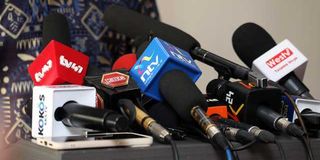
Journalists cover a press conference at KICC in Nairobi on June 27, 2026.

In August, the Committee to Protect Journalists (CPJ) announced it would honour 16 Eritrean journalists with its 2026 International Press Freedom Award. The journalists, now known as the Eritrea 16, are among the world’s longest-detained journalists, having been arrested 25 years ago during the government’s crackdown on independent media. This week, during the African Investigative Journalism Conference in Nairobi, CPJ held a public tribute for the journalists and demanded proof that the journalists are still alive.
The journalists are: Amanuel Asrat, Dawit Habtemichael, Dawit Isaak, Ghebrehiwet Keleta, Hamid Mohamed Said, Idris Said, Jimi’ie Kimeil, Mattewos Habteab, Medhaine Haile, Said Abdelkader, Saleh Aljazeeri, Sahle Tsegazeab, Seyoum Tsehaye, Temesgen Ghebreyesus, Tesfay Ghebreab and Yusuf Mohamed Ali.
“For a quarter of a century, families have been denied answers about their loved ones. The Eritrea 16 deserve recognition for their journalism, not for their decades of disappearance,” said CPJ CEO Jodie Ginsberg.


“The award honours their courage, but it cannot replace truth, freedom, or justice,” Ginsberg added. “Their case is a warning to the world: when journalists can be silenced with impunity, press freedom everywhere is at risk.”
Elsewhere, in Egypt, Lina Attalah, the Mada Masr editor-in-chief, faces charges of publishing false news and operating a website without a licence. In a separate case, she was fined three million Egyptian pounds (about $56,000) and the website’s closure was ordered.
Why should these cases concern Kenyans?
On this year’s International Day to End Impunity for Crimes Against Journalists, observed annually on November 2, the Media Council of Kenya (MCK) released a report documenting incidents affecting journalists’ safety, protection and working environment in Kenya from July to September.
The day was set aside by the United Nations General Assembly in 2013 to raise awareness and demand justice for journalists who face threats, attacks and even death while performing their duty, and to advocate for ending impunity for these crimes and ensuring justice for victims.
In the three months, MCK documented 47 cases involving various forms of press freedom violations, including physical attacks, arrests, threats, intimidation and harassment. Of these, 34 were assault cases while five were threats. There were two cases each of arrest and intimidation, and one case each of abduction and surveillance. The violations, the council observed, occurred against the backdrop of heightened political activity ahead of the General Election next year, with the major ones entailing attacks on journalists during the Ol-Kalou by-elections and the Homa Bay rally by the Linda Mwananchi Movement. This raises concern that the violations could escalate as the elections draw nearer.
While these numbers might not look alarming, there is cause for concern when they are compared to the same period in previous years. In 2024 there were 24 cases, and in 2025 there were 17.
The numbers also mask the stories behind them. Each of these incidents involves a journalist: a man or woman who was going about their work, in enjoyment of his or her constitutional right to earn a living, and in fulfilment of their professional calling, before being assaulted, threatened, unlawfully arrested or, in extreme cases, abducted with a real threat of being killed.
The numbers also veil the fact that, when these incidents occur, the journalists are left with not just physical injuries and scars, but psychological trauma and pain that could last forever. Also obscured by the numbers is the collective intimidation and fear wrought upon newsrooms and the entire media fraternity. It is the kind of fear that makes a journalist think twice before taking up an assignment deemed risky, or drives editors to self-censorship.
Even more disturbing is the total lack of accountability for these violations. Although some of the violations have been captured on camera, and attackers unmasked and named, the law-enforcing arms of the government have turned a blind eye to these crimes. Save for the occasional lone voice of media sector organisations like MCK, the Kenya Editors Guild, the Association of Media Women in Kenya, the Kenya Union of Journalists and the Kenya Correspondents Association, there appears to be a conspiracy of silence. Violations against journalists have been normalised.
These incidents also give Kenya a bad name. In this year’s World Press Freedom Index published by Reporters Without Borders, Kenya was ranked 106th. Although this was an improvement from 117th in 2025, it remains in the “difficult” tier. It could slip to the levels of some of the most hostile countries for journalists in Africa, like Eritrea and the Democratic Republic of Congo.
As Kenya heads to the General Election next year, and as journalists across the world continue to bear the brunt of politics, dictatorship and conflict, this should become the rallying call: #Journalism is not a crime.
Follow ourWhatsApp channel for breaking news updates and more stories like this.
Contact the Public Editor to raise ethical concerns or request a review of published material. Reach out: Email: [email protected]. Mobile number: 0741978786.