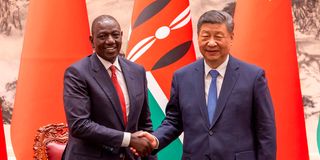
Kenya should not be compelled to justify relationships that serve its national development agenda.
To do so would be to submit to a double standard that no sovereign nation should accept.
It is remarkable how often Kenya is expected to explain itself on matters of foreign policy, particularly when it engages with countries that do not fall within the traditional sphere of Western influence. Despite professing a policy of non-alignment since independence, it seems that principle is only deemed acceptable when it conforms to certain global expectations.
The end of the Cold War marked a profound shift in Africa’s place in international affairs. When the Soviet Union collapsed, the ideological competition that had kept Western attention, and funding, flowing to Africa disappeared almost overnight. No longer needing to counterbalance the influence of communism on the continent, the West adopted a markedly different posture: aloof, disinterested, and often prescriptive.