Raila’s legacy must outlive political slogans
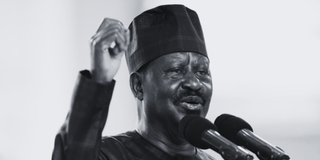
Kenya's former Prime Minister Raila Odinga.

As Kenya marks the first anniversary of Raila Amolo Odinga’s death on October 15, the country must ask whether those claiming his political inheritance are advancing his principles or invoking his name for convenience.
Raila’s legacy is inseparable from Kenya’s struggle against authoritarianism.
His detention without trial under President Daniel arap Moi, particularly after the failed 1982 coup, placed him among those who challenged one-party rule. Their collective struggle helped secure the repeal of Section 2A in 1991 and the return of multiparty politics.


Yet pluralism alone could not restrain executive power. KANU retained office in 1992 and 1997 amid opposition divisions and electoral concerns. In 2002, Raila’s declaration, “Kibaki Tosha,” helped unite the opposition behind Mwai Kibaki and the National Rainbow Coalition, ending KANU’s uninterrupted rule. Winning office and transforming governance are different undertakings.
The disputed 2007 election and ensuing violence exposed the cost of winner-takes-all politics. The 2008 National Accord helped stabilise the country after hundreds of thousands were displaced and more than a thousand killed.
Political negotiation
The 2010 Constitution, with devolution, an expanded Bill of Rights, judicial independence and institutional checks, was another milestone. Raila played a role, but it was a collective achievement forged through decades of public agitation and political negotiation.
His 2018 handshake with President Uhuru Kenyatta showed that confrontation and compromise can coexist. But negotiation earns legitimacy through outcomes, not the symbolism of leaders embracing. The question is not whether Raila’s followers should cooperate with those in power; he built alliances himself. It is whether such arrangements advance constitutionalism, accountability and citizens’ welfare, or merely redistribute political influence.
Displaying his photographs, wearing party colours and invoking Baba are easy expressions of loyalty. Defending constitutional principles when allies violate them is harder. Fidelity to Raila’s democratic legacy means challenging corruption, protecting peaceful protesters and defending independent institutions, regardless of who governs.
Raila was neither flawless nor the sole architect of Kenya’s democratic transformation. Respect for his legacy requires examining his contributions and limitations rather than turning him into a political myth. The anniversary should audit political values, not stage remembrance.
Democracy depends on citizens and institutions defending freedoms won through collective sacrifice. History will judge Raila’s legacy not by mourners’ loyalty, but by the freedoms preserved and institutions strengthened. The question is who will defend those principles when doing so carries a political cost.
Follow our WhatsApp channel for breaking news updates and more stories like this.
Dr Kiprono is a lecturer in History, Diplomacy and International Relations and UASU Chapter Treasurer at Alupe University, Kenya.


