Sustainability is not a cost, but an investment
Being one of the biggest contributors to rapid climate change, a lot of the sustainability focus has now shifted to the construction industry, which accounts for 40 per cent of all the carbon emitted in the world.

Every business leader understands the pressure of managing costs. Raw material prices fluctuate, energy costs rise, equipment requires investment, and shareholders expect returns, even as customers continue to demand greater value. In such an environment, every investment comes under scrutiny, with every shilling expected to deliver a clear and meaningful return.
Sustainability investments often face an even greater test. Unlike investments that generate immediate financial returns, their value can take time to materialise. Yet, when approached strategically, sustainability is not simply a cost to be managed; it is an investment that can strengthen business resilience, create long-term value and support sustainable growth.
For many organisations, sustainability is still viewed as an expense, something undertaken because regulations require it or because stakeholders expect it. However, businesses that have been on this journey long enough understand something different. Sustainability is not simply a compliance obligation. It is a long-term business strategy that requires significant investment today to secure resilience, competitiveness and social licence tomorrow.


This is especially true in manufacturing, where the environmental footprint is naturally higher and where reducing emissions, conserving natural resources and protecting surrounding communities requires deliberate, and often costly, decisions.
Alternative fuels
Take air quality, for example. Modern cement manufacturing relies on sophisticated dust filtration systems that can cost millions to install, operate and maintain. These systems do not necessarily increase production volumes or improve quarterly profits. Customers rarely ask whether the cement they purchase was produced using the latest filtration technology.
Yet responsible manufacturers continue to invest in such systems because protecting surrounding communities and reducing environmental impact is simply the right thing to do. Clean air should never be viewed as a luxury that depends on whether there is an immediate financial return.
The same principle applies to the transition away from fossil fuels. Replacing traditional fuels with alternative fuels requires new infrastructure, specialised handling systems, technical expertise and continuous operational optimisation. These investments are substantial, and demand patience and long-term commitment before their financial benefits become evident.
Across the manufacturing sector, businesses are increasingly demonstrating that meaningful environmental progress is possible when investment decisions extend beyond short-term returns. One example is the use of alternative fuels, where waste materials that would otherwise end up in landfills can be safely recovered and converted into energy. This reduces dependence on conventional fossil fuels while contributing to a more circular economy.
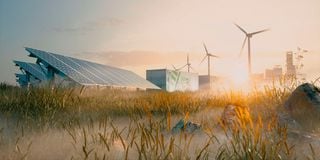
Renewable energy presents another example. Installing large-scale solar infrastructure requires significant capital investment, with payback periods often stretching over many years. Such projects can be difficult to justify when viewed solely through a quarterly financial lens. However, integrating renewable energy into industrial operations can reduce dependence on conventional grid electricity, lower operational emissions and strengthen long-term business resilience. Perhaps the clearest illustration that sustainability is an investment rather than a cost is found in nature itself.
When mining activities cease, companies can simply walk away. Restoring ecosystems is expensive, technically demanding and, in some cases, undertaken primarily because of regulatory requirements. Yet responsible rehabilitation can transform degraded industrial land into ecosystems that support biodiversity, environmental education, tourism and surrounding communities.
Quarry rehabilitation
The experience of quarry rehabilitation in Kenya demonstrates the possibilities. Former limestone quarries have been transformed into conservation areas, showing that industrial land can have a meaningful second life. Such restoration requires long-term planning, financial commitment and a willingness to look beyond the immediate lifecycle of an operation.
True sustainability is not only about carbon emissions or energy efficiency. It is equally about investing in people. Supporting education for disadvantaged learners, expanding access to healthcare, improving water stewardship and strengthening surrounding communities all require sustained financial commitment.
Across the private sector, investments in scholarships, healthcare infrastructure, health outreach, community development, education and environmental conservation demonstrate that sustainability can create shared prosperity rather than simply represent isolated acts of corporate philanthropy.
Critics often ask whether businesses can afford such investments. Perhaps the better question is whether they can afford not to. Businesses that delay sustainability investments may temporarily save money, but they often inherit greater costs later through regulatory pressures, operational disruptions, reputational damage and declining competitiveness.
Most importantly, it is an investment in ensuring that future generations inherit not only thriving businesses, but a thriving planet on which those businesses can continue to operate.
Operating sustainably is undoubtedly expensive. However, history increasingly shows that the greatest cost belongs to those who choose not to.
Follow our WhatsApp channel for breaking news updates and more stories like this.
Jane Wangari, Sustainability and Corporate Affairs Director, Bamburi Cement Plc