As the clock ticks towards the General Election scheduled some 314 days from today, noise from heightened electioneering might be drowning out the fact that we should be paying as much scrutiny to the election management body as we are to the various political players.
The rabble-rousing, skulduggery, corruption, scare-mongering and ethnic incitement we witness daily play a big role in compromising the integrity of the electoral process; but all the sabotage engineered by our political leaders would be neutralised in the face of a strong, resolute, independent referee.
President William Ruto and the cast of characters scrambling over each other in the quest to send him home will no doubt continue as politicians do. It therefore behoves the Independent Electoral and Boundaries Commission (IEBC) to live up to its name. This will include demonstrating, by more than mere words, that it is on top of the game in regard to all the steps and procedures required to deliver free and fair elections.
Unfortunately, the election management body has, in the past three decades since the return of multi-party democracy, all too often been the weak link in the electoral process. We have witnessed outright incompetence, botched logistics, delays and corruption in the procurement of election materials, capitulation to political pressure and all the other things that cast doubt on electoral outcomes, inevitably leading to chaos and disorder.
Presidential election fiasco
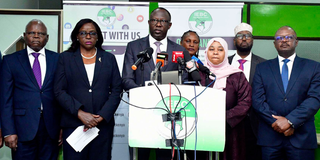
IEBC Chairperson Erastus Ethekon and his band of merry men and women, in office for just over one year, should not be tarred with the sins of their predecessors. However, they should have learnt valuable lessons from the ills that rocked previous elections.
They should have read up, particularly, on the 2007 presidential election fiasco under Samuel Kivuitu, and the annulled 2017 polls under the stewardship of Wafula Chebukati. The contentious elections of 2013 and 2022 can also offer valuable lessons.
Looking back into history will highlight the pitfall that Mr Ethekon and his team must navigate if they are to conduct elections that are so fair, so open and so clean that the outcome will be indisputable.
Unfortunately, the present cast of IEBC commissioners took office carrying baggage of the past. The neutrality of some was questioned given their known political affiliations, and a recruitment process that seemed tilted towards certain individuals.
It did not help that in some of the by-elections since conducted, they chose to play deaf and dumb to open election offenses, such as violence and voter bribery, that would otherwise disqualify a candidate.
It became worse when a commissioner publicly played down open instances of voter bribery that had been captured on video, offering justifications for such actions as if she were an advocate for the perpetrators. We can give electoral commissioners the benefit of doubt on such incidents, but must still keep close watch on poll preparations.
Acquisition and eventual deployment of election materials remains a source of concern, especially where there are legal challenges, as happens every election cycle, arising out of contested procurement.
Then there are pending court cases filed by various parties around issues of counting and tallying of votes, results transmission and declaration of results. Without going into legal mumbo-jumbo, the key issue seems to be around the role of the National Tallying Centre and the monopoly of announcements by the IEBC chair.
Personally, I have no problem with a centralised venue—be it Bomas of Kenya, Nyayo Stadium, Kamukunji Grounds, Gikomba Market—where the IEBC will receive, collate and announce the presidential election results.
Succession of tired commissioners
The problem is that the laborious process where everybody must wait for a succession of tired commissioners to read vote count updates that have been held “secret” is an anachronism in this day and age.
The National Tallying Centre would become redundant if the IEBC kept to its promise to maintain a public portal where any interested party would have access to all results coming in from vote counts completed at the polling stations and collated at the constituency tallying centres.
We don’t know whether it is by accident or design that the public portal never works as intended, and neither do the giant screens set up at the National Tallying Centre to display the same.
That is why questions are inevitably asked about the source of numbers read out, numbers which should already have been available to the public.
If IEBC can make good on that one commitment, and also on an agreement to allow the media to plug directly into the results portal and broadcast results as they stream in, unnecessary suspicion will be removed.
Mr Gaitho, an independent journalist, is former NMG Managing Editor for Special Projects. [email protected] .