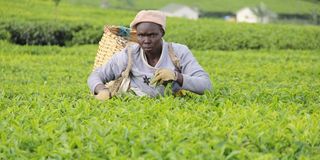
In the coming days, tea farmers across Kenya will receive the much-anticipated news of this year’s bonus payments.
For many, this announcement is more than a financial update. It is a verdict on a year of sweat, sacrifice, and hope. Yet, early indications point to lower earnings compared to last year.
Understandably, this is bound to stir discontent. But before the anger finds a target, we must step back and ask: what really determines tea prices, and how can we, collectively, build a more resilient sector?
For decades, tea has been the green lifeline of millions of Kenyan households, especially in the Central, West of Rift and East of the Rift regions. Kenya is the world’s leading exporter of black tea, and the second largest producer after China.
But unlike China and India, where farmers and governments have diversified tea into premium and speciality products, Kenya has remained heavily reliant on bulk black tea exports, sold in an auction, in Mombasa. This, in my opinion, is a system that is vulnerable to global market swings and prone to exploitation by middlemen.
That notwithstanding, several factors, both local and global, shape the price of tea.
1. Global demand and supply. When global tea production surges, as seen recently in India and Sri Lanka, oversupply depresses prices across international auctions. Conversely, poor harvests in competitor countries can push prices up.
2. Economic conditions and geopolitics in consuming countries. For example, the recent economic strain and foreign exchange crisis in Pakistan, which is a key market for Kenyan tea, significantly weakened its ability to import our tea. The civil unrest in other key markets such as Sudan, Ukrain and Russia negatively affects the tea market.
3. Exchange rate fluctuations. Tea is traded in dollars. Therefore, the strength or weakness of the Kenya shilling against the dollar directly affects farmers’ payouts. Even if auction prices hold steady, a weaker shilling will mean that each dollar earned from tea exports converts into more Kenyan shillings, boosting the income received by farmers. On the other hand, a weaker shilling translates to higher prices of imported agricultural inputs such as fertiliser.
4. Production and input costs. Rising fertiliser prices, delayed supplies, fuel costs, and factory inefficiencies eat into margins, reducing what eventually reaches the farmer’s pocket. The delays in fertiliser delivery in recent months, for instance, not only affect yields but also the cost vs benefit balance for smallholders.
5. Climate change. Changes in the climatic conditions continue to threaten the viability of the tea sector. In Kenya, tea farming relies almost 100% on rainfall. In recent times, the patterns have changed drastically, with longer dry seasons being witnessed over the years. Even more worrisome, experts (Ethical Tea Partnership, 2021; Jayasinghe & Kumar, 2020; Kramer & Ware, 2021) are predicting that yields will decrease by 5% in China, 14% in Sri Lanka, and 25% in Kenya by 2050 due to climate change.
6. Value addition and product type. Kenya exports nearly 95% of its tea in bulk form. Yet speciality teas such as green, purple, orthodox teas, command premium prices on global shelves. The reality is simple: until Kenya significantly shifts towards value addition, it will remain at the mercy of commodity pricing.
Kenya is not alone in grappling with the volatility of tea pricing. There are lessons we can draw from other tea-producing nations:
• Sri Lanka: Despite political upheavals, Sri Lanka has managed to carve a niche by positioning its own branded tea - “Ceylon Tea” as a premium global brand. Strict quality controls and heavy investment in branding have ensured their tea attracts higher prices per kilo than Kenya’s.
• China: The world’s largest producer has mastered diversification. Beyond black and green tea, China has popularised white, oolong, and speciality teas, fetching very good prices in niche markets. This strategy shields their farmers from the lows of bulk pricing.
• India: With strong domestic consumption, India’s tea sector is less exposed to the vagaries of international markets. By cultivating a robust local tea culture, they guarantee farmers a steady demand base.
For Kenya, the lesson is clear. While we cannot control global forces, we can reposition ourselves. Developing a strong “Brand Kenya Tea” identity, expanding into speciality markets, and promoting local consumption could cushion farmers against global volatility.
No discussion about tea in Kenya is complete without the mention of the Kenya Tea Development Agency (KTDA). For years, KTDA has been accused, sometimes unfairly, sometimes justly, of fleecing farmers through opaque management and bloated costs. The mistrust is deep, and it will not be erased overnight.
The new KTDA leadership under chairman Chege Kirundi has embraced the mantra “Farmers First”. This is commendable. But farmers are not looking for slogans. They want a timely supply of inputs, leaner operational costs, transparency in auction processes, and innovative approaches to marketing. They want proof that the value chain is not leaking at their expense.
The writer is the head of innovation, intellectual property and community engagement, Mount Kenya University