Water, not imports, key to feeding Kenya
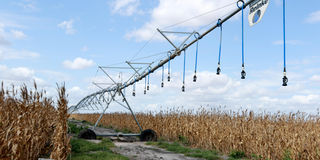
One of the irrigation machines stationed within the maize plantation covering thousands of acres at the Galana-Kulalu Food Security Project in Tana River and Kilifi counties on July 6, 2026.

What you need to know:
- Galana Kulalu is being positioned as an anchor of a national plan to increase food production and build a more resilient agricultural economy.
- In Kirinyaga, Thiba Dam has added 10,000 acres to the Mwea scheme, allowing farmers to grow rice twice a year instead of once.
For many years, Kenya measured its food security at the port. The questions were simple: How many ships had docked? How many tonnes of maize, rice and edible oil had arrived from abroad? That era must now give way to a different measure: how much food can the country grow on its own soil, using its water, throughout the year?
At the centre of this ambition is Galana Kulalu, a 1.75 million acre ranch straddling Kilifi and Tana River counties. For years, it symbolised promise unfulfilled. It is now being positioned as an anchor of a national plan to increase food production and build a more resilient agricultural economy.
The approach has changed. Rather than attempting to farm directly, the government is providing infrastructure while private investors bring capital, technology, agricultural expertise and access to markets. Under the National Irrigation Sector Investment Plan for 2025 to 2035, the state is expected to provide water infrastructure, power, roads and security, creating conditions for commercial farming.


More than 350,000 acres at Galana Kulalu have been allocated to private operators under long-term concessions. Selu Limited has been allocated 40,000 acres and committed Sh12.5 billion under a 30-year concession. Its operations are expected to grow from 500 acres in 2025 to more than 2,000 acres. Nyumba Agri Products has been allocated 54,000 acres, with an investment of more than Sh6 billion.
United Arab Emirates-based Al Dahra has been allocated 180,000 acres, with a projected investment of up to $800 million. Other investors account for 76,000 acres, bringing total allocations to 350,000 acres.
At Galana, a 20,000 cubic metre intake and a 550,000 cubic metre reservoir have been completed, supported by a one-megawatt solar plant. A Sh1.49 billion bridge, measuring 200 metres across the Galana River, connects the two sides of the project and is expected to lower the cost of transporting farm inputs and produce. The system is designed to use about one per cent of the river’s flow, storing water during periods of high flow for use when conditions are dry.
Kenya consumes between 70 million and 75 million bags of maize annually. In 2024, farmers produced about 44 million bags. In a poor season, particularly when rains fail in the North Rift, the shortfall can reach 25 million bags.
Water available for irrigation
The country imported 488,535 tonnes of maize in 2023. The volume fell to 214,067 tonnes in 2024 following better rains. Rice presents an even bigger challenge. Kenya consumes about 1.79 million tonnes annually but produces only about 300,000 tonnes through public irrigation schemes. It imported 930,930 tonnes in 2023 and 629,688 tonnes in 2024, spending Sh67.9 billion on the latter.
The reliance on imported edible oil is also substantial. Almost 90 per cent of the cooking oil consumed in Kenya is imported, at a cost of more than Sh100 billion annually. Yet crops such as sunflower, soya beans and groundnuts can be grown locally, including under irrigation.
Combined food imports cost the country more than Sh500 billion a year. The National Irrigation Sector Investment Plan sets out a 10-year framework to pursue that goal. The Sh598 billion pro-gramme seeks to nearly double the area under irrigation from 664,000 acres to more than 1.28 million acres, with a longer-term pathway to 1.5 million acres.
It also targets an increase in water available for irrigation from 55 million cubic metres to more than 2.3 billion cubic metres. Under the plan, maize production from irrigated areas is expected to exceed five million bags. Rice production is projected to rise from 305,000 tonnes to 990,000 tonnes, a level intended to close the national deficit.
Funding will come from government and development partners (39 per cent), with the private sector, commercial banks and farmers expected to provide the remaining 61 per cent, or about Sh365 billion. Blended finance under the Kenya Climate Resilient Irrigation Scale Up pro-gramme, supported by the World Bank and the International Finance Corporation, is expected to help mobilise investment.
Galana Kulalu has a defined place in this wider plan. The immediate target is to bring 20,000 acres under commercial production. A larger expansion will depend on securing a reliable water supply. In December 2025, the government signed a Sh40 billion contract for the Galana Dam, designed to hold 305 million cubic metres of water and deliver one billion cubic metres annually.
Together with the High Grand Falls Dam, the project is expected to unlock 300,000 acres for year-round irrigation. 200,000 acres at Galana are projected to produce 14 million bags of maize, potentially covering more than half of the national deficit.
Food security challenge
The strategy extends beyond Galana. In Kirinyaga, Thiba Dam has added 10,000 acres to the Mwea scheme, allowing farmers to grow rice twice a year instead of once. In Tana River, the Bura Irrigation Scheme is being revived for maize, cotton and green gram.In Kisumu, Ahero and Kimira Oluch are expanding rice and high-value vegetable production.
In Turkana, schemes at Katilu and Morulem are demonstrating the potential for sorghum and other drought-tolerant crops in arid areas, helping diversify production and ease pressure on maize.
Seed production is one part of that effort. At Galana, 330 acres of seed maize produced 860,000 kilogrammes in the first harvest in October 2025. Increasing domestic production of certified seed could reduce reliance on imports and improve access to varieties suited to local conditions.
Infrastructure is another. The bridge, solar plant and roads are intended to lower operating and transport costs. The gazettement of Galana as a Special Economic Zone could also attract processors, allowing more produce to be handled and value added closer to farms.
The projects are expected to employ agronomists, irrigation technicians, tractor operators and extension officers, while supporting businesses and services in surrounding communities. The national plan projects more than five million direct and indirect jobs and Sh240 billion in annual revenue when fully implemented.
There are, however, issues that must be managed. Large water projects require fair compensation and dignified resettlement where necessary. Water allocation must be equitable, with water users’ associations playing a role in managing access. Wildlife corridors also need protection, while private operators should be held to clear production and investment commitments.
Galana Kulalu is not the whole answer to Kenya’s national food security challenge. But, alongside Thiba, Bura, Mwea, Ahero and irrigation schemes in Turkana, it represents an attempt to move the country beyond emergency imports and unpredictable harvests.
Success will be measured by consistent food production, higher farmer incomes, jobs and reduced imports. Kenya’s food security will depend on turning its water and agricultural potential into reliability.
The writer is Head of Public Service