We must invest in research to realise First World dream

View of the Gardens by the Bay located in Singapore.

Kenya’s transformation into a globally competitive economy hinges on strategic investment in research and development. While recent government commitments aim to bridge the funding gap, stronger domestic financing and pathways to commercialisation are essential to unlock the nation’s full innovation potential.
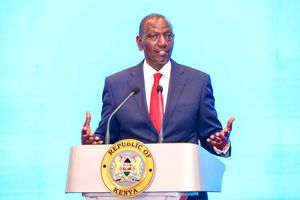
In November 2025, President William Ruto articulated a bold vision for Kenya to achieve first-world status by following the development trajectory of the Asian Tigers, particularly Singapore and South Korea.
This ambition reflects Kenya’s desire to transition from a developing economy to a globally competitive and industrialised nation. While ambitious, history shows that such a transformation is achievable when countries invest deliberately and consistently in research and development (R&D).


Across the world, science, technology, and innovation have been central drivers of economic transformation. Nations that invest heavily in research create new industries, generate high-value jobs, and strengthen their global competitiveness. The experiences of Singapore and South Korea demonstrate how sustained investment in knowledge and innovation can accelerate national development.
Singapore’s rise from a modest trading hub to one of the world’s most advanced economies was built on strategic investment in science and technology. Through disciplined national planning, the country gradually transitioned from labour-intensive manufacturing to a knowledge-based economy.
In 1991, Singapore established the National Science and Technology Board and launched a National Technology Plan targeting sectors such as biotechnology, information technology, and medical sciences. Over time, these investments helped build globally competitive industries in pharmaceuticals, biomedical sciences, and advanced manufacturing.
Innovation in electronics
South Korea provides another powerful example. Beginning in the 1960s, the country placed science and technology at the centre of its development strategy. The establishment of the Korea Advanced Institute of Science and Technology (KAIST) played a key role in building national capacity in engineering and applied sciences.
A critical component of South Korea’s strategy was the deliberate engagement of its diaspora. Scientists and engineers trained in leading global universities were encouraged to return home and contribute to national development.
Through strong collaboration between universities, government, and industry, these professionals helped drive innovation in electronics, materials science, biotechnology, and engineering. This ecosystem supported the emergence of global corporations such as Samsung and LG while also fostering a vibrant start-up culture.
Kenya can pursue a similar pathway. The establishment of a State Department for Science, Research and Innovation represents an important step toward coordinating research across sectors such as health, agriculture, manufacturing, and digital technologies.
However, Kenya’s research ecosystem still faces a significant challenge: limited domestic investment in research. Kenya currently spends about 0.8 per cent of its Gross Domestic Product on research and development, which is below both the African Union benchmark of one per cent and the national target of two per cent.
Because of this funding gap, many Kenyan scientists rely heavily on international partners and donor agencies to finance research activities. While global collaboration is valuable, excessive dependence on external funding can create structural challenges.
Research priorities may sometimes be shaped by donor interests rather than national development needs. In addition, intellectual property arising from externally funded projects may be owned by foreign institutions, while biological samples and research data generated locally may disproportionately benefit international partners.
Increasing domestic investment in research is therefore essential if Kenya is to develop home-grown solutions to national challenges. Encouragingly, the government has reaffirmed its commitment to strengthening science, technology, and innovation as key drivers of economic growth.
Academic incentives
Beyond funding, Kenya must also strengthen the link between research and economic development. For many years, academic incentives have focused primarily on scholarly publications. While publications remain important for advancing knowledge, they alone cannot drive economic transformation.
What will ultimately propel Kenya toward first-world status are patents, prototypes, and commercialisation pathways that translate research discoveries into products, companies, and industries.
Universities and research institutions should therefore encourage scientists, professors, and postgraduate students to establish start-ups and spin-off enterprises. Intellectual property policies should also be reviewed to allow researchers to incubate businesses while maintaining their academic positions. Such innovation ecosystems can attract investment, generate employment, and stimulate industrial growth.
Engaging the Kenyan diaspora also presents an important opportunity. Kenyan scientists and professionals working in global research institutions, pharmaceutical companies, and technology firms represent a vast reservoir of expertise. Structured programmes that encourage collaboration or return could significantly strengthen Kenya’s innovation capacity.
Ultimately, Kenya’s journey toward first-world status will depend on sustained investment in science, technology, and innovation supported by policies that encourage entrepreneurship and commercialisation.
If Kenya commits to these reforms, research and development will cease to be merely an academic pursuit and instead become the engine of industrialisation, job creation, and long-term economic prosperity. That is the true pathway to Singapore—and to a first-world Kenya.
Follow our WhatsApp channel for breaking news updates and more stories like this.
Prof Songok, PhD, is the Acting Director-General and CEO of the Kenya Medical Research Institute and a seasoned researcher as well as a leading voice on national science and innovation policy.