Why Kenya must take content creation seriously
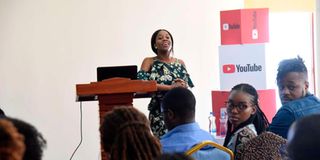
Head of YouTube Music Business and Partnership in Sub-Saharan Africa Addy Awofisayo trains
Kenyan content creators.
There was a time when becoming a media personality in Kenya meant waiting for a television station, radio programme, or production house to open its doors. Today, a smartphone, an idea, and the courage to publish can take a Kenyan creator to an audience of thousands or even millions. That is more than a technological shift; it is a transformation of our economy, our culture and the way we tell our stories.
The numbers tell us that content creation is no longer a side hustle. In May 2026, the Ministry of Information, Communications and the Digital Economy said Kenya’s digital content industry was valued at more than Sh1.27 trillion, with smartphone penetration exceeding 83 per cent. The 2026/27 budget also allocated Sh8.6 billion to the digital superhighway and creative economy, recognising the sector's growing role in economic growth and youth employment.
There is another figure that deserves our attention. An OdipoDev analysis of more than 35,000 Kenyan creators found that influencers earned an estimated Sh1.07 billion from brand-sponsored content in 2025, while the top 10 creators accounted for about Sh296 million. Yet the same research exposes an important reality: attention does not automatically translate into income. Instagram converted 40.8 per cent of views among top creators into paid partnerships, while TikTok monetised only 12.1 per cent.


Celebrating views
For those of us who have spent years working across traditional and digital media, this is both exciting and instructive. I have spent more than a decade working across acting, television, modelling, presenting, events, and content creation. The biggest lesson has been that adaptability is no longer an advantage; it is essential. The modern creator is not only the talent. Often, they are the producer, writer, editor, marketer, strategist and community manager as well.
That evolution demands a more mature conversation about what success means. We have become very good at celebrating views, followers, and viral moments. But a million views do not necessarily create a sustainable career. We should be asking harder questions: What value has the content created? What intellectual property has been built? What revenue has been generated? What jobs have been created? Can the creator's business survive when an algorithm changes?
This is where Kenya must shift from a culture of virality to one of value. Creators need to see themselves as entrepreneurs and media businesses, not merely personalities chasing the next trend. They need to understand contracts, intellectual property, audience data, brand partnerships, and multiple revenue streams. Brands, too, must recognise that creators are not simply advertising channels. They are storytellers who have built relationships and trust with communities that traditional advertising cannot always reach in the same way.
Follow ourWhatsApp channel for breaking news updates and more stories like this.
The writer is an award-nominated actor, TV presenter, content creator, model and emcee.