Early campaigns costing Kenyans dearly

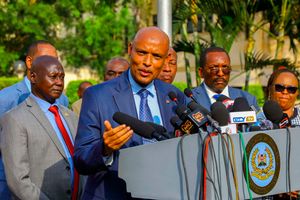
Siaya Governor James Orengo addresses a Linda Mwananchi political rally at Amalemba Grounds in Kakamega on February 21, 2026.
Even before the official campaign period, politicians have pitched tent across the country, mounting billboards, unleashing branded merchandise and taking to the skies in helicopters. What should be a focused period of governance has turned into a season of endless rallies. The result is a country permanently in campaign mode, and the citizens are paying the price.
When leaders convene political meetings on working days, businesses shut down, transport is disrupted and productivity grinds to a halt. Traders close their shops for fear of chaos. Matatu operators reroute or stay away from congested town centres. Casual workers lose a day’s wage because customers do not show up. For a country struggling with unemployment and a high cost of living, this is a direct assault on livelihoods.
Manufacturers and suppliers are also feeling the heat. Frequent political activity disrupts supply chains, delays transportation of raw materials and finished goods, and increases operational uncertainty. Investors thrive on predictability. When the political temperature is constantly high, confidence shrinks.


Beyond economics, there is also loss of life and property. In recent months, we have witnessed skirmishes between rival supporters, clashes with police and tragic deaths. No election is worth a single Kenyan life.
There is also the question of governance. Cabinet secretaries, governors and MPs are elected to formulate policy, oversee projects and deliver services. Yet when leaders spend more time campaigning rather than working, service delivery suffers and projects stall.
Structured campaign periods help contain political competition within manageable limits. They reduce the window for tension, curb excessive spending and allow institutions to function. When those timelines are ignored or cleverly circumvented under the guise of “consultations” and “empowerment tours”, the spirit of the law is undermined.
As citizens, we must also reflect. When we flock to weekday rallies in large numbers, we inadvertently normalise this culture of perpetual campaigning. Democracy demands participation, yes — but it also demands responsibility.
Follow our WhatsApp channel for breaking news updates and more stories like this.
Brown Onyango, Nairobi