GBV fight does not end after 16 Days campaign
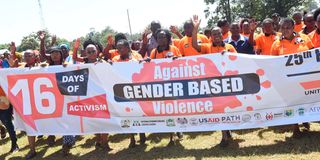
Women march in Mumias, Kakamega County, during the launch of 16 Days of Activism against GBV on November 25, 2022.
Every year, Kenya joins the global community in marking the 16 Days of Activism Against Gender-Based Violence. Yet, as the orange ribbons disappear, a troubling truth remains: gender-based violence (GBV) does not pause on December 10. Cases do not decline and survivors do not begin to heal simply because their pain was briefly acknowledged.
Kenya continues to record rising incidents of intimate partner violence, sexual assault, violence against minors and femicide. Each week brings another tragedy: a woman killed, a child harmed by someone entrusted with their safety, or a survivor seeking justice from an unresponsive system. These are signs of structural failings that a short campaign can’t fix.
The campaign is a reminder, but in Kenya it risks becoming a ritual: speeches, branded events and public promises followed by of silence. Awareness without sustained action offers false comfort. Survivors remain trapped in cycles of fear, violence and unaddressed trauma.


Real progress requires constant, deliberate work. Reporting GBV remains intimidating, with many police stations lacking gender desks and officers ill-equipped to handle cases sensitively. Investigations drag on, evidence is lost, witnesses are intimidated and cases collapse. Justice moves slowly.
Safe spaces are inadequate. We have far too few shelters, and those that exist are underfunded. Many counties offer no refuge for survivors, forcing them to remain with abusers or be homeless. Essential support—legal aid, counselling, medical care and temporary housing—demands long-term investment, not seasonal attention.
Treating the 16 Days of Activism as a ritual is dangerous; it masks the need for structural change. Political will is essential. Leadership has been inconsistent, with pledges rarely matched by action. Policies stagnate, budgets fall short and cases involving powerful individuals collapse. Mismanagement of resources meant for vulnerable groups directly harms survivors.
If Kenya is serious, the work must begin in homes, schools, police stations, county budgets and the judiciary. Leaders must stop treating GBV as a “women’s issue” and recognise it as a national emergency.
The 16 Days campaign is not the solution—it is the reminder. The real work happens in the days that follow.
Charles Wanjohi, Nairobi