New Homa Bay safe house rekindles Kenya’s fight against gender-based violence

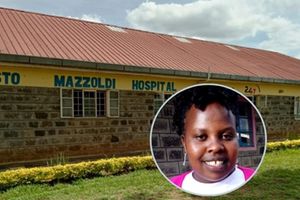
Gender and Affirmative Action Principal Secretary Anne Wang'ombe (in black) is joined by Homa Bay Governor Gladys Wanga (left), among other leaders, in a jig at the Kenya Medical Training College in Ndhiwa town on December 8, 2025. They opened a safe space built through the support of Shining Hope for Communities to help survivors of sexual and gender-based violence.

What you need to know:
- A new rescue centre in Ndhiwa marks a major step in Kenya’s efforts to end gender-based violence by 2026, offering survivors a safe space and coordinated support from government and justice agencies.
- The safe house built by Shofco provides medical care, legal support and trauma counselling for survivors as local leaders call for stronger action against entrenched violence.
- Despite high GBV rates in Homa Bay, leaders say progress remains slow.
In the final week of the 16 Days of Activism Against Gender-Based Violence, a different kind of monument opened in Ndhiwa town. Not a statue or plaque, but a door.
Shining Hope for Communities (Shofco) handed over a rescue centre to Homa Bay County—a safe space where survivors of gender-based violence (GBV) can flee when home becomes dangerous. It's modest. But in a country where 34 per cent of women aged 15 to 49 have experienced gender-based violence, it represents something radical: the moment when policy becomes refuge.
Kenya has set 2026 as the target year to end GBV and other social vices affecting women. Yet significant gaps remain, leaving many exposed to abuse both at home and in public spaces. According to the 2022 Kenya Demographic and Health Survey, one in three women reporting sexual violence have experienced it from an intimate partner. Homa Bay tells a grimmer story: 54 per cent of women have experienced gender-based violence, with 23 per cent reporting sexual violence.


Despite ongoing campaigns, gender stakeholders warn that minimal progress has been made. Anne Wang'ombe, Principal Secretary in the State Department for Gender and Affirmative Action, acknowledged this during the centre's handover: "Many survivors still report their cases at police stations and hospitals."
The Ndhiwa centre, built with support from the Children Investment Fund Foundation, offers both men and women safe refuge. During their stay, cases are handled by the Judiciary, police and the children's services department. The facility will offer trauma counselling, medical care, legal support and referral pathways.
Wang'ombe described it as "a symbol of renewal for GBV survivors." She added: "It marks a significant milestone not only for Homa Bay, but also for our national efforts to strengthen coordinated, survivor-centred GBV prevention and response."
The handover brought together Homa Bay Governor Gladys Wanga, Shofco Chief Executive Officer Kennedy Odede, and Wang'ombe — a deliberate constellation acknowledging that ending gender-based violence requires government capacity, civil society innovation, and national coordination.
Opening a centre is not solving the problem, said Wang'ombe, noting that real progress depends on addressing root causes and ensuring proper implementation at county level.
She called on county governments to strengthen coordination, allocate resources and invest in comprehensive GBV prevention systems integrating health services, psychological support, legal aid and safe shelter. "We need to move from awareness to action," she said.
Governor Wanga, speaking at the same event, pointed to economic powerlessness as a root cause. "You will hardly find women who can put food on the table being assaulted by their husbands. That is why we engage in economic empowerment programmes, allocating funds to support women across wards," she said.
She also cited mental health challenges, particularly among men who resist seeking help. "Men should stop this notion that they are strong and do not need to cry or seek help. It sometimes leads to unimaginable problems," she warned.
Odede emphasised sustainability. "I would be ashamed if a place meant to be safe for women becomes a scene of abuse. The county government must ensure security at the centre. We must guarantee survivors' safety," he said. He called on local farmers to partner with the county by supplying produce.
Homa Bay Woman Representative Joyce Osogo named what statistics miss: cultural beliefs that make abuse invisible. She condemned marital sexual violence and harmful practices such as widow inheritance.
"Rape is not only about an unknown man committing unconsented acts. It can also happen within a family, and we must speak about it. We cannot condemn GBV while failing to discipline ourselves," she said.
Ndhiwa Deputy County Commissioner Lucy Ndemo raised urgent concern about rising teenage pregnancies, particularly during school holidays. "Both boys and girls are targeted by rogue individuals. Parents must talk to their children about the dangers they may face and listen when they speak about their challenges," she said.