How IEBC can reverse low youth registration
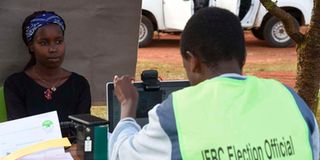
An Independent Electoral and Boundaries Commission official registers Hilda Jepkemboi as a voter at Kipkenyo in Kapseret constituency, Uasin Gishu County, on February 6, 2022.
The ongoing voter registration exercise is failing to capture the energy and numbers of the youth. This is not a minor administrative shortfall; it is a democratic emergency.
If the trend continues, the country will head into the 2027 General Election with an entire generation largely absent from the voters’ register, undermining the legitimacy of the process and the future of governance.
When the Independent Electoral and Boundaries Commission (IEBC) launched the Continuous Voter Registration exercise in September 2025, it set a target of 6.8 million new voters. By the latest count, only 201,122 new voters had been registered, alongside 67,438 transfers and 828 changes of particulars.


As the March 2026 mass registration drive approaches with a revised target of 6.3 million, the commission cannot afford to repeat the same mistakes.
Six persistent barriers stand out. First is trust. Many young Kenyans have lost faith in the IEBC due to perceived irregularities and lack of transparency in past elections. Confidence will not be restored by rhetoric but by verifiable, transparent processes and timely public reporting.
Second is voter education.
Too many young people remain unclear about how, where and why to register. Voter education must be treated as a continuous, year-round function, delivered in accessible, digital and localised formats.
Third is the perception that votes do not count. IEBC must clearly communicate how results are tallied, transmitted and verified, and publish disaggregated data promptly. Fourth is access. Registration centres remain too distant for many in rural areas and informal settlements. Mobile teams and decentralised services are essential.
Fifth is timing. Weekday-only hours exclude working and studying youth. Extended and weekend hours are necessary. Finally, national ID backlogs remain a barrier. Coordination to fast-track issuance for eligible citizens is critical.
The IEBC must remove both structural and perceptual obstacles. The opportunity exists. Seizing it will ensure that youth are fully included in Kenya’s democratic future.
Calvin Muga