Talanta: State must prove value for money
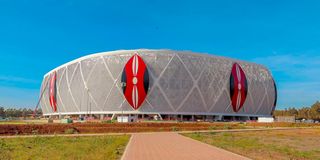
An exterior view of the under-construction 60,000-seater Raila Odinga Talanta Stadium in Nairobi.
By Dominic Ndege
When the Raila Odinga International Stadium, formerly Talanta Sports City, opens for Afcon next year, Kenyans will see steel, floodlights and 60,000 seats. They will not see the paperwork. That is where the real story sits.


Treasury approved the project at Sh35 billion. The Ministry of Defence signed a Sh45.85 billion contract with China Road and Bridge Corporation on May 26, 2024. Auditor-General Nancy Gathungu reported that the Sh10.85 billion gap lacked adequate documentation. She also said the contract was directly procured and that Attorney-General clearance, required for contracts above Sh5 billion, had not been obtained before the award.
None of this proves theft. It shows a systemic problem: a public project reached a Sh45.85 billion commitment without a paper trail the country’s chief auditor could follow.
I call this budgeted corruption. I do not mean every disputed shilling was taken. I mean corruption risk is built into a process where announcement, estimate, tender, financing and repayment are thinly documented. Money can leak through waste, error or theft, and citizens cannot tell which.
The government’s explanation deserves a fair hearing. Sports Cabinet Secretary Salim Mvurya told senators there was “no variation”, while Principal Secretary Elijah Mwangi said the Sh35 billion was a concept-design estimate that excluded VAT, withholding tax, freight and clearing charges. Officials also said all approvals, including the Attorney-General’s, were obtained.
If so, the problem changes shape but does not disappear. Why did Treasury approve an estimate that omitted almost a quarter of the eventual price, including taxes? The Public Investment Management Regulations require large projects to undergo feasibility studies and Treasury review before budgeting. Where are those documents? The Attorney-General’s clearance either exists or it does not. Publishing it would settle the dispute.
The contract is only the first number. Linzi FinCo 003 raised Sh44.79 billion, mainly from pension funds, at 15.04 per cent over 15 years. Repayments come from the Sports, Arts and Social Development Fund. What will Kenyans pay in total? Estimates range from about Sh102 billion to Sh145 billion, but the repayment schedule has not been published. A headline rate cannot reveal lifetime cost without knowing how quickly the principal is repaid.
The IMF has urged Kenya to count Sh335 billion raised through such securitisations, including Talanta, as public debt. Off the balance sheet is not off the taxpayer. This matters because public debt stood at about Sh13 trillion at the end of June, while debt service cost Sh1.77 trillion in 2025/26. Every financing decision therefore has an opportunity cost, even when the alternative is not a clinic or classroom.
Côte d’Ivoire’s Ebimpé stadium cost $257 million, while Talanta’s contract is about US$344 million and includes training pitches and external works. Different scopes, taxes, years and financing models prevent a precise benchmark. Kenyans are entitled to know why this delivery model was chosen.
The wider lesson is project preparation. A project can be economically desirable yet poorly structured. Before committing public money, government must establish costs, demand, revenue, risk allocation and repayment obligations. Proper appraisal does not prevent overruns, but it makes explanations easier to test and accountability difficult to evade.
Treasury should publish the full appraisal and cost, including taxes, before projects above Sh5 billion enter the budget. Direct procurement above that threshold should require published justification and Attorney-General clearance. Any gap between approved and signed costs should return to Parliament for fresh approval. Securitised financing should be transparently reported, with repayment schedules tabled.
The stadium will stand, and that settles whether Kenya built it. It does not settle whether Kenya paid the right price, or whether citizens will know what they paid by 2040. Citizens deserve the documents to answer these questions.
Follow our WhatsApp channel for breaking news updates and more stories like this.
Dominic Ndege, Legal researcher


