Premium
To survive, ODM must go back to its roots
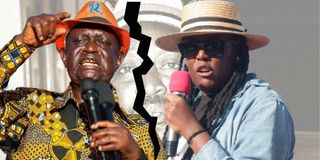
ODM leader Oburu Oginga (left) and former party leader Raila Odinga's daughter, Winnie Odinga.
ODM faces one of the most defining moments in its political history.
The once celebrated as a disciplined, reform-driven and nationally inclusive party, it now appears increasingly consumed by internal conflict, factional rivalries and family-centred power struggles that risk eroding its moral authority and political relevance. What was once framed as a healthy debate has crossed into self-sabotage.
At the heart of the turmoil is ODM’s growing inability to separate institutional politics from personal and family succession battles. Internal disagreements are no longer primarily about ideology, policy direction, or national strategy. Instead, they are shaped by proximity to power, lineage, and loyalty to individuals rather than to the party’s founding principles.


The emerging rivalry between Oburu Oginga and Winnie Odinga symbolises this shift. Oburu represents the party establishment: experienced, deeply entrenched, and influential. Winnie has positioned herself as a bold and assertive political actor, drawing legitimacy from visibility and access.
While competition within a political party is normal, the optics of a family-centred contest have unsettled supporters who fear that merit and institutional processes are being thrown out.
Leaders and grassroots mobilisers increasingly feel pressured to align not around ideas, but around personalities. ODM risks becoming a party where survival depends more on internal loyalties than on public principles. Such personalisation of power weakens discipline, silences dissent, and corrodes internal democracy.
The situation has been complicated by the political implications of Ida Odinga’s appointment as envoy to the United Nations Environment Programme. To many supporters, it reinforces the impression that top leadership is retreating from active engagement with grassroots supporters while consolidating elite positions.
Hovering over these tensions is the unresolved issue of succession. ODM has avoided a structured transition conversation. The vacuum has been filled by informal contests and public confrontations. The consequences: confused supporters, cautious allies, and rivals watching closely.
ODM’s survival now depends on restoring internal democracy, discipline, and a genuinely national outlook.
Follow our WhatsApp channel for breaking news updates and more stories like this
Wycliffe Osango