Conducive business environment for SEZs will uplift the economy
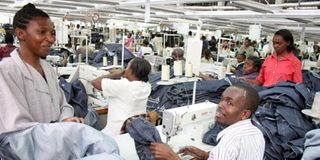
Workers at an Export Processing Zone. Kenya’s experience with the EPZ model should provide important lessons for the special economic zone (SEZs) strategic plan. PHOTO | FILE | NMG
Essentially, the government should implement the SEZ as a vehicle for accelerating industrial development, modernising agriculture and deepening technology adoption.
The launch of the SEZ should be the next big thing on Kenya’s road to Vision 2030.
But it shouldn’t overshadow the major challenges that the government should deal with to uplift the stressed sectors, particularly agriculture and manufacturing.
Since China established the first special economic zone (SEZ) in 1979, many other countries have adopted the model to drive their economic growth, expand exports and create jobs.
The economies of India, Dubai, Korea, Mauritius, Singapore and others that have created new investment opportunities in exclusive business zones have benefitted from rapid economic growth. Even though there are a few classic cases of failure, newcomer Kenya hopes to use SEZ to achieve economic transformation where other policy prescriptions have failed.