Gender equality beyond promises
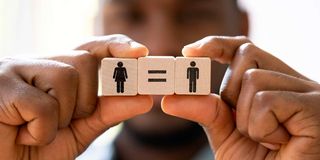
Kenya’s Constitution provides a solid foundation for gender equality.

What you need to know:
- Kenya must protect legitimate democratic debate while ensuring that public policy remains consistent with constitutional obligations.
- We must also scrutinise the influence of political and financial interests on decisions affecting women’s health and rights.
I was privileged to participate and speak at the Copenhagen Summit on Gender Equality and Women and Girls’ Rights, where governments, multilateral institutions, civil society and development partners examined the growing threats to gender equality and the political action required to protect the gains made so far.
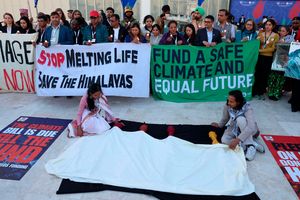
Organised opposition to women’s rights is gaining political influence across regions. These movements are increasingly coordinated, well-resourced and deliberate in their efforts to influence legislation, public institutions, development financing and public opinion. Their opposition extends beyond sexual and reproductive health and rights to education, gender equality policies, democratic participation and the work of civil society organisations.
The Copenhagen Call to Action identifies four priorities: women’s freedom to make decisions about their bodies and lives; comprehensive sexuality education; universal access to healthcare; and support for families in all their diversity. For Kenya, these priorities provide an opportunity to examine the relationship between constitutional rights, public policy and the exercise of political power.


In Kenya, our challenge is not lack of legal commitments to equality. It is the failure to consistently translate them into accessible services, adequately financed institutions and enforceable protections. Kenya’s Constitution provides a solid foundation for gender equality.
Articles 27 and 28 guarantee equality and human dignity, while Article 43 recognises the right to the highest attainable standard of health, including reproductive healthcare. Article 26 specifies the circumstances under which abortion is permitted.
Sexuality education
The discussions about sexuality education are frequently dominated by ideological disagreements, with insufficient attention to the information adolescents require to protect their health and exercise informed choice.
Young people need accurate, age-appropriate education on bodily development, consent, relationships, contraception and prevention of sexual violence.
This should be delivered through an appropriate educational framework, with the involvement of parents, teachers, healthcare professionals and the young people.
Failure to provide reliable information does not protect adolescents; it leaves them dependent on informal sources, including digital platforms where misinformation is widespread and safeguards are often inadequate.
Universal health coverage
Access to healthcare continues to be shaped by income, geographical location, institutional practices, stigma and the willingness of healthcare providers to deliver services within the law. The consequences are disproportionately borne by women with the fewest resources.
Universal health coverage cannot be assessed exclusively through registration figures or financing arrangements. The government must demonstrate improvements in service availability, financial protection, quality of care and equitable access, particularly for populations historically excluded from essential healthcare.
Support for families
The fourth Copenhagen principle, recognising and supporting families in all their diversity, is equally relevant to Kenya’s economic policy. Women’s unpaid care work remains a substantial but inadequately recognised contribution to our economy.
Women provide childcare, care for older people, support relatives with illnesses and undertake domestic responsibilities that enable other members of their households to participate in paid employment. The absence of affordable childcare restricts women’s economic participation, while weaknesses in healthcare and social protection transfer additional costs and responsibilities to households.
There is also a responsibility to confront the political organisation of the backlash against gender equality. Some of these efforts deliberately present reproductive autonomy and gender equality as incompatible with family well-being, religious freedom or national identity.
Kenya must protect legitimate democratic debate while ensuring that public policy remains consistent with constitutional obligations and established human rights protections. Political disagreement cannot become a justification for discrimination, institutional exclusion or the denial of lawful healthcare.
For Kenya, the Copenhagen Call to Action means stronger gender-responsive budgeting, transparent monitoring of public expenditure, effective implementation of constitutional protections, and meaningful participation by women’s rights organisations in policy development and oversight.
We must also scrutinise the influence of political and financial interests on decisions affecting women’s health and rights. Public institutions should be accountable to constitutional standards and the needs of the populations they serve, rather than giving in to ideological pressures.
Dr Bosire is a medical doctor and lawyer. [email protected]