For decades, Kenyan politics has been loud. Barely in substance, but loud in performance. We have mastered the art of political theatre: rallies that feel like concerts, insults disguised as “mobilisation,” tribal arithmetic dressed up as ideology, and promises made with the confidence of people who know they will never be audited by history. Our elections have often been contests of personality, money, and noise, not of vision, restraint, or constitutional fidelity.
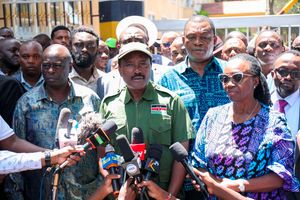
So when David Maraga quietly kicks off a 60-day nationwide voter registration caravan at the Coast, without fanfare, without chest-thumping, without turning it into a personal carnival, it feels… unfamiliar. Almost suspicious.
In a political culture addicted to spectacle, seriousness feels radical. Sometimes even boring. And that is precisely why it matters. Because a people that demands of its leaders to be entertainment outlets cannot complain when their leaders turn governance into a circus.
Maraga’s style of politics, however, does not scream. It does not beg for attention. It does not trade in outrage or theatrics. It speaks in systems, in institutions, in process, in long-term consequences.
It reflects the habits of a constitutionalist, not a career politician. A man trained to think in terms of precedent, public trust, and restraint, rather than short-term applause.
Take fundraising, for instance. For years, we have been fed the fiction that Kenyan politics must be bankrolled by shadowy billionaires, procurement cartels, and opaque “friends of the campaign.” We have normalised the idea that leaders must first mortgage the state before they can govern it.
Maraga is challenging that assumption. His fundraising has been transparent. Public. Citizen-driven. Anchored in small donors and organised diaspora caucuses who are openly mobilising resources for the voter registration caravan. No mystery benefactors. No secret dinners. No “wafadhili” whose names are whispered but never written.
Maraga offers credibility
This is not just about money. It is about political independence. When your campaign belongs to citizens, your presidency answers to citizens. When it belongs to financiers, your first loyalty is already compromised even before you take office. That distinction alone makes this moment historic.
But the deeper significance of Maraga’s emergence lies in what it represents for a generation that has been drifting into political apathy.
In 2022, we witnessed something dangerous: millions of young Kenyans opting out. Not because they were lazy. Not because they did not care. But because the choices before them looked like recycled versions of the same political class. We have a similar situation brewing currently, in the run-up to the 2027 General Election. We have the incumbency on one side. A “united opposition” that still feels like continuity on the other. Different jerseys. Same game.
To many young people, voting in 2022 felt like participating in a ritual whose outcome was already predetermined. The same feeling rings deep even now.
Today, there exists a dormant voting bloc of roughly 11 million Kenyans (8 million who didn’t vote in 2022, plus another 3 million potential new voters). Citizens who are interested but disengaged. Or eligible but unmotivated. Or politically alert but emotionally exhausted. These are not swing voters.
They are waiting voters. Waiting for a reason to believe that participation is rational again. Maraga may be that reason. Not because he promises miracles. William did that in 2022, now see. Maraga offers something rarer: credibility.
For the next five years, Kenya does not need drama. It does not need constant political warfare. It does not need leaders who campaign every day of their time in office. It needs stability. Institutional sanity. Fiscal discipline. A return to national common sense. We need a period of consolidation.
A moment to finally operationalise what the 2010 Constitution envisioned: a state governed by rules, not whims; by law, not personalities; by service, not entitlement. A seasoned constitutionalist is uniquely positioned to lead such a phase.
Someone who understands how public resources leak. How procurement can be manipulated, how the legal system can be empowered to expedite cases on corruption. How oversight is weakened. How dignity is eroded, not in dramatic moments, but in small daily compromises.
Maraga’s mantra, “Reset, Restore, Rebuild” is a governance framework. Resetting by dismantling captured systems. Restoring by re-anchoring institutions in law and ethics. Rebuilding by creating durable public structures that outlast individuals.
That is how nations recover. Not through making taxes unbearable for two years then dropping them a year before elections to seem like the guy, but through boring, disciplined, persistent reform. This is why the idea that “we can always find a better alternative later” is dangerous.
Moments like this are rare. A credible, respected, institutionally grounded figure, untainted by corruption scandals, unburdened by ethnic kingpin politics, financially independent, and morally consistent does not appear every election cycle. History does not mass-produce such candidates.
When they emerge, societies either rise to meet them, or waste them. Kenya has wasted moments before. We have watched promising leaders get drowned out by noise. We have seen reform windows close because citizens chose cynicism over engagement. We have allowed mediocrity to survive because “at least it’s familiar.”
We cannot afford that again. This is not about blind loyalty. It is about strategic maturity. It is about recognising when the political ecosystem aligns in our favour: public frustration with old politics, youth hunger for meaning, diaspora readiness to invest, institutional decay demanding repair.
All the ingredients are here. What remains is citizen action. Because Maraga represents a pivot away from performative politics toward purposeful governance. We have a chance here. A chance to interrupt the cycle. To reset our political culture. To restore dignity to public office. To rebuild trust between citizens and the state.
Let us not be the generation that recognised a turning point, and chose the comfort of the familiar over the courage of our imagined future.