NMG should never leave public unclear on where the truth lies
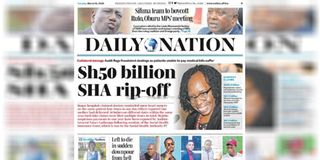
On March 10, the Nation, quoting the Auditor-General’s report, reported what appeared to be grave irregularities—amounting to Sh50 billion unaccounted for.

Across many democracies, trust in institutions is declining. In Kenya, that erosion is not only directed at the government, it is also increasingly touching the media. And sometimes, we in journalism must ask uncomfortable questions of ourselves.
Recent coverage of the Social Health Authority (SHA) offers such a moment. SHA is not just another policy story. It sits at the heart of Kenyans’ access to healthcare, literally a matter of life and death. Since it replaced the National Health Insurance Fund (NHIF) in 2024, it has dominated headlines, often for the wrong reasons: hospitals turning away patients, delayed reimbursements, confusion around benefits, and growing public anxiety about whether the system works.
On March 10, the Nation, quoting the Auditor-General’s report, reported what appeared to be grave irregularities—amounting to Sh50 billion unaccounted for. This is the kind of number that should trigger alarm, scrutiny and sustained, rigorous journalism.


The Auditor-General’s reports are the product of a structured, constitutional process. Before any finding is published, the audited entity, in this case the Ministry of Health and agencies under it, is given an opportunity to respond to queries, provide documentation and clarify anomalies.
By the time such a report is tabled, it reflects not just suspicion, but unresolved questions where evidence was either insufficient or unsatisfactory.
That is what makes these reports powerful, and why they must be treated with seriousness.
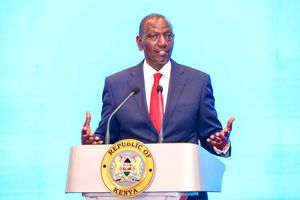
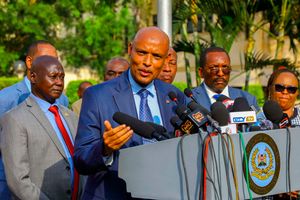
In response, Health Cabinet Secretary Aden Duale came out forcefully to dismiss the claims, arguing that the figures had been misrepresented. He framed the Sh50 billion not as lost money, but as a combination of accounting provisions, transitional fund movements, and legally sanctioned expenditures tied to the shift from NHIF to SHA.
He offered explanations: that billions flagged as “unsupported claims” were actually reserves required under international accounting standards; that funds deemed “untraced” were part of lawful institutional transfers; that payments to “uncontracted facilities” occurred during a transition period to avoid turning away patients; and that some flagged expenditures reflected differences between benefit schemes.
These are detailed, technical responses. They may well hold merit. They may also not. But here is where the problem lies.
When the Nation gave the CS space to respond, it fulfilled an important journalistic obligation: fairness. No story, however strong, should proceed without giving those accused or implicated a chance to respond.
But fairness is not stenography. The role of journalism is not merely to present competing claims and step aside. It is to interrogate them. To test them. To weigh them against evidence. To ask: do these explanations stand up? Are they consistent with the Auditor-General’s findings? What does independent expertise say? Where are the gaps?
Instead, what the audience received were two sharply divergent narratives: On one hand, the Auditor-General suggesting serious irregularities. On the other, the Cabinet secretary dismissing them as misunderstandings.
And between these two positions, the journalist appeared to retreat. Where does that leave the reader? Confused. Suspended between two claims, with no clear sense of where the truth lies.
This is what one would refer to as the “laundromat approach” to journalism: where powerful actors are given a platform to clean up allegations in public view, without being subjected to adequate scrutiny. The media, in this instance, risks becoming a conduit rather than a filter, amplifying claims without interrogating them.
It is not enough to quote. The media must question. For instance, if the Auditor-General’s process includes prior engagement with the ministry, why are these explanations emerging only after the report becomes public? Were they presented earlier and rejected, and if so, why?
If Sh26.8 billion represents legitimate insurance reserves, does the Auditor-General dispute this classification? On what basis?
If funds were legally transferred during the NHIF-to-SHA transition, why were they flagged as irregular? Is this a matter of documentation, timing, or interpretation?
If payments to uncontracted facilities were justified by emergency transition needs, what safeguards were in place to prevent abuse?
These are not adversarial questions. They are necessary ones. They require reporters who understand not just politics, but process—how audits work, how public finance is structured, and how accounting standards apply. Without that grounding, journalism risks mistaking complexity for exoneration.
The Cabinet secretary is right about one thing: reporting on complex financial systems demands responsibility. But responsibility does not mean softening scrutiny. It means sharpening it.
At stake here is not just the reputation of a ministry or the credibility of an audit. It is public trust in both the government and the media.
The Nation should never leave the public in a position where they cannot tell where the truth lies.
Rigour is what bridges that gap. Rigour means going beyond the press statement. It means returning to the Auditor-General’s report and testing each rebuttal against it. It means bringing in independent auditors, health financing experts and policy analysts to help the public understand what the facts are, what the interpretation is and what remains contested. Rigour means resisting the temptation of balance as an end in itself. Because balance without interrogation can become a false equivalence.
And ultimately, rigour is what distinguishes journalism from mere information flow.
Equally important is to interrogate Mr Duale’s other remarks about alleged irregularities detected in the SHA system, many of which would have been so funny if this were not such a grave matter (pun intended). For example, Mr Duale recently told a TV audience that more than 1,105 Kenyans had submitted between 378 and 66 dependents each, some women had submitted more than 120 husbands, and some 85 men had submitted that they had 26 to 72 wives. What system allows such scandalous irregularities? How was it configured?
The SHA story is too important to be reduced to competing soundbites. It demands depth, persistence and clarity.
Because when journalism allows itself to become a laundromat, it is not just accountability that is washed away; it is trust. And without trust, both democracy and the media itself are diminished.
Follow our WhatsApp channel for breaking news updates and more stories like this.
Contact the Public Editor to raise ethical concerns or request a review of published material. Reach out: Email: [email protected]. Mobile number: 0741978786.