Young? Self-employed? Retirement planning is for you too
Sponsored by Association of Kenya Insurers

By Pauline Gathuri
Retirement may feel like a distant concern when you are young, building a career, growing a business or juggling the demands of everyday life.
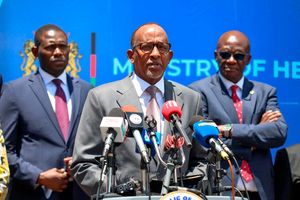
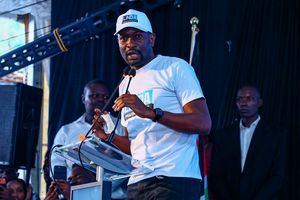
This point was discussed at length at the Nation Media Group Pensions Conference and Expo held on October 29-30, 2026. The event brought together players from Kenya’s pensions industry, subject matter experts, and members of the public to discuss the future of retirement planning.
The discussions were insightful, but what stood out were practical questions about how much to save, where to start, whether savings would be enough and how to plan for retirement without a regular salary or formal employment.
These questions highlight a reality: Retirement planning is not just for older people or for the employed people. It is for the young professional starting out, the entrepreneur building a business, the self-employed person with an irregular income, and anyone who hopes to enjoy financial security later in life.
I thought it would be useful to revisit some of the questions raised at the conference and unpack a few key points, because while retirement may be many years away, the decisions we make today can have a significant impact on the choices we have tomorrow.
Is retirement planning for employed people?
Retirement planning is for everyone. As long you are alive, then you will age and you will not be able to do as much as you could when you were younger. So, whether formally employed or self-employed, we all go through the same ageing process, and a time will come when you retire or step away from active work. However, even with retirement, your bills and financial responsibilities do not retire. They still need to be paid.
And this is why putting away some money when you are actively working is important, so that that money can sustain you when you retire. And again, this should be done by all, whether employed or self-employed. Yes, it may be easier for those employed because they have a regular income and many employers today have set up pension schemes for their employees.
For the self-employed, and even for those employed but have no pension scheme, the first thing to do is open a personal pension account from an insurance company and contribute towards it as best as you can. If your income is not regular, the same way you plan for school fees or other recurrent expenses, like shopping, rent, and transport, pension too should have a share. There is no penalty if you do not save monthly, the important thing is that you keep putting some money in the pension plan.
How will I know how much I have saved?
You will receive an annual statement that shows you how much you have contributed and what interest you have earned. Most insurance companies today have online portals and Apps where you can check your statement real time.
What goal should I work towards when saving for my retirement?
There is no magic number. Your retirement saving goal should be guided by your current lifestyle or the lifestyle you wish to lead in retirement. The amount should be able to cover for your daily living expenses, including rent, food, transport, entertainment, medical and other costs.
As a young person, I am not concerned about retirement
All those people who are retired today, were once young. Today, you are in your twenties, but 10 years ago you were in your teens. As stated earlier, if you are alive, ageing is inevitable. As soon as you can make some money, put a few coins aside for retirement.
Let us do a practical example. Alice is 25. She has just started her first job and is saving Ksh5,000 per month. Using Kenya’s retirement age of 60, she has 35 years to save. That means Ksh5,000 for 12 months over 35 years, that comes to Ksh2.1 million. If we use an assumed interest rate earned on her savings year-on-year of 10 percent over that period, Alice will have Ksh19 million in her retirement fund.
Now let us take Susan, who is 35 when she decides to start saving Ksh5,000 towards her retirement. She has 25 years to save a total of Ksh1.5 million and with the interest rate of 10 percent, her kitty at retirement is Ksh6.6 million – a whopping Ksh12.4 million difference compared to Alice’s returns.
There will be people to take care of me when I am retired
We have to accept the fact that the society has changed. Your children are not a plan, as they too, will have their own living expenses. The government cannot sustain you either. It is therefore important to plan and have something that can sustain you financially.
What happens if I die before I retire?
When opening a personal pension plan, you will be required to fill in a form that will state who will receive your benefits if you die before you retire.
Find more questions answered on the Association of Kenya Insurers (AKI) Website www.akinsure.com.
____________________
Pauline Gathuri is the Senior Manager for Life Insurance Business at AKI