Skills, jobs and business opportunities for women: Specialised beauty training centre opens in Nairobi
Sponsored by Korea International Cooperation Agency

Opening Ceremony of the Angels Beauty Training Center in Nairobi.
A new specialised beauty training centre was officially opened in Nairobi on November 7, 2026, as part of an initiative aimed at equipping women with professional skills and creating pathways to employment, entrepreneurship and improved incomes in Kenya’s beauty service industry.
The Angels Beauty Training Center (ABTC) has been established under a project titled, “A Specialised Skills Training and Employment Creation Initiative for Women in the Beauty Service Industry in Nairobi County, Kenya.”
The five-year initiative, running from January 2026 to December 2030, is being implemented through the KOICA Inclusive Business Solution (IBS) programme, with Dong-A Fiber, and Sana Industries Co Ltd as implementing partners.
The project aims to produce 2,400 graduates from the training centre over five years, select 600 scholarship recipients from vulnerable groups, and connect graduates with employment and entrepreneurship opportunities while contributing to increased household and individual incomes.
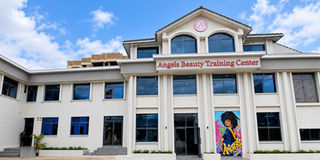
Exterior view of the newly constructed Angels Beauty Training Center in Nairobi, Kenya.
A new platform for women’s skills development and economic empowerment
Located on Langata Road in Nairobi, Angels Beauty Training Center has been designed as a professional vocational training facility combining classroom education with practical beauty training. The centre has five specialised classrooms, each capable of accommodating up to 24 students per session. Together, the classrooms can accommodate up to 120 students at a time.
ABTC offers practical training in key beauty disciplines, including Hairdressing, Skincare and Facial Care, Massage and Body Care, and K-Beauty-based Head Spa. The courses combine classroom-based instruction with hands-on practice, enabling students to develop practical skills that apply in the workplace.
Professional beauty equipment, devices and training products are imported directly from South Korea. Students are therefore able to gain hands-on experience with equipment and products used in the Korean beauty industry, while developing practical skills in professional equipment operation, customer consultation, hygiene and safety, and service procedures.
The centre’s approach goes beyond conventional vocational education. Its goal is to establish a sustainable pathway linking training, practical experience, employment, overseas employment, entrepreneurship and economic independence.
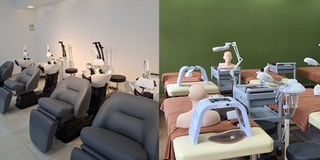
Beauty training facilities and professional equipment at the Angels Beauty Training Center.
Connecting K-Beauty training with employment opportunities
ABTC’s training model draws on Korean beauty education and industry practices, with an emphasis on skills that can be directly applied in the workplace.
The centre’s training team includes Korean professionals with practical industry experience, including a Korean practitioner with formal nursing qualifications and expertise related to hygiene, safety, customer care and professional beauty services. The centre is also led by a Korean principal with more than 10 years of experience heading educational institutions.
Students receive practical training in professional equipment operation, customer consultation, hygiene and infection control, service procedures, and pre and post-treatment customer care.
The project places particular emphasis on what happens after training.
ABTC is developing employment pathways through direct hiring opportunities linked to Sana Industries Co Ltd, partnerships with local salons and beauty companies, career counselling, portfolio development, and networking with industry professionals.
The centre is also developing a Head Spa specialist programme, covering scalp and hair care, specialised equipment, customer consultation and service procedures. The programme is intended to create opportunities for graduates to pursue careers not only in Kenya but also overseas, in the longer term.
Through these employment and entrepreneurship linkages, the project seeks not only to increase the number of trained beauty professionals but also to improve the income-generating capacity of graduates.
To make professional beauty education more accessible, ABTC provides students with training kits, uniforms and textbooks, reducing the upfront costs associated with vocational training. The centre also offers affordable tuition fees and instalment payment options, allowing students to manage their education costs more flexibly.
In addition, scholarship opportunities are available for learners who face financial barriers to accessing vocational education. As part of the five-year project, 600 vulnerable learners will be selected as scholarship recipients, giving them an opportunity to acquire professional skills and pursue employment or entrepreneurship.
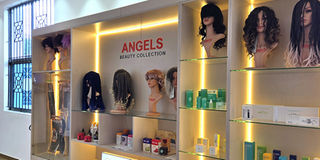
Angels Beauty Collection at the Angels Beauty Training Center.
From skills training to entrepreneurship and a wider beauty industry ecosystem
The initiative is supported by Sana Industries Co Ltd, a Kenyan-based wig manufacturing company that began operations in Kenya in 1989.
Sana Industries is known for its Angels brand and has expanded its business presence across several African countries. The company employs approximately 10,000 people and develops and supplies around 180 different wig products, contributing to local and regional economic activity.
Since establishing its Nairobi operations in 1989, the company has expanded its manufacturing capacity and regional presence, including operations in Tanzania, Ethiopia, Uganda, Zambia, Zimbabwe, South Africa and Mozambique.
The establishment of ABTC builds on this long-standing business presence by linking the beauty manufacturing industry with vocational skills development, employment creation and entrepreneurship.
Talking of entrepreneurship, ABTC is developing a Beauty Hub – a business incubation space designed to help students and graduates establish their own beauty businesses. The Beauty Hub will support entrepreneurship and business management training, development of beauty service and product ideas, branding and marketing skills, and networking with companies and industry professionals.
The project’s long-term objective is to create a cycle in which vocational education leads to employment or entrepreneurship. Increased income creates greater economic independence, and successful businesses generate additional employment opportunities within local communities.
The centre also plans to expand K-Beauty-based professional courses, strengthen exchanges between Korean and Kenyan beauty professionals, broaden overseas employment opportunities, expand its network of partner salons and companies, and strengthen support for scholarships and graduate networks.
A Beauty Show is planned for 2027, with the ambition of developing it into an industry networking platform where beauty companies, salons, professionals and students can exchange skills, products, recruitment opportunities and business ideas.
The opening of ABTC therefore marks more than the establishment of a new vocational training facility. It represents the beginning of a five-year effort to connect skills development with employment, entrepreneurship and income generation, with women and vulnerable groups at the centre of focus.
Through this model, the project seeks to contribute to a more skilled and inclusive beauty service industry in Kenya while creating practical opportunities for individuals to build sustainable livelihoods.
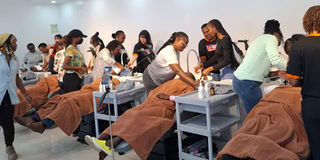
Hands-on Head Spa training at the Angels Beauty Training Center.
For more information and applications
Those interested in training opportunities at Angels Beauty Training Center can contact the facility by phone or WhatsApp at 0769 173 011, or visit www.abtckenya.com.
About KOICA
The Korea International Cooperation Agency (KOICA) is the Republic of Korea’s official development cooperation agency responsible for implementing grant aid programmes around the world.
Since opening its Kenya Office in 2008, KOICA has worked closely with national and county governments, international organisations, civil society organisations, and local communities, to support sustainable and inclusive development across various sectors, including health, education, water and sanitation, governance, agriculture, and digital innovation.


