Athi Water embarks on Ksh76.3 billion projects to improve service in Nairobi metropolitan region
Sponsored by Athi Water Works Development Agency
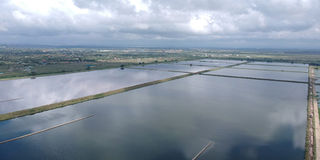
Dandora wastewater treatment plant.
By Pauline Kairu
From new bulk water supplies and household connections to sewerage expansion and renewable energy, Athi Water Works Development Agency (AWWDA) is advancing projects aimed at improving services across Nairobi and the wider metropolitan region. The portfolio is valued at approximately Ksh76.3 billion, and the projects are aimed at expanding access to reliable water supplies, improving wastewater management, and strengthening the resilience of services across Nairobi and neighbouring counties.
AWWDA is mandated with the development and management of bulk water infrastructure for Nairobi, Kiambu, and Murang’a counties. This region has over nine million residents.
Supported by the Government of Kenya and development partners, including the African Development Bank, French Development Agency, German Development Bank and Impact Fund Denmark, the investments span water sources, treatment plants, transmission and distribution networks, storage reservoirs, sewerage systems and wastewater treatment facilities.
The programme reflects a growing emphasis on connecting major infrastructure to the communities it is intended to serve, while ensuring that water supply expansion goes hand in hand with sanitation and environmental protection.
One of its recent milestones is the Northern Collector bulk water supply system, which is operational and supplying 140 million litres of treated water daily to Nairobi. Offtake infrastructure has also been completed at Runda, Karuri, Two Rivers, Thindigua and Kiambu, creating a foundation for further distribution investments.
In western Nairobi, ongoing works combine transmission and distribution pipelines, storage and sewerage infrastructure. The projects include 24km of transmission pipeline, 54km of distribution network and a reservoir at Karen.
Along the Gigiri-Karura-Outer Ring corridor, a strategic transmission link has reached 72.3 percent physical progress, with more than six kilometres of pipeline laid.
These projects form part of a wider effort to strengthen the infrastructure needed to move water from production and treatment facilities to distribution systems and, ultimately, consumers. And their impact will depend in part on continued investment in the connections that bring services closer to households.
Last-mile connectivity
Last-mile connectivity is a key component of AWWDA’s programme. Proposed distribution works linked to the Northern Collector Tunnel envisage approximately 400km of pipelines, targeting more than 300,000 people in areas including Syokimau, Gatani, Mihang’o, Utawala, Ruai, Kamulu and Thindigua.
In Kiambu County, the Gatundu Water Supply and Sewerage Project is nearing completion. It includes a treatment plant with a capacity of 18,000 cubic metres per day, water pipelines, and 2,000 household connections.
The Ruiru-Juja/Greater Githurai project is operational, while the Mwihoko last-mile project has been completed and handed over.
Together, the initiatives illustrate the different stages involved in expanding water services, from increasing treatment and transmission capacity to extending distribution networks and connecting households.
AWWDA is also investing in sanitation through the Nairobi Rivers Basin Rehabilitation and Restoration Programme, under the Sewerage Improvement Project Phase II (NaRSIP II).
The programme targets an increase in Nairobi’s sewerage coverage from 48 percent to 55 percent, with more than 400,000 residents expected to benefit by the end of this year. Work completed under the programme includes approximately 65,000 household connections, more than 480km of sewer lines, rehabilitation of wastewater treatment infrastructure, and the construction or rehabilitation of 50 ablution blocks in informal settlements.
At the Dandora wastewater treatment facility, further investment is underway to increase treatment capacity by 20,000 cubic metres per day.
Expanding sewer networks and treatment capacity is intended to improve the collection and management of wastewater, reduce pollution entering Nairobi’s rivers and support healthier urban environments. Extending connections to households remains an important part of ensuring that sewerage infrastructure translates into wider sanitation benefits.
In Nairobi’s central business district, AWWDA is using trenchless technology to rehabilitate ageing pipelines while limiting disruption to roads, businesses and movement. Techniques such as pipe-bursting and pipe-cracking allow underground pipelines to be replaced with less surface excavation than conventional methods.
The agency is also incorporating climate resilience into infrastructure planning through measures that include source diversification, storage, climate-risk assessment, solarisation and stronger wastewater systems.
Under the Athi Cluster Solarisation Project, renewable energy is being integrated into water and wastewater facilities in Limuru, Kikuyu and Machakos. The initiative is intended to reduce reliance on conventional electricity and strengthen the operational resilience of essential services.
These approaches complement investment in physical infrastructure by addressing some of the practical challenges of maintaining water and sanitation services as urban areas expand and climate risks increase.
Pipeline of strategic investments
Alongside projects under implementation, AWWDA is preparing a further pipeline of strategic investments. These include Thiririka Dam, Maragua IV Dam, Kiambaa-Ruiru II Dam, the Nairobi Metropolitan Bulk Water Supply Project, the Nairobi Satellite Towns Water and Sanitation Improvement Programme and NaRSIP Phase III.
Maragua IV Dam is estimated to require approximately Ksh60 billion, while the proposed Thiririka Dam project is valued at Ksh18 billion and would include a dam, treatment plant, pipelines and storage reservoir.
The projects represent a longer-term effort to increase water storage and supply capacity as demand grows across Nairobi and the surrounding metropolitan region. Their delivery will depend on project preparation, financing and implementation.
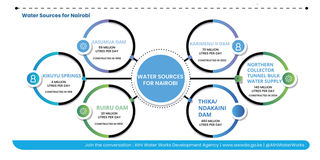
As Kenya works towards wider access to safe water and sanitation, AWWDA’s programme brings together several interconnected priorities: Developing reliable water sources, expanding distribution and household connections, improving wastewater treatment, protecting rivers, and adopting technologies that can help sustain services.
Ultimately, the value of these investments will be reflected not only in infrastructure completed, but in more dependable water supplies, improved sanitation and healthier communities across Nairobi, Kiambu, Murang’a and the wider metropolitan region.