Agency intensifies investments towards addressing water gaps in Kenya’s coast
Sponsored by Coast Water Works Development Agency
From transformative bulk-water infrastructure to renewable energy and strategic investments, the Coast Water Works Development Agency (CWWDA) is laying the foundation for a water-secure, investment-ready coastal region. The Agency is doing more by also focusing on delivering services to underserved populations.
With a daily water deficit of nearly 196 million litres, the Coast region faces a significant challenge but also an opportunity to transform water security, strengthen economic resilience and unlock new avenues for investment.
CWWDA is at the forefront of delivering strategic infrastructure designed to bridge the gap between water demand and supply while supporting sustainable development across Kenya’s coastal counties.
As the region’s population grows, urban centres expand and new industrial and commercial developments emerge, demand for reliable water and sanitation services continues to rise. Meeting this demand requires more than increased water production, calling for an integrated approach that combines bulk water production, efficient transmission, adequate storage, sustainable energy solutions and resilient sanitation infrastructure.
Sustainable Development Goal 6
Through investments in bulk water production, transmission pipelines, storage reservoirs, boreholes and sanitation infrastructure, CWWDA plays a critical role in strengthening water security and advancing Kenya’s commitment to Sustainable Development Goal (SDG) 6, which seeks to ensure the availability and sustainable management of water and sanitation for all.
The Coast region has an estimated population of 4.4 million people and continues to experience rapid urban growth and increasing economic activity. Port operations, tourism, manufacturing, trade, housing and commercial development are all increasing demand for reliable water supply.
Current Agency estimates indicate that daily water demand in the Coast region stands at approximately 446 million litres, against a production capacity of about 250 million litres. This translates to an estimated daily deficit of 196 million litres highlighting the urgent need to accelerate infrastructure development and mobilise additional investment.
Through its ongoing and completed projects, CWWDA is addressing the region’s water deficit by increasing water production and expanding bulk water supply infrastructure. The Agency currently supplies bulk water to Water Service Providers (WSPs) in four counties: Taita-Taveta, Kwale, Kilifi and Mombasa. The WSPs then distribute the water to households, institutions and businesses.
Major investments
One of the Agency’s major recent investments in addressing the water deficit in the region is the completed Second Baricho–Kakuyuni Water Supply Project implemented by CWWDA under the Ministry of Water, Sanitation and Irrigation, with financing from the World Bank through the Water and Sanitation Development Project (WSDP). The project comprises approximately 29km of an 800-millimetre-diameter steel pipeline, a 5-million-litre storage tank, three pump sets and associated electromechanical works. This has strengthened the transmission of bulk water from Baricho towards Kakuyuni, Malindi, Kilifi and surrounding areas.
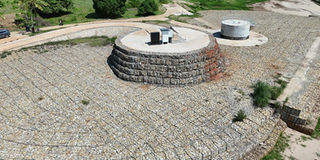
The Agency also completed the Baricho Wellfield Protection Works which were designed to safeguard the ground water source against flooding and related damage. The works included ap proximately 4.19km of piling together with extensive gabion protection. Baricho is one of the Coast region’s most important bulk water source with an installed capacity of approximately 110 million litres of water per day.
Another major investment is the solarisation of Baricho Water Works. The facility previously relied entirely on grid electricity for pumping operations with electricity expenditure averaging approximately Ksh60 million per month. The installation of 6,717 solar photovoltaic panels, each rated at 650 watts, provides a combined generation capacity of approximately 4.37 megawatts. The hybrid solar-grid system has reduced the average monthly electricity expenditure to approximately Ksh40 million, representing savings of around Ksh20 million per month or approximately Ksh240 million annually. This has significantly reduced operating costs and strengthened the financial sustainability of bulk-water production at Baricho.
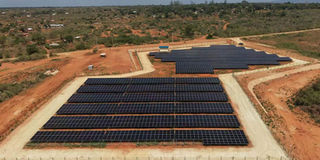
Baricho water works solarisation.
CWWDA has also completed the replacement of boreholes at Baricho and the development of major transmission and storage infrastructure, including the 56km Malindi–Kilifi pipeline, the 37km Malindi–Gongoni pipeline and a five-million-litre water storage tank in Kilifi. Together, these investments have strengthened storage capacity, improved water transmission and enhanced the resilience of the coast region’s bulk water supply system.
Long-term strategy
At the centre of CWWDA’s long-term strategy is the Mwache Project, one of the most significant investments aimed at transforming water security in Mombasa and Kwale counties. The project has two broad components. The dam and reservoir component is being implemented by the Ministry of Water, Sanitation and Irrigation. The dam is currently over 90 percent complete with reservoir impoundment targeted to start before the end of the year.
CWWDA is responsible for development of the complementary water-supply infrastructure required to treat, convey, store and distribute water from the dam to consumers.
The Agency has already commenced implementation of the Mwache South Mainland Transmission Pipeline, which will convey treated water towards the South Mainland and adjoining areas in Mombasa and Kwale.
The pipeline is particularly strategic because it will support water supply to the planned Dongo Kundu Special Economic Zone, where reliable infrastructure will be critical in supporting industrial, logistics, commercial and related investments. By providing a dependable water-supply backbone to the area, the project will help create the enabling conditions for investment, enterprise growth, employment creation and wider economic development in Mombasa and the Coast region.
CWWDA has also signed the contract for construction of the Mwache Water Treatment Plant with works expected to commence in December 2026. The plant will have a planned treatment capacity of approximately 186 million litres per day, enabling water from the dam to be treated to drinking-water standards before transmission to the target areas.
Once the full system is completed, the Mwache Project is expected to benefit approximately one million people and substantially increase water availability in Mombasa and Kwale.
While significant progress has been made, completing the full Mwache water supply system will require additional financial resources. The funding secured to date is insufficient to cover all the remaining infrastructure required to bring the project to its full potential.
CWWDA is therefore actively seeking additional partners and investors to support the completion of the remaining treatment, transmission, storage, distribution and sanitation infrastructure.
Targeting the underserved
Across Kenya’s Coast region, CWWDA is expanding access to water through targeted community-level and institutional projects designed to respond to the needs of underserved populations. Across the six counties of Mombasa, Kilifi, Kwale, Tana River, Lamu and Taita-Taveta, the projects highlighted in this area alone represent an investment of approximately Ksh2.8 billion covering boreholes, water pans, local water-supply schemes, storage facilities, pipelines and institutional water projects.
In Kilifi County, the Agency has invested in rehabilitation and expansion of water pans, boreholes and institutional water projects. The Kitsaka Cha Basi Water Pan, valued at approximately Ksh24.6 million, was expanded from about three million litres to 20 million. The Kikomani-Kwa Diki and Lutsangani water pans were also expanded. Ongoing works include the Mrya Chakwe Earth Dam, involving development of approximately 15 million litres of storage and the Kizurini Special School Borehole, which includes borehole development and 10,000 litres of water storage.
In Kwale County, CWWDA has invested in boreholes, water pans and larger local water-supply schemes. The completed Pemba Dam rehabilitation, valued at approximately Ksh286.8 million, included rehabilitation of the dam infrastructure and development of a three million litres per day water-treatment plant. Other interventions include borehole development and solarisation in Matuga and Lunga Lunga, as well as the Mdung’ani and Mnarani water pans, each valued at approximately Ksh25 million. The ongoing Makamini Dam, valued at approximately Ksh1.28 billion, includes a 787-metre-long earth-fill dam, treatment infrastructure and associated storage facilities.
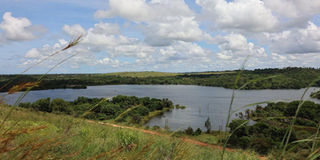
Mkurumudzi dam in Kwale County.
In Tana River County, where communities are widely dispersed and vulnerable to prolonged dry periods, approximately Ksh56.1 million, includes six shallow wells, three masonry tanks, approximately 15km of pipeline, water kiosks and associated pumping infrastructure. CWWDA is also developing the 15 million litres Mangai Water Pan and additional phases of the Hindi-Safirisi water-supply project.
CWWDA has invested extensively in decentralised water infrastructure. Completed interventions include boreholes serving communities and public institutions, as well as water pans such as Bangale and Gafuru. The Gafuru Water Pan involved approximately 20 million litres of earthworks, while the Konkona-Sheli scheme included approximately 3.5km of pipeline, water kiosks and community water points. Ongoing projects include the 50 million litres Chirifa Water Pan, the 30 million litres Charidende Water Pan and the 40 million litres Minjila Water Pan, alongside additional boreholes and community water schemes.
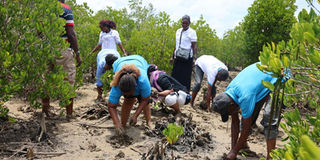
Mangrove planting at Tsunza village during Mazingira Day 2026 celebration.
In Lamu County, the Agency has completed the Chomo Water Pan, valued at approximately Ksh24.8 million and provides around 35 million litres of storage. It includes livestock watering, storage and solar powered infrastructure.
In Taita-Taveta County, CWWDA has developed a network of community boreholes and water pans aimed at improving access in areas affected by recurrent water shortages. These include boreholes at Sangenyi, Ngongodinyi, Mboghoni, Mwazambo, Ikuminyi and Mwarondo, together with the Paranga and Kishushe water pans. The Agency is also implementing the Musau Water Pan, valued at approximately Ksh24.9 million alongside pipeline extensions at Kitivo primary and other local water supply interventions.
In Mombasa County, the focus includes both underserved settlements and the pressures created by rapid urban expansion. Projects include the Kwa Bullo drinking water project, valued at approximately Ksh9.8 million and the Kapasho Water Supply Project valued at approximately Ksh17.6 million.
At the Creek Village Affordable Housing Development in Junda, the Agency is implementing a water-supply project valued at approximately Ksh169.3 million, comprising a 3.5km transmission main, approximately 5km of distribution pipeline and a 500,000 litres reinforced-concrete storage tank.
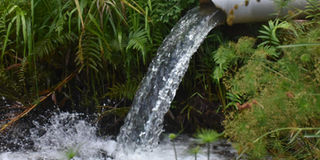
Marere Springs, a key bulk water source in the coast region, developed in 1923.
Infrastructure for institutions
CWWDA is also investing in water infrastructure for schools, hospitals and other public institutions. These include the Kizurini Special School project in Kilifi, water-supply interventions at Ngao Sub-County Hospital and Hola Hospital in Tana River County. Such investments support health, hygiene, learning and continuity of essential public services while reducing the burden created by unreliable water access.