EADB steps up action as East Africa’s industrial transformation catalyst
Sponsored by East African Development Bank
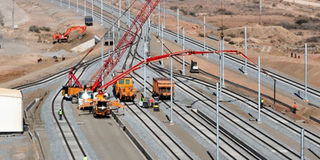
The Standard Gauge Railway (SGR) Project in Tanzania.
By Pauline Kairu
For more than five decades, the East African Development Bank (EADB) has operated largely behind the scenes, moving billions of shillings across borders to finance the factories, power lines, railways and small enterprises that keep East Africa’s economies running.
Over the years, the Bank’s impact on the region’s growth has become increasingly visible and significantly more consequential.
Founded in 1967, EADB’s mandate has always been ambitious – to spur economic growth and social progress in one of Africa’s fastest growing regions. Today, it stands as a central institution of the East African Community (EAC), providing long-term capital to governments and private businesses while shaping policy conversations around inclusive development. In a region where demand for affordable long-term financing consistently outstrips supply, the Bank has cultivated a diverse portfolio that cuts across manufacturing, energy, transport, agriculture and the SME sector.
For EADB, whose approach is rooted in generating returns on human, financial and environmental capital, sustainable industrialisation goes far beyond producing goods or turning a profit. Its integrated model places equal weight on job creation, local value addition and ecological responsibility. This philosophy guides the Bank’s investments, which focus on high-growth sectors and enterprises that support communities at the base of the economic pyramid while avoiding ventures with high environmental risk.
As the region marked Africa Industrialisation Day on November 20, the Bank’s influence stood increasingly visible, driving industrialisation that raises incomes, reinforces local value chains, and safeguards the region’s natural resources.
Across East Africa, EADB has played a pivotal role in financing some of the most important industrial and infrastructure projects. Its interventions have enabled several flagship companies to scale their operations and deepen regional competitiveness.
In Uganda, EADB has been a long-term funding partner for Kakira Sugar, which now processes over two million tonnes of sugarcane per year from its nucleus estate, and supports over 10,000 outgrower farmers. Believing in the vision of the founders of East Africa Medical Vitals in Uganda, EADB supported the establishment of the only medical gloves manufacturer in the region. This has greatly reduced reliance on imports in Uganda, a powerful import substitution initiative.
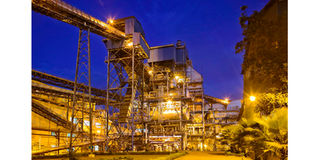
Kakira Sugar Factory in Uganda.
In Rwanda, EADB’s financing enabled Cimerwa Cement to expand production capacity to 600,000 tonnes per year, bolstering the construction and housing sectors.
In Kenya, EADB has been one of the funding partners of Kenya Power’s distribution network, and part of the syndicate of lenders for the construction of Lake Turkana Wind Power project, Africa’s largest wind farm.
In Tanzania, the Bank co-financed Standard Gauge Railway Lots 3 and 4, a transformative transport corridor now moving more than a million passengers.
Beyond large infrastructure and industrial financing, EADB has quietly become one of the region’s most influential enablers of small and medium-sized enterprises.
Over the past five years, it has injected more than $95 million into 20 partner financial institutions, financing that is critical for SMEs, especially when offered in local currencies, to shield them from exchange-rate volatility.
Through these partner institutions, more than 10,000 SMEs have accessed capital, including nearly 3,000 women-owned businesses. More than 60,000 additional enterprises have benefited indirectly through strengthened supply and value chains. For thousands of entrepreneurs, these facilities have become catalysts for productivity, innovation and market competitiveness.
Together, these cases demonstrate a pattern. EADB financing strengthens value addition, expands productive capacity and sharpens regional export competitiveness.
EADB works closely with regional blocs like the EAC and the Common Market for Eastern and Southern Africa (COMESA), and also with international partners that include the United Nations Industrial Development Organisation (UNIDO), African Development Bank (AfDB), International Fund for Agricultural Development (IFAD) and the Opec Fund for International Development (OFID). These partnerships facilitate co-financing, loan syndications and resource mobilisation for large, capital-intensive industrial projects.
Under its 2024-2028 strategic plan, EADB is focused on deepening its involvement in the region’s industrialisation agenda. Key priorities include financing industrial parks, supporting large-scale manufacturing zones, providing wholesale funding for national SME development agencies, enhancing regional infrastructure connectivity, and strengthening value addition in the agriculture and industry sectors.
With the African Continental Free Trade Area (AfCFTA) opening access to a market of 1.4 billion people, EADB is thus positioning itself as the financier enabling regional manufacturers to scale. The Bank provides long-term credit ranging from five to 15 years, accompanied by generous grace periods of up to three years, terms that give large industrial projects time to stabilise before generating revenue. It also issues credit guarantees to unlock additional financing for capital-intensive projects that commercial lenders consider too risky.
Alongside this, the Bank continues investing heavily in power, transport and logistics systems designed to reduce operational costs and ensure that regional industries can compete under AfCFTA. It considers infrastructure as the connective tissue of industrial growth.
Efficient railways, reliable highways, modern ports, renewable energy plants and cold storage facilities dictate the speed, cost and efficiency with which goods move across borders. Under its 2024-2028 strategy, the Bank plans to intensify investment in infrastructure that enhances regional connectivity covering road, rail, air and water transport, as well as the logistics systems necessary for the smooth movement of perishable and non-perishable goods.
EADB says it is strengthening regional value chains by combining infrastructure financing with SME-focused credit interventions. “As logistics and energy systems improve, the Bank ensures that small manufacturers, who are often weighed down by transport and power costs, can access affordable financing through partner financial institutions with wide branch networks. This dual approach aims to create seamless value chains that link small producers to regional and global markets,” reads a statement from the Bank.
EADB has fully integrated sustainability and digital innovation into its investment model. Every project must demonstrate environmental, social and gender considerations. Internally, the Bank has adopted policies to expand access to green finance and support climate-smart investments. It is also pursuing accreditation from the Green Climate Fund and the Adaptation Fund to unlock cheaper, long-term capital for environmentally resilient projects.
To date, EADB has disbursed more than $100 million to projects with strong environmental outcomes. In the bank’s estimation, its investments cut more than 380,000 metric tonnes of greenhouse gas emissions annually, and led to over 100,000 tonnes of waste being recycled, treated or reused across supported projects.
Women and youth are central to the Bank’s inclusive development strategy. SME initiatives such as the Rural Finance Enhancement Programme and the Agri-Finance Enhancement Programme in Uganda; the Agricultural Financing Kenya Programme; and SME financing initiatives in Rwanda, have collectively directed more than $95 million into small, rural and agricultural enterprises. These efforts have reached more than 10,000 SMEs, nearly 3,000 being women-led firms, enhancing opportunities for the region’s most dynamic but underserved entrepreneurs.
EADB urges governments to create environments that allow industries to thrive, and encourages investors to scale innovations, deepen regional presence and build resilient supply chains. The Bank reiterates that this is the moment to invest not only in profits but also in the shared prosperity of Africa for socio-economic impact. It affirms its central role as a dependable driver of industrial growth, facilitator of cross-border investments and nurturer of the next generation of East African enterprises.