Energy efficiency: manufacturers' role
Sponsored by The Energy News Network
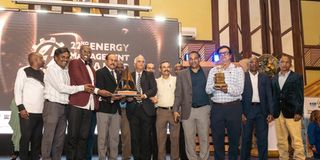
KAM honors firms driving Kenya’s clean energy transition during the 22nd edition of the energy management awards.
Twenty-two years ago, the Kenya Association of Manufacturers (KAM) embarked on an initiative to promote energy efficiency. Few people could have imagined or predicted how vital that intervention would turn out to be.
Twenty-two years later, plenty of water has passed under the bridge. So much has happened in the energy landscape both locally and globally. Climate change, a serious threat to all nations, has drawn the attention of the world, with efforts to stem global warming ongoing in earnest. In discussions on climate change and how to keep it in check, energy use and conservation feature heavily. This is because the fossil fuels that most industries rely on is associated with environmentally harmful greenhouse gas emissions.
Naturally, the drive to use energy efficiently and conserve it has gained greater urgency.
The landmark Paris Agreement that targets reducing global warming was adopted on December 12, 2015 at the UN Climate Change Conference (COP21). That was years after had KAM initiated energy audits and the famous Energy Management Awards (EMA) – two progressive initiatives.
KAM chief executive officer Mr Tobias Alando says the association is fulfilling its role as a key stakeholder in Kenya's energy efficiency and conservation agenda through a combination of technical support, capacity building, and industry engagement initiatives.
Key interventions include:
- Capacity building and skills development through training programmes for Energy Managers, technical personnel, and business leaders to strengthen energy management capabilities across industry.
- Mainstreaming energy management within business operations by promoting a culture where energy performance is regularly monitored, measured, and integrated into operational and investment decisions.
- Structured energy management support to help companies establish energy management systems, comply with regulatory requirements, and implement continuous improvement practices.
- Energy audits and technical assessments that identify inefficiencies, quantify savings opportunities, and provide practical recommendations for reducing energy consumption and production costs.
- Knowledge-sharing and recognition platforms, including the Energy Management Awards (EMA), which showcase best practices and encourage industries to adopt energy-efficient technologies and processes.
The Centre for Energy Efficiency and Conservation (CEEC), operated by KAM in partnership with the Ministry of Energy and Petroleum, continues to play a central role in advancing energy efficiency, conservation, and sustainable industrial development in Kenya. For more than two decades, the Centre has been at the forefront of promoting energy management practices that help industries reduce costs, improve productivity, strengthen competitiveness, and lower their environmental footprint.
CEEC helps KAM members improve energy performance, reduce operational costs, enhance sustainability, and strengthen their competitiveness. Through technical support, energy audits, capacity building, and industry recognition programmes, the Centre has enabled manufacturers to realize substantial economic and environmental benefits.
The impact of the Centre's work is evident through the success of the EMA, which KAM has implemented over the last 22 years as a platform for recognizing excellence in energy performance and sustainability. In 2026, KAM successfully hosted the 22nd edition of the Energy Management Awards, reaffirming the programme's position as one of Kenya's most impactful initiatives for promoting energy efficiency, renewable energy adoption, climate action, and sustainable manufacturing.
The results achieved by participating industries demonstrate the significant potential of effective energy management. According to the 2026 EMA assessment, participating companies collectively realized 118,904 gigajoules of thermal energy savings and 6,203 megawatt-hours of electricity savings, translating into approximately KSh340 million in cost savings. The assessment also revealed notable progress in digitalization, renewable energy adoption, and thermal optimization, highlighting the growing commitment by industry to embrace sustainability while enhancing operational efficiency.
Over the last 22 years, EMA has recognised more than 550 organizations that have demonstrated excellence in energy performance and sustainable operations. Collectively, these organizations have achieved energy savings exceeding KSh15 billion, highlighting the long-term impact of structured energy management interventions. Cumulatively, participating companies, continue to further illustrate the increasing recognition by industry that sustainable manufacturing is no longer optional but essential for competitiveness, resilience, and long-term growth.
Mr Alando says in response to evolving industry needs, CEEC has expanded its scope beyond traditional energy efficiency programmes to provide broader sustainability support. Today, the Centre offers technical assistance in areas including resource efficiency, renewable energy adoption, decarbonization, climate action, sustainability reporting, and compliance with emerging environmental and sustainability standards.
The Centre's strategic importance is further affirmed by the Kenya National Energy Efficiency and Conservation Strategy (KNEECS), which identifies CEEC as a critical implementing partner in advancing the country's energy efficiency and conservation agenda. As industries face rising energy costs, climate-related risks, and increasingly stringent global sustainability requirements, CEEC remains committed to supporting businesses with the technical expertise, capacity-building programmes, and practical solutions needed to drive sustainable industrial growth and enhance Kenya's global competitiveness.
The Centre has also contributed to national energy security and energy access objectives. By promoting energy efficiency across industries, CEEC has helped reduce overall energy demand and improve energy utilization. This means that existing energy infrastructure can serve more consumers without the immediate need for significant additional generation or installed capacity investments. Energy efficiency therefore remains one of the most cost-effective pathways to supporting Kenya's growing energy needs while advancing sustainable development goals.
Capacity building has been another key area of impact. To date, the Centre has trained more than 3,000 professionals, including Energy Managers, engineers, technicians, and sustainability practitioners, equipping them with the skills and knowledge required to drive energy efficiency initiatives within their organisations.


