From 18 hours to 24: How water agency is changing lives in Mountain region
Sponsored by Tana Water Works Development Agency
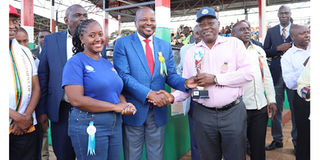
TWWDA Chairman Wambugu Mukundi (Right) receives a trophy on behalf of the Agency, from the Cabinet Secretary for Agriculture Hon Mutahi Kagwe during the Agricultural Society of Kenya show in Nyeri in 2024.
The difference between receiving water for 18 hours a day and enjoying a round-the-clock supply may appear modest on paper. For households, businesses and institutions in Kerugoya and Kutus, however, the improvement represents a significant change in daily life. Reliable water supply means less time worrying about the next tap opening, greater convenience for households and a more dependable resource for businesses. It is a practical demonstration of what sustained investment in water infrastructure can achieve.
The transformation of the Kerugoya–Kutus water supply system in Kirinyaga County offers a glimpse of the wider ambitions of Tana Water Works Development Agency (TWWDA), which is working to extend similar benefits across a region serving approximately 3.92 million people. Through its Strategic Plan 2023–2027, the agency set ambitious targets to increase access to quality water services from 57.8 percent to 90 percent and sanitation coverage from 8.1 percent to 30 percent by 2027.
Achieving these targets calls for more than constructing new water systems. It requires rehabilitating ageing infrastructure, expanding distribution networks, developing sewerage systems and strengthening last-mile connectivity to ensure that the benefits of public investment reach individual households, schools, health facilities and businesses. It also calls for enhanced operational efficiency through adoption of renewable energy, technology and innovation in the management of water supply.
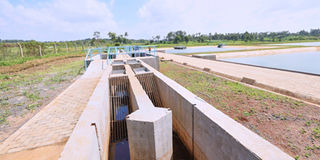
A section of the Kerugoya-Kutus Sewerage Project.
Operating across Nyeri, Kirinyaga, Embu, Tharaka Nithi and Meru counties, TWWDA identified a funding requirement of Ksh63.775 billion to implement its five-year development programme. Its strategic plan projects available allocations of Ksh40.87 billion, leaving an anticipated resource gap of approximately Ksh22.9 billion. These are planning projections and should not be interpreted as a verified assessment of the agency's current funding position.
Of the total projected requirement, Ksh37.096 billion is earmarked for water infrastructure development, maintenance and improved access, while Ksh24.042 billion is allocated to sanitation. The remaining resources are intended to support research, innovation, strategic partnerships and institutional sustainability. The scale of this investment reflects the significant infrastructure demands facing a region whose population and economic activities continue to grow.
Several projects demonstrate how the agency is translating these ambitions into tangible interventions across the Mount Kenya region.
In Nyeri County, the Mathira Community Water Supply Project, commissioned in January 2024, was designed to benefit more than 25,000 people. Its infrastructure comprises three water intakes, 21km of primary gravity mains, a 74km distribution network and six storage tanks. Beyond improving access to domestic water, the project is expected to support agricultural production, strengthen food security and create opportunities for improved household incomes.
In Tharaka Nithi County, the Kibunga–Kakimiki water supply system is undergoing improvements intended to increase its coverage from approximately 10,000 people to more than 20,000. The intervention focuses on enhancing the efficiency of the existing infrastructure and reducing water losses, thereby creating opportunities to extend reliable supplies to more rural households and public institutions.
In Embu County, the Mbeere South Water Supply Project is designed to harness water from Kamburu Dam to address persistent water shortages in the area. The project includes a treatment plant with a capacity of 10,000 cubic metres per day, alongside approximately 150km of distribution pipelines, transmission mains, storage tanks and last-mile connections. Once fully implemented and operational, the system is expected to serve approximately 100,000 people, opening up opportunities for improved livelihoods and economic activity.
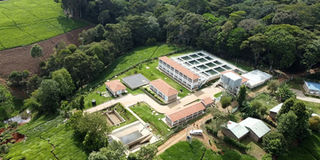
Mbeere South Water Supply Project.
Together, these interventions demonstrate the importance of combining new infrastructure with the rehabilitation and optimisation of existing water systems. Ultimately, the success of such investments will not be measured solely by kilometres of pipelines laid or treatment plants constructed, but by the reliability of services delivered to the people they are intended to benefit.
Sanitation: An equally important development priority
While expanding access to safe water remains a priority, TWWDA recognises that sustainable development must also address the equally pressing challenge of sanitation. Inadequate wastewater management poses risks to public health, environmental conservation and the quality of water resources. The agency is therefore advancing sewerage and wastewater treatment infrastructure in Kerugoya–Kutus, Chuka, Chogoria, Meru and Othaya to improve sanitation services and support the sustainable growth of urban centres.
The Kerugoya–Kutus sewerage project is designed to benefit approximately 40,000 people by providing infrastructure for the collection and treatment of wastewater. In Meru, the sewerage project is intended to improve sanitation services for approximately 193,000 people through expanded sewer networks and wastewater treatment facilities. Meanwhile, the Chuka and Chogoria sewerage projects are expected to provide essential wastewater treatment capacity and sewer networks to serve the growing urban populations in the two centres.
The interventions are particularly significant for towns experiencing rapid population growth, where existing sanitation facilities are increasingly under pressure. By investing in sewerage infrastructure, the agency is contributing to cleaner neighbourhoods, improved public health and the protection of rivers and other water resources from pollution caused by untreated wastewater.
Bridging the financing gap through partnerships
Delivering an infrastructure programme of this magnitude requires substantial and sustained financing. The anticipated Ksh22.9 billion resource gap presents a challenge that calls for innovative financing approaches, stronger partnerships and prudent utilisation of available resources.
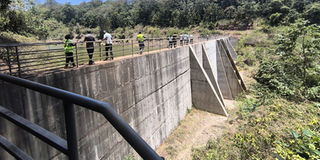
A section of the Bakuli 4 Dam in Marsabit, constructed by Tana Water Works Development Agency and Northern Water Works Development Agency.
TWWDA continues to pursue government allocations and development-partner support, including through its engagement with the African Development Bank. Its strategic plan also identifies potential financing opportunities with institutions and partners such as the World Bank, UK Export Finance, KOAFEC and the SWED Fund, subject to their respective eligibility requirements and funding priorities.
Public-private partnerships present another opportunity for mobilising resources for suitable water supply, sanitation, renewable energy and wastewater treatment projects. The agency is also exploring alternative revenue streams, including water-bowser services and bulk water supply, as part of efforts to strengthen financial sustainability and diversify its resource base.
However, financing infrastructure is only one part of the equation. Ensuring that completed projects remain functional and deliver the intended benefits requires effective operation and maintenance. Water service providers play a particularly important role in this regard. As the institutions responsible for managing customer connections and day-to-day service delivery, their technical, operational and financial capacity is critical to sustaining investments made by the government and its development partners.
As Kenya advances its commitment to Sustainable Development Goal 6 on clean water and sanitation, the work of Tana Water Works Development Agency remains central to improving access and strengthening water security across the Mount Kenya region.
From the improved reliability of the Kerugoya–Kutus Water Supply System to the development of major sewerage networks and rural water projects, the agency's interventions demonstrate how infrastructure investment can contribute to better living standards, economic growth and environmental sustainability.
The journey towards the 2027 targets will demand sustained financing, effective project implementation, strong institutional partnerships and a continued focus on the people these investments are intended to serve. Closing the projected resource gap would accelerate the implementation of priority projects, expand access to essential services and help ensure that more communities across the five counties enjoy the benefits of reliable water supply and improved sanitation.
Ultimately, the measure of success will be simple: More households with adequate clean water flowing from their taps, more towns with properly managed wastewater and more communities enjoying the dignity, health and economic opportunities that access to these essential services brings. Together, we forge ahead with renewed purpose, greater determination and shared commitment towards a future where every community enjoys access to quality water and dignified sanitation services.