How REREC's diversified strategy is building Kenya's energy security from the ground up
Sponsored by Rural Electrification and Renewable Energy Corporation
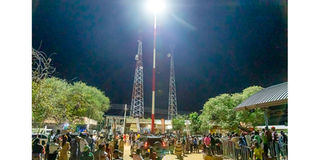
High mast flood lights in Embakasi South Constituency, Nairobi County.
Kenya's journey toward energy security is often viewed through the lens of large-scale, national grid projects. However, the silent and persistent work of the Rural Electrification and Renewable Energy Corporation (REREC) is building a more resilient, diversified, and sustainable energy future from the grassroots up.
By strategically deploying a mix of on-grid and off-grid renewable solutions, REREC is not only expanding energy access, but is also fundamentally contributing to Kenya's energy security, reducing dependence on volatile fossil fuels and decentralising power generation. This approach, which places women's empowerment and the concept of REREC Energy Centres at its core, aligns perfectly with the national aspirations of Vision 2030 and the Bottom-Up Economic Transformation Agenda (BETA).
Decentralisation and the Last Mile: The pillars of security
Traditional energy security models often focus on centralised generation and large-scale infrastructure, which are vulnerable to single points of failure. REREC's strategy directly addresses this vulnerability through decentralisation.
The solar mini-grids installed in remote and off-grid locations, often under the Kenya Off-Grid Solar Access Project (KOSAP), provide a reliable, localised power source. These systems operate independently of the national grid, ensuring that a power outage elsewhere does not affect these communities.
Furthermore, the Last Mile Connectivity Programme (LMCP) extends the national grid to households and public facilities near existing transformers, offering flexible payment options that make connection affordable for low-income families, many of them women-headed. This approach acknowledges that energy security is not just about having power but also ensuring all citizens can access and afford it.
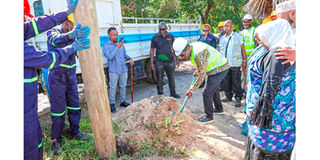
Kenya’s Energy and Petroleum Cabinet Secretary Hon Opiyo Wandayi during the launch of Madongoni/ Majikuko Rural Electrification Project in Msambweni, Kwale County.
Reducing reliance on fossil fuel imports
REREC's mandate to promote renewable energy directly tackles Kenya's energy security vulnerabilities by reducing reliance on external sources of energy, particularly volatile and price-sensitive fossil fuels. By leveraging Kenya’s abundant solar, biomass, and wind resources, REREC is developing a domestic energy supply chain. The solarisation of boreholes, the installation of standalone solar systems, and the push for biogas and clean cookstoves, all contribute to reducing communities' dependence on imported diesel, kerosene, and gas. This provides greater stability in energy costs, benefiting both consumers and the national economy.
REREC's Energy Centres: Hubs for women's empowerment
The Energy Centres are the operational engine of this bottom-up strategy, perfectly aligning with BETA's emphasis on empowering communities at the grassroots level, particularly women. These centres move beyond being simple training sites. They are incubators of change.
Skill development: Training programmes at the centres prioritise women’s participation, equipping them with the skills to manufacture, install, and maintain renewable energy products. This directly creates jobs and stimulates the MSME economy.
Entrepreneurship: Empowered women's groups and Jua Kali artisans become entrepreneurs, building local markets for renewable energy technologies and driving self-reliance.
Practical demonstrations: Centres like the Jamhuri Energy Centre, with its clean cooking hub, provide hands-on experience and education on tiered cooking solutions, empowering women to choose safer, cleaner, and more efficient methods.

Kenya's Energy Principal Secretary Alex Wachira (centre) during the commissioning of Kandutura rural electrification project in Laikipia North, Laikipia County.
Multidimensional advocacy: Beyond the academic context
The success of REREC's work requires a multidimensional approach to advocacy that recognises the complexities of cultural and social contexts. Simply providing technology is not enough. Its acceptance is shaped by how it interacts with existing social structures, beliefs, and practices.
From an academic perspective, REREC's work offers invaluable data for research. Studies can analyse the effectiveness of mini-grids versus last-mile connections, the socio-economic impacts of clean cooking, and the factors that influence technology adoption. This evidence-based approach helps refine policies and ensures interventions are effective.
From a social and cultural perspective, REREC navigates a complex landscape where technology adoption can be influenced by deeply ingrained traditions. For instance, the promotion of clean cooking must contend with the cultural significance of traditional cooking methods, often tied to social rituals and perceived food taste. Similarly, introducing new technologies requires addressing local power dynamics and social norms, ensuring that interventions do not disrupt valued community practices. The sensitisation barazas are crucial here, serving as forums for dialogue and dispelling misconceptions, such as those that led to the vandalism of Mageta solar panels. They allow for the integration of community feedback, ensuring projects are culturally sensitive and socially acceptable.
A call to action: The path to a resilient future
REREC's integrated approach – combining its Energy Centres, last-mile connectivity, mini-grids, and a nuanced understanding of multidimensional advocacy – is building a more secure, resilient, and sustainable energy future for Kenya. It is an agenda where women are not just beneficiaries but also actively empowered as entrepreneurs, technicians, and decision-makers. By recognising that energy security and economic transformation are intrinsically linked to social and cultural contexts, REREC is moving beyond simply implementing policy. It is engaging in a more profound transformation, proving that a secure energy future is built from the ground up, one empowered community at a time
For more, read here: https://static.nation.co.ke/pdfs/Sustainable-Energy-ConferenceEAREREC1.pdf