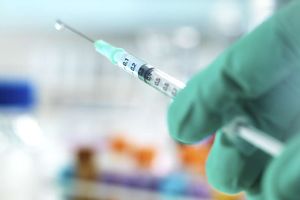
There have been at least 16 recalls of medical products issued by the PPB so far this year.

In a renal unit at a major public hospital, a routine dialysis procedure takes an unexpected turn when tiny dark clots form inside the tubing.
A recall notice later issued by the Pharmacy and Poisons Board (PPB) cited complaints of clot formation during use of an injectable blood thinner on a dialysis machine.
In another case, a batch of spinal anaesthetic failed its pH specifications, while dry antibiotic preparations developed unusual discolouration and particles.
These are not hypothetical scenarios. They are among 16 recalls of medical products issued by the PPB so far this year, continuing an upward trend in market withdrawals over the past six years.
The Ministry of Health maintains that rising recall numbers reflect stronger surveillance systems detecting compromised products, rather than a collapse in oversight.
Nevertheless, the trend raises questions about why defective or non-compliant medicines continue to reach hospital shelves and pharmacy counters before being detected.
An examination of Kenya’s pharmaceutical supply chain points to vulnerabilities at several stages, from manufacturing and importation to storage, surveillance and reporting. Frontline health workers often become a crucial line of defence.
In a statement to Nation, PPB Chief Executive Officer Dr Ahmed Mohamed said healthcare workers in hospitals and pharmacies are among the major sources of reports received by the Board because they routinely handle medicines and can identify changes in appearance, packaging, labelling and other characteristics.
Patients and members of the public also report suspected poor-quality products through healthcare workers and the Board’s reporting channels.

The Pharmacy and Poisons Board officers inspect drugs and medicines nabbed in routine inspections and crackdown at their offices in Kisumu.
The products recalled this year span several therapeutic classes, including surgical and emergency medicines such as anaesthetics and injectable blood thinners, antibiotics, asthma inhalers, a contrast agent used in hospital imaging, gastrointestinal treatments, steroids and nerve supplements.
A closer look at the 2026 recalls shows that several affected products were manufactured overseas, with Indian manufacturers accounting for a significant share. An Indian firm was recalled twice over discoloured antibiotic injections, while another was recalled after complaints of clot formation during use on a dialysis machine.
Other Indian manufacturers featured in the notices for issues including loss of flowability, failure of visual inspection specifications, failure of pH specifications, formation of solid lumps inside sachets and a dosing-frequency discrepancy in product information.
One of the affected products failed a pH test, measuring 3.7 against a specified range of 4.0 to 6.5. Another developed solid lumps inside sachets, while a separate product was recalled over a discrepancy in the recommended dosing frequency for Gemifloxacin in its product information leaflet.
A German firm was recalled after a quality defect was identified during ongoing stability studies, while a South African manufacturer’s product was recalled over potential foreign-material contamination identified during a factory inspection.
According to Dr Mohamed, falsifiers and rogue suppliers target fast-moving and high-value medicines, including specialist products such as anticancer drugs. However, he said no category of medical product is completely immune from falsification or other forms of non-compliance.
Dr Lonary Ngetich, an industrial pharmacist at the Kenyatta University Teaching, Referral and Research Hospital (KUTRRH), says a spike in recalls can indicate that post-market surveillance and electronic reporting systems are becoming more effective at detecting problems that were previously invisible. It does not necessarily mean the market is deteriorating.
However, he says recall records show differences between problems involving locally manufactured and imported medicines.
“Records of drug recalls in Kenya show a major difference between problems in locally made medicines and those imported from abroad. Medicines manufactured within Kenya are usually recalled because of obvious physical defects, which cause 36.8 per cent of local recalls,” Dr Ngetich says.
“These are flaws you can easily see or notice, such as dirt inside the medicine or broken packaging. In contrast, foreign-made medicines are mostly recalled due to hidden chemical flaws. You cannot see these issues with the naked eye. Instead, scientists must use laboratory tests to discover that the medicine’s active ingredients are incorrect, weak or unsafe.”
Dr Ngetich adds that medicines can deteriorate after leaving the manufacturer because of poor storage, extreme heat during transit or high humidity in a facility.
“A batch of medicine can leave a factory in perfect condition but become substandard later due to poor storage conditions, extreme heat during transit, or high humidity in a rural facility,” he says.
The consequences can be severe. Dr Ngetich says substandard or falsified medicines can allow underlying diseases to progress, while ineffective antibiotics and antimalarials can worsen infections and contribute to complications such as sepsis, organ failure or death.
Acute toxicity and poisoning can also occur when toxic substitutes are used to mimic medicines or manufacturing introduces harmful contaminants.
There have been at least 16 recalls of medical products issued by the PPB so far this year.
Substandard medicines can also contribute to antimicrobial resistance when they contain insufficient active ingredients to eliminate pathogens, exposing bacteria or parasites to weak, sub-lethal doses.
He says reporting channels for health workers who encounter suspected falsified or substandard products are available through email addresses and forms on the Board’s website, but follow-up can present bottlenecks.
When imported medicines enter Kenya, they encounter regulatory checks at points of entry. The PPB maintains Trade Affairs and Points of Entry units responsible for overseeing incoming shipments. Inspectors check documents including Certificates of Analysis, import permits and shipping manifests.
The scale of incoming cargo, however, presents challenges for physical sampling and laboratory testing before products are released into the market. High container volumes, limited laboratory facilities at points of entry and pressure to clear port congestion can constrain the extent of testing undertaken.
Dr Mohamed reported that between 2021 and 2026, the PPB recorded fluctuating numbers of reports of suspected poor-quality products, discovered falsified products and recalls.
Reports of suspected poor-quality products stood at 42 in 2021, rose to 55 in 2022 and peaked at 85 in 2023. They then fell to 64 in 2024 and 23 in 2025.
Falsified products were first recorded in 2023, with three cases. The figure rose to five in 2024, fell to four in 2025 and stands at three in 2026.
Recalls of suspected poor-quality products, meanwhile, have generally increased. The PPB issued 10 recalls in 2021 and 11 in 2022. The numbers rose to 18 in 2023, 32 in 2024 and 45 in 2025. So far this year, 16 recalls have been recorded.
Despite these figures, the full extent of patient exposure remains unknown. The PPB acknowledges that it has not completed studies to establish exact patient exposure levels, although research partnerships are underway.
When a suspect product is identified, the Board requires quarantine orders, recalls or public alerts to be issued within 48 hours.
The effectiveness of detection therefore depends partly on how quickly suspected problems are identified and reported.
To address these vulnerabilities, Kenya is implementing a National Action Plan on Substandard and Falsified Medical Products. Recognising that medicine safety cannot be managed by the Ministry of Health alone, the plan establishes a whole-of-government framework bringing together government agencies, healthcare providers, manufacturers, importers, distributors, retailers, patients, professional bodies, research and academic institutions and other partners.
“The plan will help to strengthen coordination across the supply chain and address identified gaps in areas such as surveillance and detection, information sharing, supply-chain controls, enforcement, public and professional awareness, reporting, investigation and response, and evidence generation,” says Dr Mohamed. “The objective is to ensure that each stakeholder’s responsibilities are clearly defined and that interventions are coordinated to reduce the risk of substandard and falsified products reaching patients.”
Follow ourWhatsApp channel for breaking news updates and more stories like this.